
Hkucuktas / CC BY-SA 3.0, via Wikimedia Commons
Erica manipuliflora: complete guide
Erica manipuliflora
Want to see Erica manipuliflora: complete guide in your garden?
1 minute, no credit card
Overview
Erica manipuliflora, commonly known as Autumn Heather, is a captivating shrub from the Ericaceae family. This plant originates from the Mediterranean region, particularly southeastern Europe and Lebanon. It distinguishes itself through late blooming and elegant form.
This Mediterranean heather reaches 16 to 24 inches tall and forms a compact, rounded habit. It is hardy in moderate climates and provides visual interest year-round. Especially in autumn, when many plants fade, Erica manipuliflora shines with blooms.
Appearance and bloom
Erica manipuliflora has extremely fine, needle-like foliage arranged in whorls around thin stems. The foliage is grey-green and very dense. In autumn, leaves may turn reddish-brown.
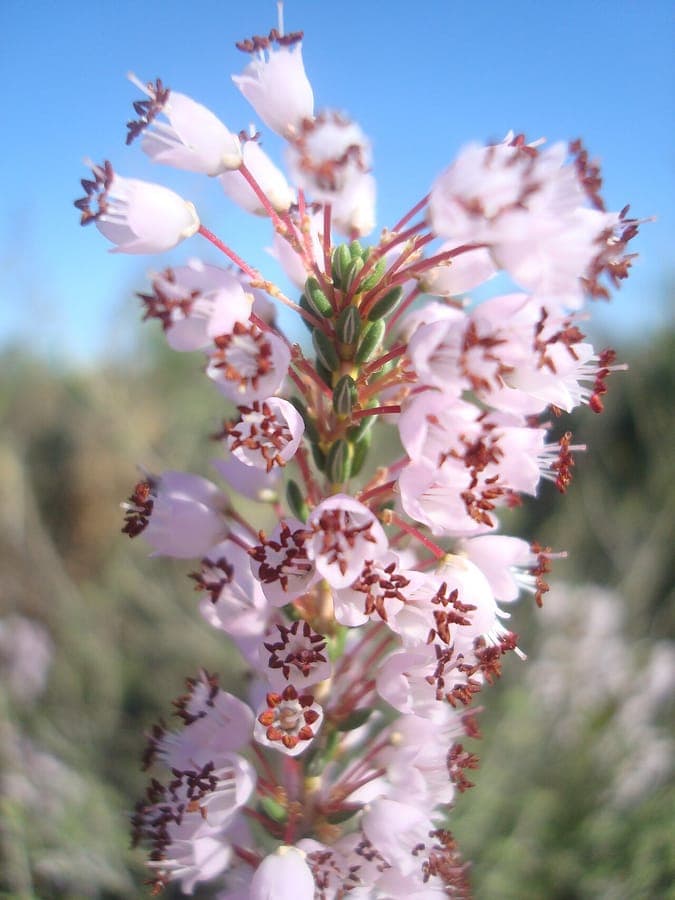
The flowers are the plant's highlight. From September through November, tiny tubular flowers appear in shades of pink to violet-red. They cluster densely along the stems, making the plant appear draped in flowers. A full plant in bloom is utterly enchanting.
Ideal location
Erica manipuliflora thrives in sunny locations. At least six hours of direct sun daily is necessary for good blooming. In partial shade, growth occurs but flowering diminishes. It loves air circulation and open spots.
Ensure it is not in areas with stagnant, warm, humid air. A spot on a slope or in raised beds is ideal. It works wonderfully in front gardens where it surprises passersby with autumn blooms.
Soil
Erica manipuliflora is very particular about soil. It requires acidic, well-draining sand or sandy soil. A pH of approximately 4.5 to 5.5 is ideal. Heavy, clay-based or lime-rich soils are poorly tolerated.
For containers, use ericaceous (heather) compost. In borders, add sand to your garden soil to make it lighter and more acidic. Mulch with pine needles for structure and acidity.
Free design
Want to see Erica manipuliflora: complete guide in your garden? Make a free design now.
Watering
Erica manipuliflora is fairly drought-tolerant once established. Water regularly until the plant is well-rooted, approximately one year. Afterward, it can manage with moderate watering.
Ensure the soil never completely dries out, especially during flowering. Use rainwater rather than tap water, as it is less chalky. Avoid waterlogged conditions by careful watering.
Pruning and maintenance
Erica manipuliflora requires annual pruning after flowering in November or December. Remove approximately one-third of the plant to keep it compact. This promotes dense growth and better flowering next year.
Avoid cutting deep into old wood, as the plant does not regenerate well from old timber. Prevent the plant from becoming rangy.
Maintenance calendar
May-June: Water young plants well. Provide shade on hot days. July-August: Water moderately. Consider mulching with pine needles. September-October: Enjoy emerging flowers. Ensure adequate water. November-December: Prune after flowering. Prepare for winter. January-April: Minimal care needed. Check only for frost damage.
Winter hardiness
Erica manipuliflora is hardy to approximately -12 C. In severe winters, damage may occur, but the plant usually recovers in spring. Plant in a sheltered spot for extra protection.
Companion plants
Erica manipuliflora combines well with other heather species like Calluna or Daboecia. It also forms beautiful combinations with dwarf conifers. Avoid neighbor plants with different soil preferences.
Conclusion
Erica manipuliflora is ideal for those with acidic, well-draining soil and full sun. With minimal maintenance, you get unforgettable autumn blooming. Source plants from specialized nurseries. Enjoy its Mediterranean elegance!
Want more drought-tolerant blooming plants? Visit gardenworld.app for inspiration.
Want to see Erica manipuliflora: complete guide in your garden? Make a free design now.
Upload a photo, pick a style, and get a photorealistic design with plant list in under a minute.
No credit card required


Similar plants
Zenobia pulverulenta: complete guide
Zenobia pulverulenta
Everything about Zenobia pulverulenta (honeycup): siting, acid soil, pruning and the fragrant white bells, in this complete care guide.
Dwarf huckleberry: complete guide
Gaylussacia dumosa
Everything about dwarf huckleberry (Gaylussacia dumosa): acidic soil, partial shade, pruning and care for this compact North American berry shrub.
Drooping leucothoe: complete guide
Leucothoe fontanesiana
Everything about drooping leucothoe (Leucothoe fontanesiana): shade tolerance, soil, watering, pruning, hardiness and companion plants.