
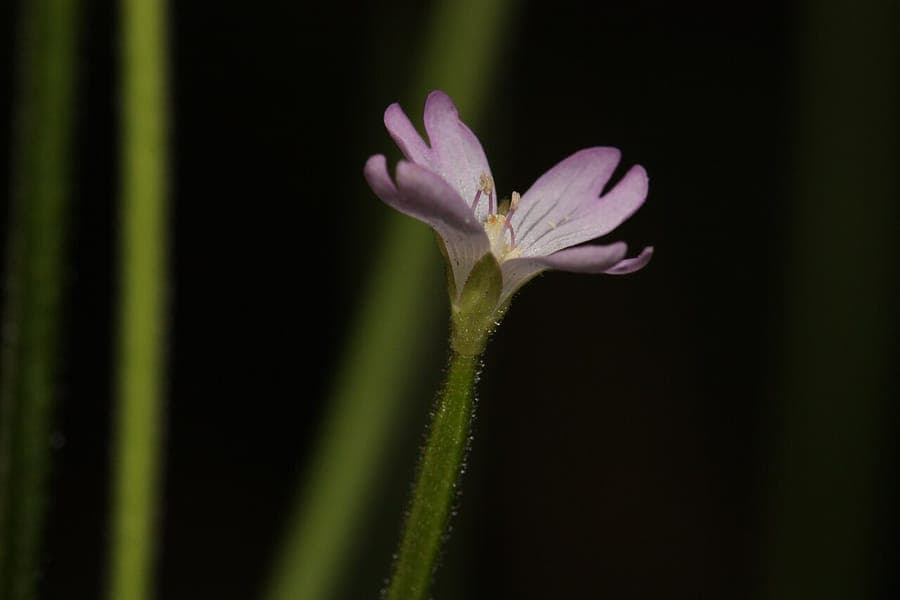
Walter Siegmund (talk) / CC BY-SA 3.0, via Wikimedia Commons
Smooth willowherb: complete guide
Epilobium glaberrimum
Want to see Smooth willowherb: complete guide in your garden?
1 minute, no credit card
Overview
Epilobium glaberrimum, commonly known as smooth willowherb or glaucous willowherb, is a perennial herbaceous plant belonging to the evening primrose family Onagraceae. The species was first formally described by Barbey and published in 1876 based on collections from western North America. Its native range spans from southern Canada through the Rocky Mountain states down to northern Mexico, with recorded occurrences in Alberta, British Columbia, California, Idaho, Montana, Nevada, Oregon, Utah, Washington and Wyoming.
The Latin epithet 'glaberrimum' means 'most smooth' or 'very hairless', referring to the nearly glabrous stems and leaves that distinguish this willowherb from its more hairy relatives. The English common name 'smooth willowherb' reflects this same characteristic, while 'glaucous willowherb' refers to the characteristic blue-green waxy sheen on the leaves and stems.
This plant belongs to a large genus of over two hundred species worldwide. Epilobiums are pioneer plants well suited to disturbed, moist ground along stream banks, mountain slopes and open woodlands. The smooth willowherb earns its garden value through modest but charming purple flowers and its blue-grey foliage, which brings a calming color note between greener plants.
On gardenworld.app you can find garden design inspiration that integrates waterside and wetland perennials like smooth willowherb into naturalistic planting schemes.
Appearance and bloom cycle
Epilobium glaberrimum forms an upright to lightly branched plant typically reaching 20 to 60 cm in height. The stems are notably smooth and nearly hairless - the defining characteristic behind its scientific name. Leaves are lance-shaped to elliptical, sessile on the stem, and display a blue-green to grey-green color resulting from a thin waxy layer coating the leaf surface.
The flowers are small but pleasingly colored: four purple to light pink petals surround a white ovary. Individual flower diameter is modest - generally 4 to 8 mm - but the abundance of flowers more than compensates for their size. The bloom period runs from June through August, depending on elevation and local climate conditions.
After flowering, the plant produces the elongated seed capsules typical of the Epilobium genus. When ripe, the capsules split open and the seeds disperse on a white silky fluff - a striking display when plants grow in numbers along a stream bank or pond edge.
The rhizomatous growth habit means the plant can gradually spread through underground runners, but in garden conditions with regular management it remains neatly bounded. New shoots emerge close to the parent plant.
Ideal location
Smooth willowherb performs best in a sunny to lightly shaded position. In its natural habitat it grows along mountain streams, on wet slopes and in open mountain forests at elevations ranging from 500 to over 3000 metres. This origin gives it considerable adaptability to varying light conditions.
For the garden: provide a position receiving at least four to six hours of direct sunlight daily. A spot near a pond, stream or drainage channel is ideal. However, the plant can also do well in a moist planting bed or rain garden, as long as the soil does not dry out significantly during summer months.
The plant tolerates light shade reasonably well but blooms less generously in those conditions. In deep shade it stretches toward the light and loses its compact form. A south-facing or east-facing position is preferable to a north-facing one.
Soil
Epilobium glaberrimum grows naturally on mineral-rich, moist soils along mountain streams and in wet mountain meadows. Soil pH in its native range spans from 6.1 to 7.5, indicating that it thrives in slightly acidic to neutral conditions.
In the garden, a light, well-draining but moisture-retentive soil is ideal. Heavy clay soil can be improved by adding coarse sand and well-rotted compost. Sandy soil benefits from additional organic matter to improve moisture retention.
The plant is not particularly demanding regarding nutrients. Excessive nitrogen fertiliser tends to encourage lush leaf growth at the expense of flowers. A light top-dressing of compost in spring is entirely sufficient.
If the plant wilts rapidly in summer without obvious pest problems, the soil is likely too dry. Mulching with a 5 to 7 cm layer of loose compost or fine wood bark helps retain soil moisture for longer periods.
Watering
Moisture is the key requirement for smooth willowherb. In nature it grows alongside mountain streams and in wet grasslands, so drought is its primary limiting factor. In the garden it requires regular watering, especially during dry summers.
A practical rule: water when the top 2 to 3 cm of soil feels dry to the touch. During warm, dry spells this may mean watering two to three times per week. Rainwater or settled tap water is preferable to avoid calcium buildup.
Drip irrigation is the most efficient method: water reaches the roots directly and foliage stays dry, preventing fungal disease. Avoid overhead watering during hot midday hours as it can cause leaf scorch.
In autumn and early spring, water needs are lower. Check weekly whether the soil retains adequate moisture. During frost periods no watering is needed, but ensure the soil is not completely dry when frost sets in.
Free design
Want to see Smooth willowherb: complete guide in your garden? Make a free design now.
Pruning
Epilobium glaberrimum requires minimal pruning. The plant dies back above ground in autumn and can be cut back to just above soil level in spring. Remove dead stems and flower heads in autumn or winter.
When seed capsules begin to split open - signalled by the white fluff emerging - it is wise to remove them if you wish to limit self-seeding. Self-seeding is welcome in wild corners, but in a formal garden it can lead to unwanted spread.
During the growing season, extended stems can be lightly trimmed to keep the plant compact. This also encourages side shoot formation and therefore more flowers. Use clean, sharp secateurs and disinfect them after use to prevent transmission of plant diseases.
Maintenance calendar
January - February: the plant is dormant. Dead stems can remain standing as winter structure for birds and insects.
March - April: remove dead stems as new shoots appear. Apply a layer of compost around the plant. Check for early signs of aphids and other pests.
May - June: growth begins in earnest. Keep the soil consistently moist. Weed the surrounding area to reduce competition.
July - August: full bloom period. Ensure adequate water during dry spells. Deadheading is optional but not strictly necessary.
September - October: the plant begins to set seed. Remove ripe capsules if you want to prevent spread. Otherwise, allow the plant to self-seed naturally.
November - December: above-ground parts die back. Stems can be cut now or left for winter interest. Visit gardenworld.app for autumn border planting inspiration.
Winter hardiness
Epilobium glaberrimum is a robust plant that tolerates cold winters well. It grows naturally in mountain regions at significant elevation, where it regularly experiences severe winters with snow cover and hard frost.
The species is assigned to USDA hardiness zones 4 to 8, meaning it can survive temperatures down to minus 34 degrees Celsius. In most gardens across Western Europe, including northern regions of the Netherlands and Belgium, the plant is fully winter-hardy without additional protection.
In exceptional cases - when unusually severe frost is forecast, or for young plants in their first winter - a 5 to 10 cm mulch layer can be applied to protect the root zone. Use dry leaves, straw or fine wood bark for this purpose.
In spring the plant regrows from its underground rhizomes as soon as soil temperature rises. Avoid final spring cutbacks too early, as young emerging shoots are vulnerable to late frosts.
Companion plants
Smooth willowherb combines well with other waterside and moisture-loving plants. In a naturalistic border or bog garden it works beautifully alongside Iris pseudacorus (yellow flag iris), Caltha palustris (marsh marigold), Lythrum salicaria (purple loosestrife) and various Carex species (sedges).
In a less formal wild corner, the purple flowers look attractive alongside the yellow flowers of Hypericum (St John's wort) or the white flowers of Filipendula (meadowsweet). The blue-green foliage provides a pleasing contrast with dark-green ground covers such as Ajuga reptans (bugle).
For a contemporary, minimalist garden, the plant pairs well with ornamental grasses such as Molinia caerulea (purple moor grass) or Deschampsia cespitosa (tufted hair grass). These combinations create a movement-rich, texture-aware composition that remains attractive outside the bloom period.
Avoid overly aggressive ground covers that may crowd out the willowherb. Plants such as Aegopodium podagraria (ground elder) or invasive Fallopia species should be kept at a safe distance.
Closing thoughts
Smooth willowherb is an understated but genuinely valuable plant for the naturalistically inclined gardener. Its purple flowers, blue-green foliage and low maintenance requirements make it well suited to modern wild gardens, waterside plantings and pollinator-friendly borders.
It is not spectacular as a single specimen, but comes into its own when planted in larger drifts. Seed is available through specialist seed suppliers; young plants can be found at garden centres in spring. With the right position and adequate moisture it rewards the gardener with years of undisturbed flowering.
Planning a new border or looking to transform a wet corner of your garden? On gardenworld.app you will find bespoke design ideas that give pollinator-friendly plants like Epilobium glaberrimum a central role in your dream garden.
Want to see Smooth willowherb: complete guide in your garden? Make a free design now.
Upload a photo, pick a style, and get a photorealistic design with plant list in under a minute.
10,000+ gardens designed already
No credit card required


Similar plants
Purpleleaf willowherb: complete guide
Epilobium coloratum
Grow purpleleaf willowherb at pond edges and wet borders: soil, watering, maintenance and companion plants for this graceful native herb.
Bog willowherb: complete guide
Epilobium leptophyllum
Grow bog willowherb in pond margins and peat gardens: soil acidity, moisture requirements, maintenance and companion plants for this slender native.