
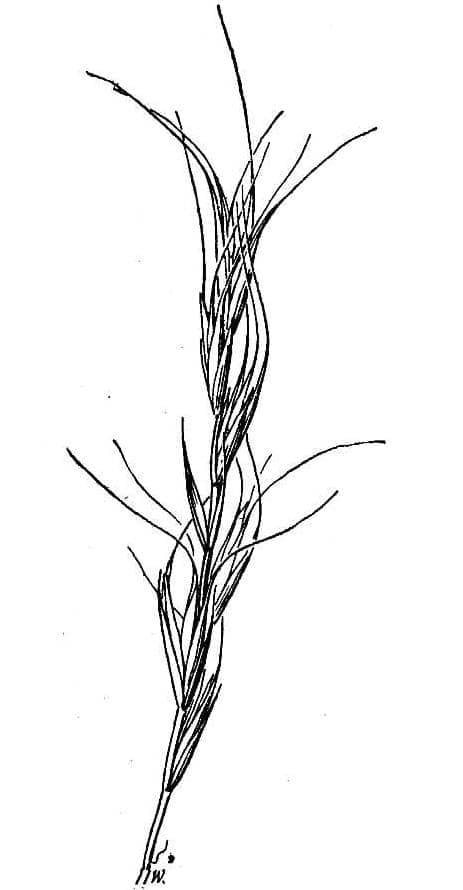
Hitchcock, A.S. (rev. A. Chase). / Public domain, via Wikimedia Commons
Slender wheatgrass: complete guide
Elymus violaceus
Want to see Slender wheatgrass: complete guide in your garden?
1 minute, no credit card
Overview
Slender wheatgrass (Elymus violaceus) is an impressive arctic grass originating from East Siberia and North America. This is a very special grass that is extremely suitable for arctic or mountainous conditions.
This grass is one of the most winter-hardy grass species. It grows in areas where other plants struggle. Slender wheatgrass is ideal for gardeners wanting to create an authentic northern or arctic garden.
The grass has an elegant appearance with fine spikes and graceful foliage. Despite its arctic origins, it can also grow in more temperate climates.
Appearance and bloom
Elymus violaceus has fine, thin leaves that grow upright. The leaves have a characteristic purplish or violet color under certain light conditions.
The spikes are elongated and elegant. They grow upright and give the grass a very graceful appearance. Blooming occurs in summer.
The grass reaches a height of approximately 30 to 60 cm. In arctic areas, it grows smaller.
The plant forms slowly expanding groups via underground rhizomes.
Ideal location
Slender wheatgrass grows best in open, sunny locations. At least six hours of direct sunlight per day is ideal. The grass can also grow in partial shade.
This grass is very suitable for mountainous gardens and steep slopes. It can also grow well on poor, rocky soils.
Wind is not a problem for this grass. It actually grows even better in somewhat windy locations.
Soil
Slender wheatgrass grows best in dry to moderately moist, poor soils. The grass prefers no rich, heavily fertilized ground. Light, rocky soils are ideal.
Poorer soils are actually better. The grass grows worse in very fertile ground. The grass easily adapts to lean, poor soil.
The plant loves well-draining soil. A neutral to slightly acidic pH level is ideal.
Free design
Want to see Slender wheatgrass: complete guide in your garden? Make a free design now.
Watering
Slender wheatgrass is very drought tolerant. Once established, it actually needs no water at all.
Young, new plants need somewhat more water until they become well established. After the first year, watering can be drastically reduced.
Excessive water is harmful to this grass. Waterlogging must be avoided.
Pruning
Slender wheatgrass does not need pruning. The grass grows naturally into an attractive shape. Dead leaves can be removed in early spring.
Carefully remove dead, brown leaves and spikes in early spring.
Damaged spikes can be removed at any time.
Maintenance calendar
Spring: Check for winter damage. Remove dead material.
Summer: Almost no maintenance needed. Enjoy the blooms.
Autumn: Still beautiful. The spikes remain attractively visible.
Winter: The grass remains winter light green or yellow.
Winter hardiness
Slender wheatgrass is extremely winter hardy. The grass originates from arctic areas and can withstand temperatures of -40 degrees or lower.
In temperate regions, this grass is absolutely winter hardy. It can even be used in the bitterest mountain areas.
Above-ground parts may turn yellow or brown in very cold winters, but underground the grass remains alive.
Companion plants
Other arctic and alpine plants work well next to slender wheatgrass. Mountain gentian and alpine flowers are good neighbors.
Other sedges and graminoids can also be used. Small shrubs from arctic areas also work well.
Closing
Slender wheatgrass is a unique choice for gardeners who love arctic and mountainous environments. The grass is extremely winter hardy and drought tolerant. It brings an authentic arctic atmosphere to the front yard. Find this grass at specialized nurseries. For more inspiration visit gardenworld.app.
Want to see Slender wheatgrass: complete guide in your garden? Make a free design now.
Upload a photo, pick a style, and get a photorealistic design with plant list in under a minute.
No credit card required


Similar plants
Sporobolus pungens: complete guide
Sporobolus pungens
Sporobolus pungens is a stoloniferous Mediterranean coastal grass with outstanding salt and drought tolerance, perfect for seaside and dry gardens.
Mediterranean aegilops: complete guide
Aegilops biuncialis
Everything about Aegilops biuncialis, a Mediterranean annual grass with ornamental spikes and outstanding drought tolerance for dry gardens.
Silver bluestem: complete guide
Bothriochloa saccharoides
Full guide to Bothriochloa saccharoides (silver bluestem): site, soil, watering, winter hardiness, pruning, and garden companions.