
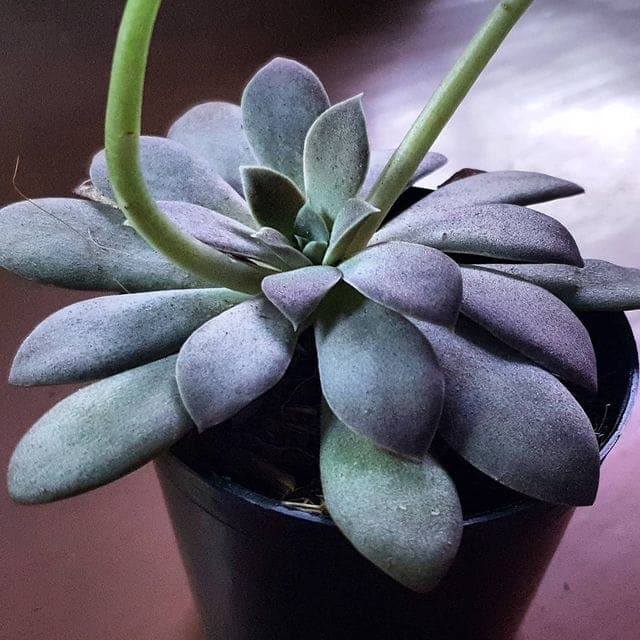
Fogfish Comics / CC BY-SA 4.0, via Wikimedia Commons
Echeveria carnicolor: complete guide
Echeveria carnicolor
Want to see Echeveria carnicolor: complete guide in your garden?
1 minute, no credit card
Overview
Echeveria carnicolor, commonly called coral echeveria, is a captivating succulent from Mexico. This plant is prized for its elegant rosettes of thick, fleshy leaves with striking reddish hues. In garden design, it creates unique texture and visual interest when grouped with other drought-tolerant species. Its compact form makes it perfect for borders, containers, and contemporary garden designs.
Appearance and bloom
The plant forms dense rosettes approximately 10-15 cm in diameter. Leaves are covered with a white powdery patina, which highlights the red pigments at leaf bases and tips. In spring, small yellow or red flowers bloom, arranged along a flower stalk. The blooms provide striking contrast against the silvery-grey foliage and attract pollinators.
Echeveria carnicolor belongs to the Crassulaceae family, closely related to jade plants and echeverias. The leaves feel firm and succulent due to high water content stored as an adaptation to Mexico's dry climate.
Ideal location
Coral echeveria thrives in full sun conditions. It requires at least 5-6 hours of direct sunlight daily for optimal coloring and compact growth. In partial shade, growth becomes leggy and the red coloration fades to green.
Indoors, place on a south-facing windowsill to maximize light exposure. Ensure the plant doesn't touch cold window glass in winter. Outdoors in containers or border plantings, it performs excellently in full sun. Watch for leaf scald during extreme heat, especially if water splashes on leaves. Rotate containers regularly for even growth.
Soil
Proper soil is essential for healthy roots. Succulents require well-draining substrate. Use cactus or succulent-specific potting mix, amended with extra perlite or coarse sand for superior drainage. A mix of 60% universal potting soil, 30% perlite, and 10% coarse sand works well.
Ensure pots have drainage holes to prevent water stagnation. Roots sitting in moisture will rot quickly. In ground plantings, it thrives only in sandy or gravelly soil where water drains rapidly.
Watering
Watering is where most succulent growers make mistakes. These plants store water in their leaves and require far less moisture than typical plants. During growing season (spring-summer), water only when soil is completely dry, approximately every two weeks. In fall-winter, reduce watering drastically: once every 4-5 weeks.
Always test soil before watering: insert your finger 2 cm deep. If soil still feels moist, wait another week. Overwatering is the primary cause of echeveria death. Container plantings outdoors require no supplemental watering during rainy periods.
Free design
Want to see Echeveria carnicolor: complete guide in your garden? Make a free design now.
Pruning
Echeveria carnicolor requires minimal pruning. Remove only dead or damaged leaves by gently pulling them away. Leaves often detach easily and can even be propagated.
After flowering, remove spent flower stalks. For a more compact form, remove top rosettes and replant them separately.
Maintenance calendar
Spring: begin watering, feed monthly with cactus fertilizer. Gradually acclimate to increased sun exposure.
Summer: water moderately, periodically check for pests. During very dry periods, light misting helps (not in direct sun).
Fall: gradually reduce watering. Remove fallen leaves that could promote fungal growth.
Winter: minimize watering, no fertilizer. The plant rests and grows minimally. A cool location (around 10 degrees Celsius) is ideal.
Winter hardiness
Echeveria carnicolor is not frost-hardy in temperate climates. It cannot tolerate freezing temperatures. Container plants must move indoors before first frost. Overwinter in a cool greenhouse or sunny indoor windowsill.
Frost damage causes leaves to become soft and translucent. Recovery is impossible; remove affected foliage. Prevention is better: bring plants indoors before freezing weather.
Companion plants
Coral echeveria pairs beautifully with other succulents:
- Sempervivum (houseleek): similar water needs, drought-loving
- Aloe: larger, blue-green foliage with yellow flowers
- Sedum: diverse colors, fall blooming
- Euphorbia (spurge): contrasting forms and height
In containers: combine with silver-foliaged plants like Senecio rowleyanus or Helichrysum.
Conclusion
Echeveria carnicolor is a reliable, low-maintenance succulent for anyone wanting a piece of Mexican desert in their garden. With proper watering and light, it grows quickly and flowers annually. Young plants are widely available online from specialized nurseries, typically priced around 3 euros.
Search for "coral echeveria" and you will find quality specimens. Use gardenworld.app for design inspiration: plant in clusters of 3-5 for maximum impact in your borders.
Sources and further reading
Additional information available on gardenworld.app with design examples featuring this plant. Scientific sources: Plantnet (GBIF 4202886), Royal Botanic Gardens Kew.
Want to see Echeveria carnicolor: complete guide in your garden? Make a free design now.
Upload a photo, pick a style, and get a photorealistic design with plant list in under a minute.
No credit card required

