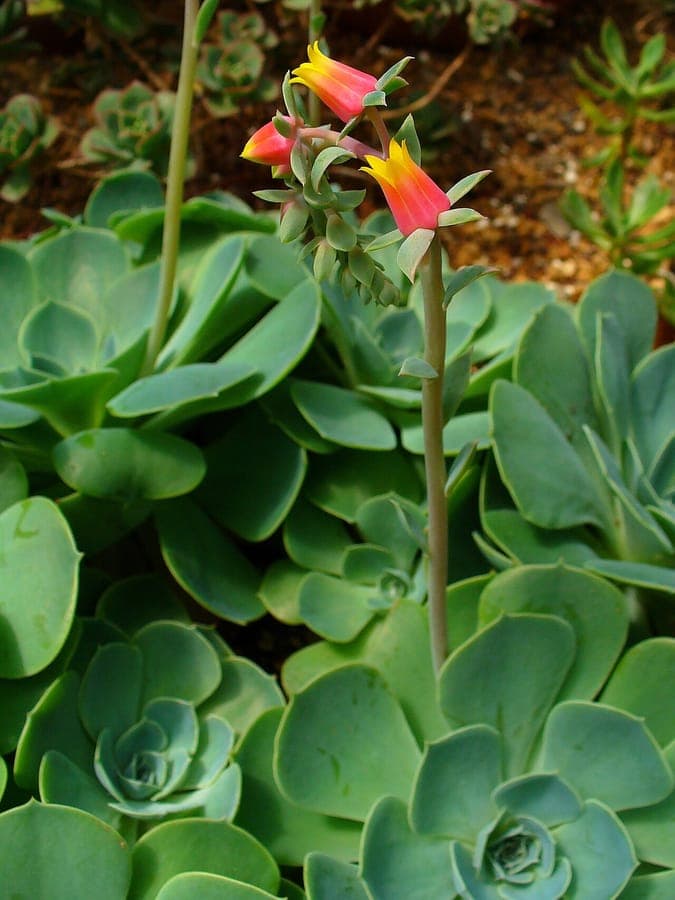
H. Zell / CC BY-SA 3.0, via Wikimedia Commons
Echeveria gibbiflora: complete guide
Echeveria gibbiflora
Want to see Echeveria gibbiflora: complete guide in your garden?
Full design in HD: €7.99
Look after your Echeveria gibbiflora with the GardenWorld app
Identify plants with your camera and get a care calendar with reminders for this plant.


Overview
Echeveria gibbiflora, known as Giant echeveria or Burro's ear, is a spectacular succulent from Mexico. This impressive succulent forms large, tightly-packed rosettes with fleshy leaves in grey-blue to purple tones. With its imposing growth and frost sensitivity, it is ideal for container cultivation and striking focal points.
This plant is remarkably easy to maintain and tolerates drought and neglect well. It is perfect for gardeners seeking succulents without demanding care routines.
Appearance and Bloom
Echeveria gibbiflora grows into a robust rosette approximately 25 to 40 centimeters in diameter, depending on conditions. The leaves are thick, fleshy, and nearly spatula-shaped. They are grey-blue in color, often with purple or red tints along the edges.
During spring (April-May), the plant produces flowers on a central spike. The flowers are small, about 1 centimeter across, with red-orange coloration. After flowering, the central rosette dies but produces side shoots. In container cultivation, flowering occurs less frequently.
Ideal Location
Echeveria gibbiflora thrives best in full sun. At least four hours of direct sunlight daily is ideal. More sunlight promotes richer leaf colors.
In very hot climates (above 35 degrees Celsius), afternoon shade may be beneficial. In temperate climates, full sun is always best. In moderate light, the plant grows but remains pale in color.
Soil
Echeveria gibbiflora demands well-draining soil. Use a cactus soil mixture with 50 percent perlite or sand. The pH may be neutral to acidic.
It is essential that water drains quickly. Regular garden soil causes root rot. For pot culture, a homemade mixture of 60% cactus soil and 40% perlite works excellently.
Free preview
Want to see Echeveria gibbiflora: complete guide in your garden? Make a free preview of your design.
Watering
Echeveria gibbiflora is drought-tolerant once established. Water lightly and allow drying between waterings. During the growing season (March-October), water once every two weeks.
In winter (November-February), water minimally - only if leaves begin to shrivel. Overwatering is the primary killer of this plant. Always ensure drainage in pots.
Pruning
Carefully remove dead or damaged leaves from the base. This gives the plant a neater appearance. Cut off spent flower spikes close to the base.
You need not regularly prune this plant. It naturally grows into beautiful rosette forms.
Maintenance Calendar
March-April: Growing season begins. Water regularly. Apply cactus fertilizer once monthly.
May-September: Peak growing season. Water every two weeks. Support full sun exposure.
October: Growing season ends. Gradually reduce watering.
November-February: Winter dormancy. Minimal water (only if necessary). No fertilizer.
Winter Hardiness
Echeveria gibbiflora is not winter hardy in temperate climates and cannot tolerate frost. At temperatures below 5 degrees Celsius, the plant begins to suffer damage.
In warm zones (USDA 10-11), it can remain outdoors. Protect from frost and wet conditions. In colder zones, bring it indoors for winter.
Companion Plants
Echeveria gibbiflora pairs beautifully with:
- Other succulents: Aeonium, Sedum, Sempervivum
- Bold forms: Euphorbia, Aloe, Agave
- Trailing plants: Senecio, Delosperma
- Vining plants: Rhaphidophora, Senecio rowleyanus
The plant is perfect for dry rock gardens, stone troughs, and container groupings.
Conclusion
Echeveria gibbiflora offers spectacular appearance with minimal maintenance. With proper drainage and careful watering, you gain a beautiful succulent that lasts for years. Available from garden centers and online suppliers as a houseplant. Discover more plant guides on gardenworld.app and brighten your space.
Frequently asked questions about Echeveria gibbiflora
Is Echeveria gibbiflora winter hardy?
Echeveria gibbiflora is not winter hardy in temperate climates and cannot tolerate frost. At temperatures below 5 degrees Celsius, the plant begins to suffer damage.
When and how do you prune Echeveria gibbiflora?
Carefully remove dead or damaged leaves from the base. This gives the plant a neater appearance.
How much water does Echeveria gibbiflora need?
Echeveria gibbiflora is drought-tolerant once established. Water lightly and allow drying between waterings.
Where does Echeveria gibbiflora grow best?
Echeveria gibbiflora thrives best in full sun. At least four hours of direct sunlight daily is ideal.
What soil does Echeveria gibbiflora need?
Echeveria gibbiflora demands well-draining soil. Use a cactus soil mixture with 50 percent perlite or sand.

See it in your garden
See Echeveria gibbiflora in your garden
One photo of your garden and a few questions. You see the result in about a minute.
Try it with a photoIdentify this plant in your own garden. Identify a plant
Similar plants
Aeonium tabuliforme: growing the saucer plant
Aeonium tabuliforme
Aeonium tabuliforme, the saucer plant, forms a flat, hairy rosette like a green plate. How to grow this Tenerife succulent, tilt it, water it and overwinter it.
String of buttons (Crassula perforata): care guide
Crassula perforata
How to grow string of buttons, Crassula perforata: light, watering, compost, cuttings and overwintering for this succulent with leaf pairs stacked like beads on a stem.
Glaucous echeveria (Echeveria secunda): complete guide
Echeveria secunda
Echeveria secunda forms mats of blue-grey rosettes with red leaf tips and is one of the toughest echeverias. Light, watering, potting mix, propagation and pet safety.
