
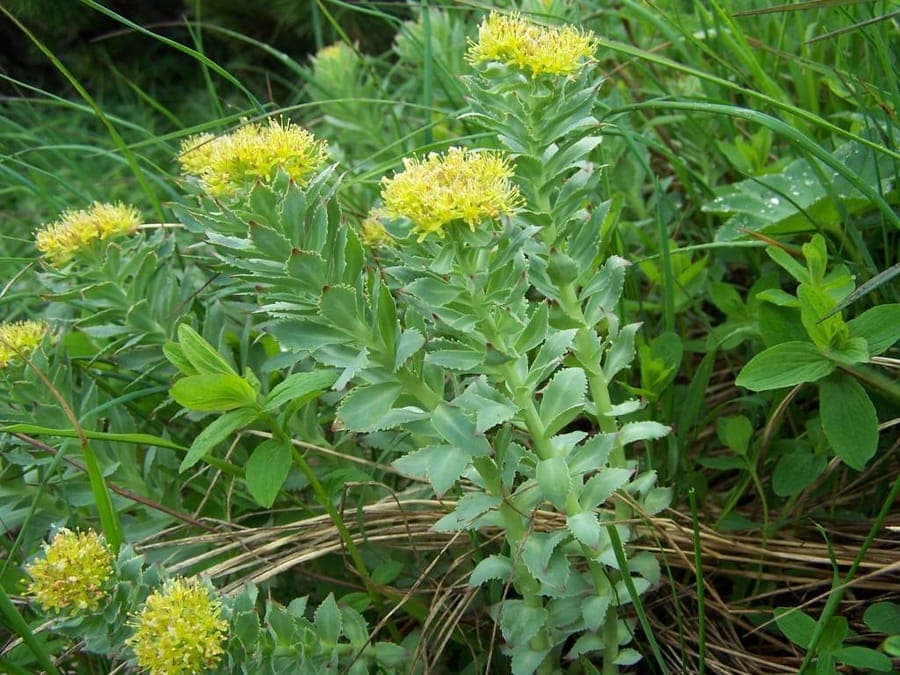
Opioła Jerzy / CC BY 2.5, via Wikimedia Commons
Roseroot: complete guide
Rhodiola rosea
Want to see Roseroot: complete guide in your garden?
1 minute, no credit card
Overview
Roseroot (Rhodiola rosea) is one of the most cold-tolerant and adaptable hardy succulents available to gardeners in cool-temperate climates. A member of the Crassulaceae family and closely related to Sedum and Sempervivum, it grows wild across an enormous arc of the northern hemisphere: the sea cliffs of Iceland, Norway, and the Faroe Islands; the alpine meadows of the Alps, the Carpathians, and the Pyrenees; the tundra plains of Siberia and northern Russia; and rocky coastal outcrops in northeastern North America from Labrador to New England. That vast natural range is the best indication of its constitution - roseroot survives conditions that would destroy most garden plants and thrives precisely in the kind of lean, stony, exposed spots where other plants struggle. Its common name comes from the thick, horizontal rootstock (rhizome) that, when freshly cut, releases a clear fragrance strikingly similar to rose water. For garden design ideas featuring roseroot in rock gardens and dry borders, visit gardenworld.app.
Appearance and bloom cycle
Roseroot grows from a fleshy, slowly expanding rhizome that sends up multiple erect stems each spring. These stems reach 15 to 45 cm in height and are closely set with thick, glaucous, blue-green to grey-green leaves that feel slightly waxy to the touch. This succulent texture is a classic adaptation to dry and cold environments: the leaves store water to bridge periods of drought, and the waxy coating reduces evaporation. Blooming occurs from April through June. The plant is dioecious, meaning male and female flowers grow on separate individuals. Male plants carry tight, dome-shaped clusters of small bright yellow flowers; female plants produce rust-brown seed heads that ripen through summer and give the plant attractive structure well into autumn and winter. Even after the stems have died back in late autumn, the dried seed heads and the low rosette of basal leaves that often persists provide quiet garden interest through the colder months. When planting for maximum ornamental value, choose male plants for the showier yellow flowers, or grow both sexes for seed production.
Ideal location
Roseroot performs best in a sunny to lightly shaded position. Full sun produces the most compact, floriferous plants; moderate shade results in taller, slightly looser stems but is perfectly tolerable. In nature it colonises exposed cliff faces, scree slopes, and windswept coastal headlands, so it is not at all troubled by wind exposure or coastal salt spray. In the garden it excels in rock gardens, raised beds with grit mulch, dry stone walls, green roofs, and gravel gardens. It also grows well in containers provided drainage is excellent. A position where rain drains quickly away from the base - on a slope, between rocks, or on a raised platform - is far better than any flat, moisture-retaining spot.
Soil
Free drainage is the single non-negotiable requirement for roseroot. In the wild it colonises pure rock crevices with almost no organic matter, so in the garden a lean, gritty medium is ideal. Mix two parts coarse grit or fine gravel with one part loam or leaf mould to create a substrate that drains instantly yet holds enough moisture for initial establishment. pH tolerance is broad (5.5 to 7.5), so lime-rich or slightly acidic soils both work. Avoid rich, nitrogen-heavy composts or fertilised beds: overly fertile soil produces lush but weak, floppy stems that are prone to rotting. Do not feed at planting time; in subsequent years a light top-dressing of grit around the base each spring is all the maintenance the soil needs.
Watering
Roseroot is genuinely drought-tolerant once established, which usually takes one full growing season. During that first year after planting, water once a week in dry weather to help the rhizome settle in. After that, in the typical climate of the British Isles or the Low Countries, supplemental watering in open ground is rarely if ever necessary. In containers, allow the substrate to dry out completely between waterings - roseroot in a pot should be treated more like a cactus than a border perennial. Overwatering is by far the greater risk: wet roots, especially in cool temperatures, cause rhizome rot that is usually fatal. Stop all watering of containerised plants from November through February. Garden plants in free-draining ground look after themselves through winter without any intervention.
Free design
Want to see Roseroot: complete guide in your garden? Make a free design now.
Pruning
Roseroot is a herbaceous perennial that dies back to its rhizome each winter. After the first hard frosts of autumn, the stems brown and collapse. You can cut them back to ground level at this point, but equally you can leave them standing: the dried stems and seed heads add structural interest through winter and provide insect shelter. In late winter or early spring - February or March - cut away any old stems as the new season's shoots emerge from the rhizome. No other pruning is needed during the growing season. The plant self-regulates its growth and does not require cutting back to stimulate flowering or rejuvenate the clump.
Maintenance calendar
January and February: the plant rests as a dormant rhizome; no action needed. Early March: as new shoots appear, cut back any remaining old stems. April: stems grow rapidly and flower buds become visible; this is the best time to divide established clumps if more plants are wanted. May and June: peak flowering; no intervention required. July and August: seed heads ripen; collect seed if desired. September: reduce watering for containerised plants. October: stems begin to die back after the first frosts; optionally cut back or leave for winter interest. November and December: complete dormancy; no special care needed for this exceptionally tough plant.
Winter hardiness
Roseroot is one of the hardiest plants available for temperate gardens, rated to USDA zone 2 - meaning it can survive minimum temperatures of around -45 degrees Celsius. In the wild it thrives on the cliffs of Svalbard and in Siberian tundra, environments far colder and harsher than anything experienced in temperate Europe. In practical garden terms this means: plants in open ground never need winter protection, not even in their first winter. Young newly planted specimens have survived hard winters without any loss provided drainage was adequate. In pots, the rhizome is theoretically more exposed to cold, but in the climate of the UK or the Netherlands, pot-grown roseroot will come through every winter without any wrapping. This extraordinary hardiness, combined with its drought tolerance, makes it one of the most reliable plants available for exposed, low-maintenance situations. Find plant combination ideas and garden design inspiration at gardenworld.app.
Companion plants
Roseroot fits naturally alongside other rock-garden and drought-tolerant plants. Sedum spectabile and Sedum telephium offer similar succulent foliage with later-season flowers. Sempervivum cultivars (houseleeks) are ideal low-growing companions in the same sunny, dry conditions. Thymus serpyllum and Dianthus deltoides provide fine-textured ground cover that flowers at a similar time. Allium species add vertical accents with their spherical flower heads. Aubrieta, Phlox subulata, and Arabis caucasica bloom even earlier in spring and fill the gap before roseroot hits its stride. For taller background plants sharing the same preference for lean, sunny conditions, Lavandula angustifolia, Salvia officinalis, and Perovskia atriplicifolia all work well.
Buying and prices
Roseroot is increasingly available at well-stocked garden centres and specialist alpine or rock-garden nurseries, as well as through online plant retailers. Small plug plants cost from 3 to 6 pounds or euros; pot-grown specimens in 9 to 12 cm pots range from 5 to 10 pounds or euros. Buy in early spring so the plant has a full growing season to establish. Look for firm, upright stems with good blue-green colouring and no signs of rotting or waterlogging at the base. Avoid any plants where the pot feels very light and completely dry, or conversely, where the substrate smells musty - both indicate poor growing conditions before purchase.
Closing
Roseroot is the perfect plant for gardeners who want beauty without effort. Its fleshy blue-green foliage, its cheerful yellow spring flowers, its rose-scented rhizome, and its near-indestructible constitution make it a standout choice for rock gardens, green roofs, dry walls, and any other challenging spot in the garden. Plant it once in the right place - sunny and sharply drained - and it will return year after year, growing slowly stronger without any attention from you.
Want to see Roseroot: complete guide in your garden? Make a free design now.
Upload a photo, pick a style, and get a photorealistic design with plant list in under a minute.
10,000+ gardens designed already
No credit card required


Similar plants
Sedum nevadense: complete guide
Sedum nevadense
Discover Sedum nevadense, the stunning alpine stonecrop from the Pyrenees. Expert care tips, growing requirements, and design ideas for rock gardens.
Aizoon stonecrop: complete guide
Phedimus aizoon
Everything about Phedimus aizoon - the frost-tolerant aizoon stonecrop from Siberia with bright yellow flowers. Planting, care and garden use.
Aeonium arboreum: complete guide
Aeonium arboreum
Learn all about tree aeonium. Cultivation advice for successful growing, maintenance tips and suitable for pots and dry borders. Subtropical accent.