
Hedwig Storch / CC BY-SA 3.0, via Wikimedia Commons
Aeonium arboreum: complete guide
Aeonium arboreum
Want to see Aeonium arboreum: complete guide in your garden?
1 minute, no credit card
Overview
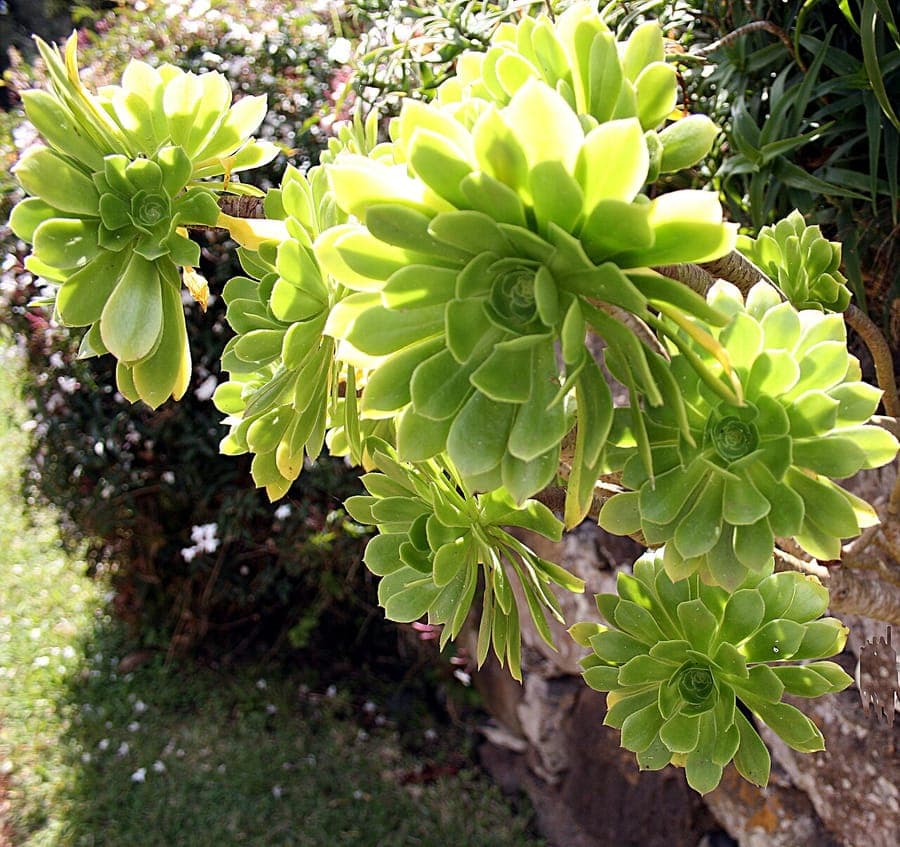
Aeonium arboreum, commonly known as tree aeonium or houseleek tree, is a fascinating succulent from the Canary Islands and Southwestern Morocco. This fleshy-leaved plant is celebrated for its tree-like growth habit and dense, geometric rosettes of succulent foliage. It remains popular for containers, hedges, and dry borders in warm to temperate climates.
Originally from rocky slopes of Morocco and the Canary Islands, this plant has adapted to dry, warm conditions. In temperate climates, protection from freezing temperatures is necessary.
Appearance and Bloom
Aeonium arboreum grows as a small tree reaching 30 to 100 cm tall, depending on growing conditions. The characteristic rosettes of tightly-packed, fleshy leaves form perfect geometric patterns.
Coloration ranges from green to deep red, depending on light intensity and season. In spring, yellow flowers appear in large flower panicles, after which the plant reproduces and often dies.
Ideal Location
Aeonium arboreum thrives in full sun to light part shade. A minimum of four to six hours of direct sunlight daily ensures compact growth and intense coloring.
In warm climates, the plant may appreciate some afternoon shade during the hottest summers. Good ventilation proves essential for preventing fungal diseases.
Soil Requirements
Aeonium arboreum demands sharp-draining, highly porous soil. Standard cactus and succulent mix works well. Alternatively, blend garden soil, sand, and perlite in equal parts.
The pH may range from neutral to slightly alkaline. Nutrition matters less for succulents; lean soil actually proves advantageous.
Free design
Want to see Aeonium arboreum: complete guide in your garden? Make a free design now.
Watering
During the growing season (spring and summer), water moderately until the soil drains freely, then allow it to dry between waterings.
During winter months (especially October through February), reduce or cease watering entirely. Prevention of moisture excess proves critical.
Pruning
Aeoniums require minimal pruning. Gently remove dead, damaged, or diseased leaves with your hands or a sharp knife. Detached lower rosettes can serve as cuttings.
After flowering, the entire flower stalk may be removed.
Maintenance Calendar
Spring: Light feeding once monthly; begin regular watering. Summer: Suspend watering during the hottest weeks; inspect for pests. Fall: Gradually reduce watering as temperatures drop. Winter: Minimal watering; protect from frost in temperate zones.
Winter Hardiness
Aeonium arboreum is not frost-hardy. It tolerates brief frost periods to roughly -2 to -5°C, but prolonged freezing proves fatal.
In temperate climates, the plant must overwinter indoors in containers or in warm, sheltered microclimates outdoors.
Companion Planting
Aeonium arboreum looks stunning alongside other succulents and drought-tolerant plants. Try it with agaves, sedums, and echeverias in dry borders or large containers.
In Mediterranean gardens, it pairs beautifully with lavender, sage, and rosemary. Its architectural form contrasts elegantly against softer foliage.
Final Thoughts
Aeonium arboreum offers a unique blend of exotic appearance and effortless care. Whether you grow it as a houseplant, balcony specimen, or garden accent, it certainly adds architectural interest and Mediterranean flair.
Available at garden centers with succulent selections. For more ideas on designing dry, succulent-focused gardens, visit gardenworld.app. Discover how to combine water conservation with exotic appeal.
Want to see Aeonium arboreum: complete guide in your garden? Make a free design now.
Upload a photo, pick a style, and get a photorealistic design with plant list in under a minute.
No credit card required


Similar plants
Sedum nevadense: complete guide
Sedum nevadense
Discover Sedum nevadense, the stunning alpine stonecrop from the Pyrenees. Expert care tips, growing requirements, and design ideas for rock gardens.
Aizoon stonecrop: complete guide
Phedimus aizoon
Everything about Phedimus aizoon - the frost-tolerant aizoon stonecrop from Siberia with bright yellow flowers. Planting, care and garden use.
Roseroot: complete guide
Rhodiola rosea
Everything about roseroot (Rhodiola rosea): a tough hardy succulent ideal for rock gardens, green roofs, and dry sunny positions.