
Bog hair-grass: complete guide
Deschampsia setacea
Want to see Bog hair-grass: complete guide in your garden?
1 minute, no credit card
Overview
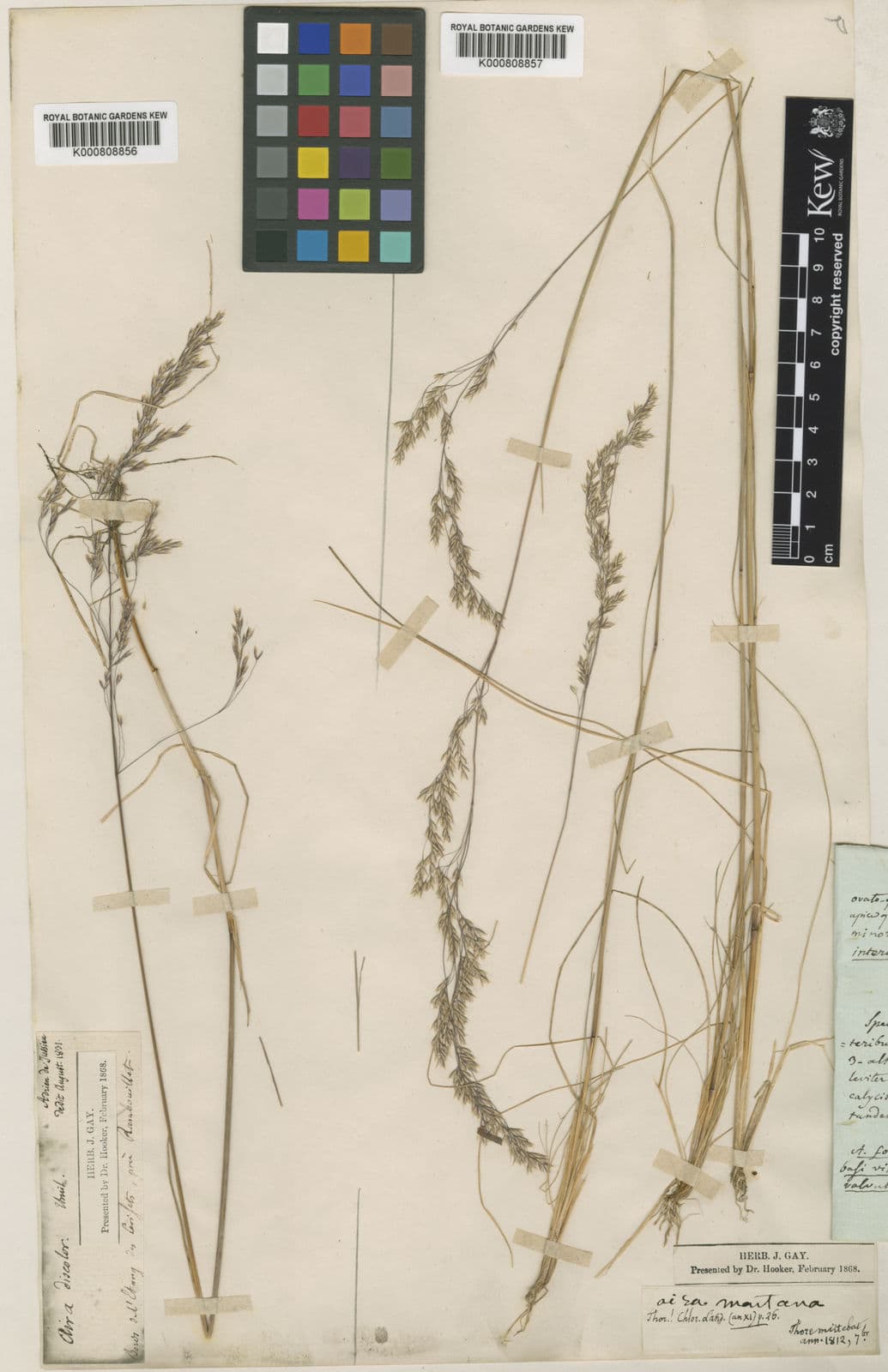
Bog hair-grass (Deschampsia setacea) is an elegant ornamental grass with a strong preference for moist or wet conditions. This European species, native to marshes and boggy grasslands of northwest and western Europe, thrives in locations where most other ornamental grasses fail. The plant reaches 40-60 cm tall and develops a characteristic loose, open-textured growth habit with very fine, hair-like leaves that create an ethereal appearance.
On gardenworld.app you can create a garden design where bog hair-grass highlights the potential of damp zones. The grass grows in dense clumps, forming a soft, lush mass, and flowers from June to August with subtle greyish-blue panicles. This is a plant for gardeners who see waterlogged soil not as a curse but as an opportunity. Unlike most ornamental grasses, bog hair-grass loves wet feet - it actually prefers them.
Appearance and bloom
Bog hair-grass distinguishes itself through extremely fine, hair-like leaves that appear almost translucent in backlighting. The leaf mass is dense and forms a characteristic 'hairball'-like cluster. The tufts rarely exceed 60 cm and possess an elegant, transparent quality that provides contrast against heavier plant materials.
Flowering occurs from June to August, producing very fine, branched panicles that are greyish-blue in colour. These panicles have an extraordinarily open, ethereal appearance and move delightfully in the slightest breeze. Because the grass carries such fine, hair-thin flower heads, the effect is wonderfully subtle. After flowering, the panicles gradually fade and acquire a dusty, dried-out appearance that persists through autumn.
Ideal location
Bog hair-grass thrives in moist to very wet situations with high water tables. This is a grass for marshy areas, ditch sides, water gardens, and other locations where wet grasslands occur naturally. The grass is immune to the rot that plagues other ornamental grasses on permanently moist sites. Recommended spacing: 30-40 cm.
While the grass performs well in full sun, it also tolerates partial shade with grace, especially in moist conditions. In a dry, shady border you will not enjoy success with this grass - it is truly a plant for moisture-loving situations.
Soil requirements
Bog hair-grass demands well-draining but moisture-retentive, humus-rich soil. The ideal planting medium is a mix of clay and sand with plenty of incorporated leaf compost. Apply a mulch layer (3-5 cm) of leaf compost to improve moisture retention and temperature stability.
The plant actually prefers heavy soils - clay is ideal, so no soil improvement is required. Most garden centres stock leaf mould and garden compost suitable for mulching.
Free design
Want to see Bog hair-grass: complete guide in your garden? Make a free design now.
Watering
Bog hair-grass is a true hydrophile. Once established, this plant requires little active watering because it naturally grows in moist locations. During prolonged drought (extremely rare for bog hair-grass), supplementary water helps, but this is usually unnecessary.
Ensuring adequate moisture availability is crucial. Plant bog hair-grass therefore on low-lying locations where water naturally accumulates, near water features, in dips, or along ditches. In typical gardens, choose sites that are naturally moister than average.
Pruning
Bog hair-grass requires minimal pruning. In early spring (March-April) cut the old leaf mass back to just a few centimetres above ground. This promotes new growth and removes dead material.
You can leave the flower panicles standing through winter for natural effect. In early spring, before new growth begins, remove this dried material. Use a grass shear and work carefully to avoid damaging the emerging shoots.
Maintenance calendar
March-April: Cut back old leaf mass. Add leaf mould as a soil improver.
May-June: New growth begins. Monitor moisture levels carefully.
June-August: Flowering. Enjoy the fine panicles dancing in the breeze.
September-October: Panicles turn dusty. Leave them for natural effect.
November-February: Winter dormancy. Bog hair-grass forms a decorative skeleton in the winter garden.
Winter hardiness
Bog hair-grass is extremely hardy (USDA zones 4-9) and survives temperatures down to -30 degrees Celsius. The plant overrides every British and Central European winter without protection. The above-ground parts die back, but the root system survives safely.
Companion plants
Bog hair-grass combines beautifully with other moisture-loving plants. Partner with Astilbe for colour and structure, Hostas for leaf-form contrast, and Primula japonica for early-season colour. Along pond edges, bog hair-grass works well alongside Iris sibirica and sedges (Carex species).
Closing
Bog hair-grass is an elegant option for those who view wet soil not as a handicap but as an opportunity. It offers year-round interest and demands very little maintenance. Plant in groups of three to five for best effect. On gardenworld.app you can design a garden where bog hair-grass allows your moistest zones to truly shine.
Want to see Bog hair-grass: complete guide in your garden? Make a free design now.
Upload a photo, pick a style, and get a photorealistic design with plant list in under a minute.
No credit card required


Similar plants
Tufted hairgrass: complete guide
Deschampsia cespitosa
Discover Deschampsia cespitosa, an elegant ornamental grass with fine plumes year-round. Thrives in moist to wet soils and adds winter structure to borders.
Ovina: complete guide
Festuca ovina
Everything you need to know about Festuca ovina: care, ideal conditions, soil, watering and plant combinations. Perfect for sunny, dry gardens. Find design ideas on gardenworld.app.
Poa compressa: complete guide for gardeners
Poa compressa
Discover all about Poa compressa, Canada bluegrass. Cultivation and care of this strong, resilient grass.