
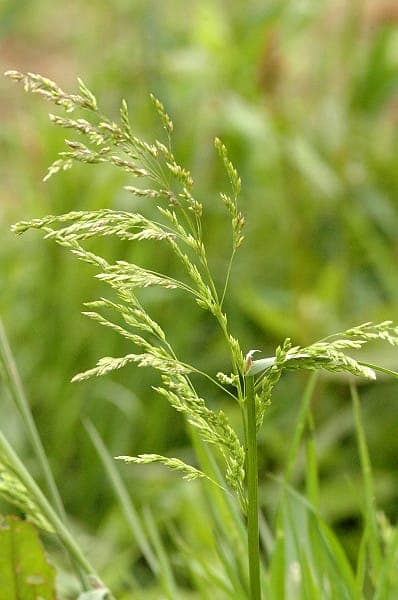
James K. Lindsey / CC BY-SA 3.0, via Wikimedia Commons
Poa compressa: complete guide for gardeners
Poa compressa
Want to see Poa compressa: complete guide for gardeners in your garden?
Full design in HD: €7.99
Look after your Poa compressa with the GardenWorld app
Identify plants with your camera and get a care calendar with reminders for this plant.


Overview
Poa compressa, commonly known as Canada bluegrass, is a tough, hardy grass species distinguished by its sturdy base and compressed leaves. This perennial grass belongs to the Poaceae family and originates from Europe to China. The plant is known for its exceptional ability to grow under difficult conditions, including very poor soils and compacted substrates.
Canada bluegrass is one of the toughest grass species and is widely used for erosion control, pathways, and other high-traffic zones.
Appearance and Bloom
Poa compressa forms dense, compact mats of approximately 15 to 30 centimeters height with very narrow, steel-gray leaves that are flattened together (hence the name compressa). The base of the plant is noticeably thick and woody, giving the grass exceptional sturdiness.
The plant flowers from May to July with small, green to purple flower panicles. Most characteristic, however, is the thick, firmly developed root base that makes this grass particularly suitable for compacted, difficult soils.
Ideal Location
Poa compressa thrives in virtually every location, from full sun to partial shade. The plant tolerates all light conditions excellently. Ideal are sunny, dry sites where other grasses fail. Plant it on pathways, between pavers, on slopes, and other footpaths.
This grass is ideal for difficult, compacted soils where foot traffic is intense. It also grows well in very shady corners where practically no other grass succeeds.
Soil
Poa compressa is absolutely not fussy about soil. It grows on virtually every soil type, from very poor, sandy soils to compacted, composite clay soils. It can even grow on sidewalks, between pavers, and other very restrictive environments.
Even pH does not matter much - it grows from very acidic (pH 3) to alkaline (pH 8). Drainage is not critical, though it grows much better on well-draining soils.
Watering
Once established, Poa compressa requires virtually no water. This is one of the most drought-tolerant grass species. Water only during the first two weeks after planting and during very dry weeks after direct seeding.
After that, it can survive completely without supplemental water. Even underground moisture retention can help but is rarely necessary. This grass is ideal for situations where watering is impractical.
Free preview
Want to see Poa compressa: complete guide for gardeners in your garden? Make a free preview of your design.
Pruning
Pruning is optional. You can prune the plant to 5 centimeters in spring for a neater appearance, but this is not essential. The grass can simply be left maintenance-free.
To prevent seed spread, remove flower panicles before they set seed. This also helps prevent unwanted seeding in neighboring gardens.
Maintenance Calendar
Spring (March-May): Optional pruning for neater appearance. No fertilization or special care needed.
Summer (June-August): Practically no care. Water only in extreme droughts.
Fall (September-October): Remove faded flower panicles.
Winter (November-February): No care. Plant is fully dormancy-tolerant.
Winter Hardiness
Poa compressa is very winter-hardy to zone 4 (down to -34 degrees Celsius) and grows better in cold climates. It survives even extreme frost periods without protection. The plant loses its green color in winter but is not dead - it will regrow in spring.
No winter protection needed. This grass is ideal for very cold regions where many grasses do not survive.
Companion Plants
Poa compressa combines well with:
- Other extreme-tolerance grasses (Festuca ovina)
- Rock garden plants (stone doves, saxifraga)
- Herbs and lavender (for contrast)
- Other durable sturdy plants
It forms interesting background material in a garden design.
Closing Remarks
Poa compressa is the ultimate grass species for difficult situations. Its exceptional resilience, drought tolerance, and adaptability to poor soils make it incomparable for pathways, erosion control, and other high-traffic applications.
Seed can surely be found at garden centers or online retailers. Visit gardenworld.app for more ideas and discover how this tough grass can reinforce your most difficult garden corners. With virtually no care, this grass will maintain a solid, green appearance for years.
Poa compressa proves that hardness and strength can be just as important as beauty in gardening. This humble grass is a workaholic that works without complaint for years.
Frequently asked questions about Poa compressa
Is Poa compressa winter hardy?
Poa compressa is very winter-hardy to zone 4 (down to -34 degrees Celsius) and grows better in cold climates. It survives even extreme frost periods without protection.
When and how do you prune Poa compressa?
Pruning is optional. You can prune the plant to 5 centimeters in spring for a neater appearance, but this is not essential.
How much water does Poa compressa need?
Once established, Poa compressa requires virtually no water. This is one of the most drought-tolerant grass species.
Where does Poa compressa grow best?
Poa compressa thrives in virtually every location, from full sun to partial shade. The plant tolerates all light conditions excellently.
What soil does Poa compressa need?
Poa compressa is absolutely not fussy about soil. It grows on virtually every soil type, from very poor, sandy soils to compacted, composite clay soils.

See it in your garden
See Poa compressa in your garden
One photo of your garden and a few questions. You see the result in about a minute.
Try it with a photoIdentify this plant in your own garden. Identify a plant
Similar plants
Poa annua: complete guide for gardeners
Poa annua
Discover everything about Poa annua, annual bluegrass. From cultivation to maintenance: tips for healthy plants in your garden.
Poa bulbosa: complete guide for gardeners
Poa bulbosa
Discover all about Poa bulbosa, bulbous bluegrass. Cultivation and care of this unique grass for structure in your garden.
Poa chaixii: complete guide for gardeners
Poa chaixii
Discover all about Poa chaixii, broadleaf meadow grass. Cultivation and care of this elegant alpine grass.
