
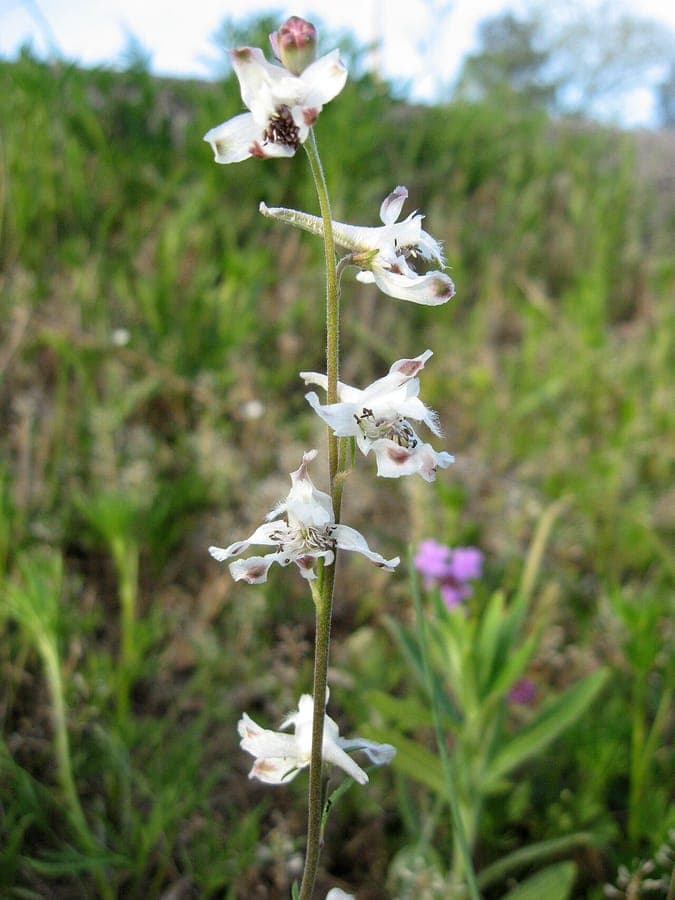
Mason Brock (Masebrock) / Public domain, via Wikimedia Commons
Delphinium carolinianum: complete guide
Delphinium carolinianum
Want to see Delphinium carolinianum: complete guide in your garden?
1 minute, no credit card
Overview
Delphinium carolinianum, commonly known as Carolina Larkspur or Blue Larkspur, is a stunning wildflower native to North America. This member of the Ranunculaceae family naturally grows on dry prairies and mountain meadows. The plant is renowned for its striking blue flowers.
Carolina Larkspur is a special plant for gardeners who appreciate native North American plants. Despite its wild heritage, it grows reasonably easily in ordinary gardens. It is a short-lived perennial.
Appearance & Bloom Cycle
Delphinium carolinianum grows in loose, graceful columns of 30-60 centimeters tall. The leaves are finely dissected and hair-like. Foliage often disappears later in the season, especially in dry summers.
The flowers are the true attraction. They are bright blue to violet-blue, sometimes white in the center. Each flower has a characteristic spur. The bloom period runs from May through July.
After flowering, distinctive seed pods develop. These seeds can self-sow in suitable locations.
Ideal Location
Delphinium carolinianum thrives in full sun. The plant requires at least six hours of direct sunlight daily to flower well. In warmer climates, it appreciates light afternoon shade.
Place your plant in a location with well-draining soil. Avoid damp, stagnant corners.
Soil Requirements
Delphinium carolinianum grows best in well-draining, not overly rich soil. The plant naturally grows in prairie and mountain terrain. Sand and grit should be present in moderate quantities.
The pH can be neutral to slightly acidic (6.0-7.5).
Free design
Want to see Delphinium carolinianum: complete guide in your garden? Make a free design now.
Watering
Delphinium carolinianum is drought-tolerant once established. During the first growing year and throughout flowering, it appreciates regular watering. In dry summers, supplemental water may be needed.
As foliage dies back in summer, reduce watering.
Pruning
No pruning is necessary. Allow the plant to maintain its natural form. If you want to collect seeds, let seed pods mature.
Remove only obviously dead foliage.
Maintenance Calendar
March-April: Initial growth begins. April-May: Rapid growth. May-July: Bloom period. July-August: Seed setting. August-October: Plant may die back. November-February: Winter.
Winter Hardiness
Delphinium carolinianum is exceptionally winter hardy. It naturally grows as far north as Canada. The plant tolerates temperatures below minus-25 degrees Celsius.
The plant grows as a short-lived perennial. However, after about three years, you will need to grow new plants from seed.
Companion Plants
Delphinium carolinianum combines beautifully with echinacea, coreopsis, rudbeckia, achillea, salvia and gaura.
Closing Thoughts
Delphinium carolinianum is invaluable for lovers of native North American plants. With its brilliant blue flowers, it brings the beauty of the American prairie to your garden. For more information, visit gardenworld.app.
Want to see Delphinium carolinianum: complete guide in your garden? Make a free design now.
Upload a photo, pick a style, and get a photorealistic design with plant list in under a minute.
No credit card required


Similar plants
Drummond's anemone: complete guide
Anemone drummondii
Discover Drummond's anemone (Anemone drummondii): a silvery-grey mountain plant for cool rock gardens and alpine troughs.
Korean clematis: complete guide
Clematis serratifolia
Clematis serratifolia is a hardy climber with fragrant yellow bell flowers in August-September. Pruning group 3, location and care tips.
Aquilegia brevistyla: complete guide
Aquilegia brevistyla
Discover Aquilegia brevistyla, the elegant North American columbine. Growing tips, shade tolerance, and design ideas for woodland and shadowed gardens.