
Benjamin Zwittnig / CC BY 2.5 si, via Wikimedia Commons
Striated daphne: complete guide
Daphne striata
Want to see Striated daphne: complete guide in your garden?
1 minute, no credit card
Overview
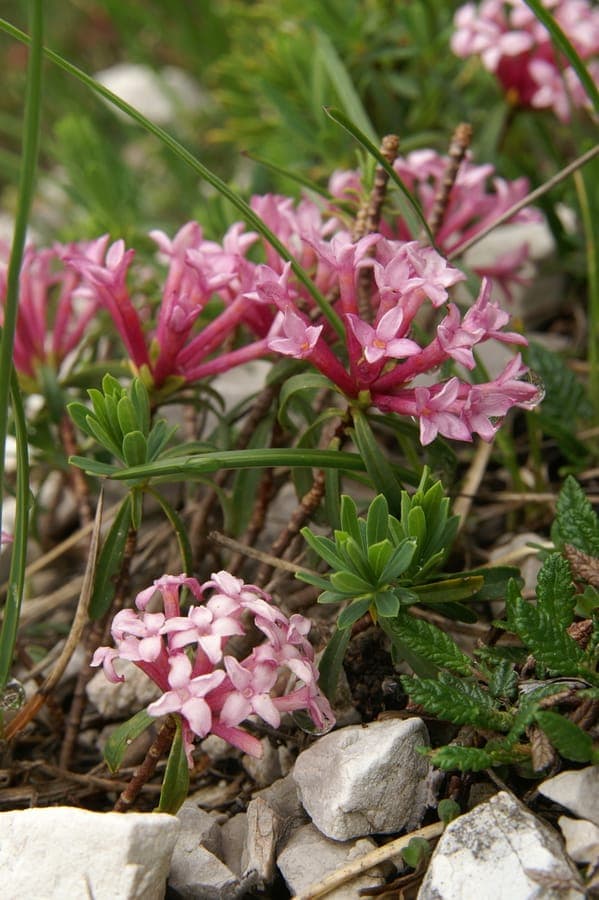
Striated daphne (Daphne striata) is a rare Alpine shrub from the European high mountains. Though uncommon in cultivation, this remarkable plant thrives in well-drained gardens. The purple flowers with their characteristic white striations are truly enchanting and sweetly scented.
Appearance and Bloom
This Alpine shrub forms a compact mound, rarely exceeding 30 cm in height. Linear leaves are bright green and attractively textured. Purple flowers appear from May to August in terminal clusters, displaying distinctive white and purple stripes that give the species its common name. Delightfully fragrant blooms attract pollinators.
Ideal Location
Position in full sun with excellent drainage. This Alpine plant abhors shade and wet feet. In southern regions, light afternoon shade during extreme heat is acceptable. Shelter from strong western winds in exposed areas. A south or southwest-facing slope is ideal.
Soil Requirements
Excellent drainage is absolutely essential. Use rocky, nutrient-poor soil with sand and gravel amendments. This plant tolerates dry conditions better than moisture. A pH of 7 to 7.5 (neutral to alkaline) is optimal. Avoid clay and humus-rich soils entirely.
Free design
Want to see Striated daphne: complete guide in your garden? Make a free design now.
Watering
Minimal watering even after planting. If drought stress appears, water carefully. Excessive moisture is harmful. No supplemental watering needed in winter. Overwatering is the primary cause of failure with this species.
Pruning
Minimal pruning required. Remove spent flower clusters after blooming. Heavy shaping is not recommended; allow the plant's natural form to develop. Avoid pruning in autumn and winter when growth is slowest.
Maintenance Calendar
Spring (March-May): Water sparingly at establishment. Summer (June-August): Withhold water unless extremely dry. Autumn (September-October): Monitor drainage carefully. Winter: Protect from moisture, not cold.
Winter Hardiness
Fully hardy throughout northern Europe, even in the coldest regions. Suitable for all climatic zones. However, winter moisture is more damaging than frost.
Companion Plants
Pair with other Alpine specialists such as dwarf phlox, saxifrage, or Alpine asters. Combine in rock gardens or scree plantings. Excellent with sedum and sempervivum succulent collections.
Summary
Striated daphne is a horticultural treasure for passionate Alpine gardeners. Though challenging to locate, the reward is years of delicate blooms. Not for conventional gardeners, but a must-have for specialists.
Available through specialized nurseries and Alpine plant specialists.
Want to see Striated daphne: complete guide in your garden? Make a free design now.
Upload a photo, pick a style, and get a photorealistic design with plant list in under a minute.
No credit card required


Similar plants
Thymelaea sanamunda: complete guide
Thymelaea sanamunda
Full guide to growing Thymelaea sanamunda, a rare Mediterranean subshrub from southern France and Spain. Care, soil and location tips.
Daphne pontica: complete guide to Pontic daphne
Daphne pontica
Pontic daphne from southeast Europe: compact evergreen shrub, intensely fragrant spring flowers, toxic. Prefers partial shade and well-drained soil.
Winter daphne (Daphne odora): complete guide
Daphne odora
Learn how to grow fragrant winter daphne for year-round garden interest. This cold-hardy shrub blooms in winter and fills gardens with intoxicating perfume.