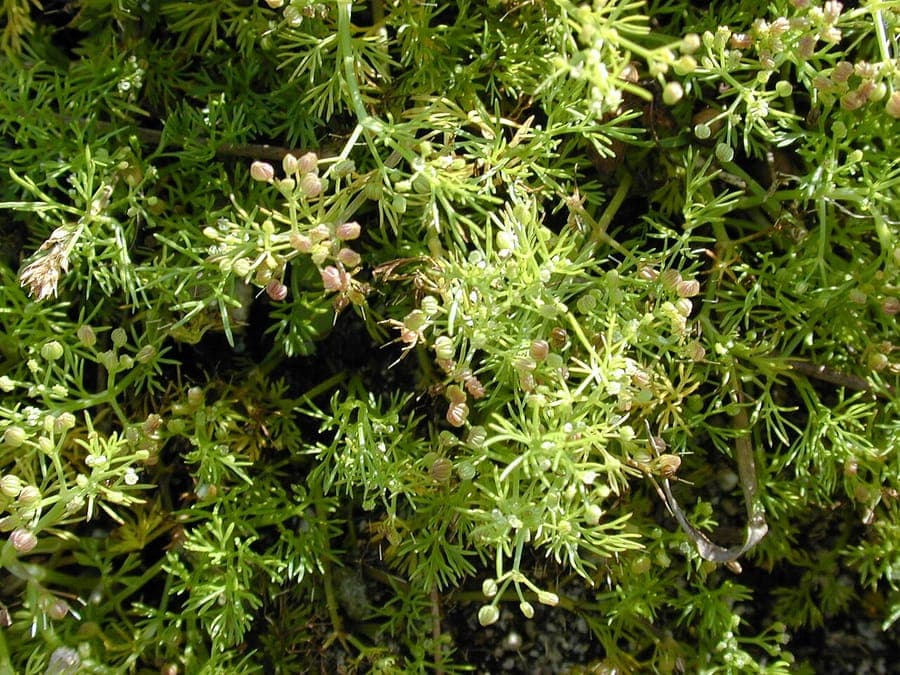
Forest & Kim Starr / CC BY 3.0, via Wikimedia Commons
Cyclospermum leptophyllum: complete guide
Cyclospermum leptophyllum
Want to see Cyclospermum leptophyllum: complete guide in your garden?
Full design in HD: €7.99
Look after your Cyclospermum leptophyllum with the GardenWorld app
Identify plants with your camera and get a care calendar with reminders for this plant.


Overview
Cyclospermum leptophyllum, also known as "Marsh parsley" or "Slender parsley", is an herbaceous plant from Mexico and South America. The plant is known for its fine, aromatic foliage and is widely used in the kitchen. It is an annual to perennial plant that reaches 20-60 cm in height.
Appearance and bloom
The plant has very fine, divided leaves that smell strongly of parsley. It grows upright in a bush-like form. The flowers are small, white flowers in umbel-shaped clusters that appear in summer. After flowering, the plant produces small seeds.
Ideal location
Cyclospermum leptophyllum loves warmth and adequate sunlight. Plant it in a warm, sunny to partially shaded spot. The plant is suitable for balcony pots, vegetable gardens and greenhouses.
Soil type
Use nutrient-rich, well-draining garden soil. The plant grows well in normal garden soil mixed with some compost. Add coarse sand for better drainage.
Watering
Water regularly so the soil stays consistently moist. The plant likes moist but not waterlogged soil. In summer water every 2 days. Water less frequently in winter.
Free preview
Want to see Cyclospermum leptophyllum: complete guide in your garden? Make a free preview of your design.
Pruning
Pruning encourages foliage growth. Regularly pinch off leaf tips for cooking. This also promotes compact growth.
Maintenance calendar
In spring, sow seeds or plant seedlings. May through October is the growth and harvest period. Water regularly during this time and feed once a month. November through April is dormancy with minimal maintenance.
Winter hardiness
Cyclospermum leptophyllum is not winter-hardy and must be kept indoors. The plant can tolerate temperatures down to about 10 degrees Celsius but grows best at 18-25 degrees. In warm areas it can be grown outdoors.
Companion plants
Cyclospermum leptophyllum combines well with other herbs such as basil, dill and coriander. Plant them together in herb gardens or pots.
Conclusion
Cyclospermum leptophyllum is a fantastic plant for lovers of exotic herbs and fine-leaved plants. It adds interesting herbal aroma to dishes. The plant is easy to grow and is available from herb growers. Visit gardenworld.app for more inspiration and plant advice.
Frequently asked questions about Cyclospermum leptophyllum
Is Cyclospermum leptophyllum winter hardy?
Cyclospermum leptophyllum is not winter-hardy and must be kept indoors. The plant can tolerate temperatures down to about 10 degrees Celsius but grows best at 18-25 degrees.
When and how do you prune Cyclospermum leptophyllum?
Pruning encourages foliage growth. Regularly pinch off leaf tips for cooking.
How much water does Cyclospermum leptophyllum need?
Water regularly so the soil stays consistently moist. The plant likes moist but not waterlogged soil.
Where does Cyclospermum leptophyllum grow best?
Cyclospermum leptophyllum loves warmth and adequate sunlight. Plant it in a warm, sunny to partially shaded spot.
What soil does Cyclospermum leptophyllum need?
Use nutrient-rich, well-draining garden soil. The plant grows well in normal garden soil mixed with some compost.

See it in your garden
See Cyclospermum leptophyllum in your garden
One photo of your garden and a few questions. You see the result in about a minute.
Try it with a photoIdentify this plant in your own garden. Identify a plant
Similar plants
Astrantia maxima: complete guide
Astrantia maxima
Everything about Astrantia maxima, the masterwort with broad pink ruffs: site, soil, pruning and hardiness for weeks of flowers in partial shade.
Whorled carrot: complete guide
Daucus involucratus
Daucus involucratus is a Mediterranean umbellifer with white flower heads framed by lacy bracts. Growing this gravel garden gem.
Daucus muricatus: complete guide
Daucus muricatus
Daucus muricatus, the spiny wild carrot, grows wild on Mediterranean coasts. Discover sowing, June-July bloom, and wildflower meadow use.
