
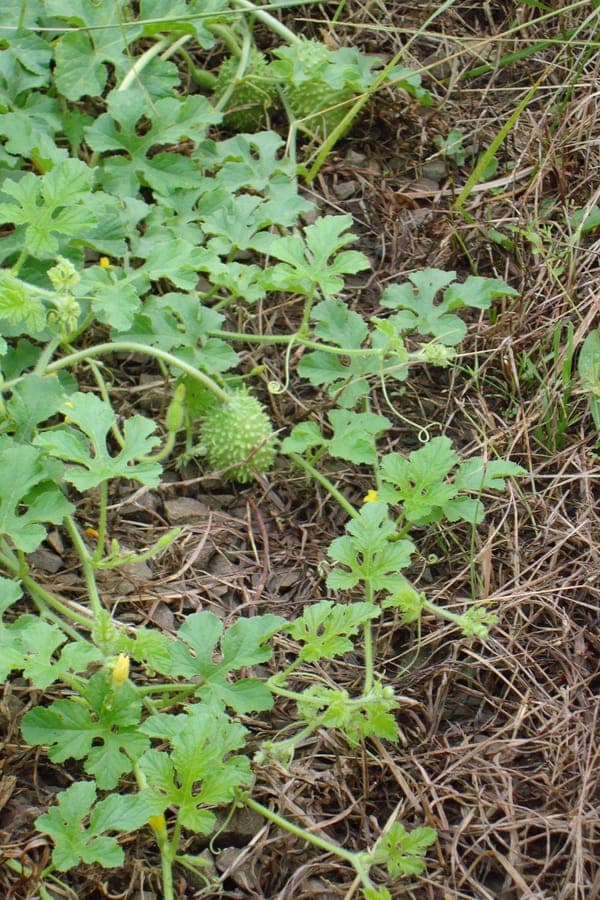
Eugenio Hansen, OFS / CC BY-SA 3.0, via Wikimedia Commons
West Indian gherkin: complete guide
Cucumis anguria
Want to see West Indian gherkin: complete guide in your garden?
1 minute, no credit card
Overview
The West Indian gherkin or Angurian (Cucumis anguria) is an annual climbing plant from the Cucurbitaceae family, originally from Africa. This plant produces small, about 5-7 cm long, spiky fruits that are edible and have a fresh taste. They are popular in Latin America and are locally grown for their young fruits.
Appearance and Bloom
The plant grows as a slender, hairy vine with hand-shaped leaves having 5-7 lobes. The flowers are small, yellow blooms that appear along the stem. The characteristic fruits are small, oval to round, green and covered with dense, short spines. When ripe, they turn yellow-green. The plant reaches 1-2 meters in length depending on support.
Ideal Location
West Indian gherkin thrives in full sun with at least 6-8 hours of direct sunlight daily. This warmth-loving plant prefers temperatures of 20-30 degrees Celsius. Place the plant where it can climb against a trellis, fence or pergola. Ensure adequate air circulation to prevent fungal diseases.
Soil
Well-draining, fertile soil is ideal. pH around 6.0-7.0 is optimal. Add rich organic matter such as compost before planting. The plant loves soil with good water-holding capacity but not waterlogged. Mulch around the plant helps retain moisture.
Free design
Want to see West Indian gherkin: complete guide in your garden? Make a free design now.
Watering
Regular watering is essential, especially as fruits develop. Keep the soil consistently moist during the growing season. Water at the base of the plant; avoid wetting foliage to prevent fungal diseases. In dry periods water more; check moisture levels regularly.
Pruning
Minimal pruning is needed. Only remove dead or damaged leaves. If the plant becomes too dense, remove some stems to improve air circulation. Side vines can be lightly pruned back to stimulate growth.
Maintenance Calendar
May-June: Plant out to full sun, provide rich soil. July-August: Water regularly, begin harvesting as fruits are small. September: Continue harvesting; plant becomes less productive. October: Final harvests; plant dies at first frost.
Winter Hardiness
West Indian gherkin is not hardy. This is a warmth-loving annual plant that dies at first frost. In temperate climates it is grown annually from seed or purchased as young plants.
Companion Plants
Corn or beans can be used as natural support. Cucumber and melon grow well together in the same warm and moist conditions. Herbs such as oregano and basil fit well in the same bed zone.
Closing
The West Indian gherkin is an interesting and productive vegetable plant for warmth-loving gardeners. With regular water and rich soil you will harvest numerous spiky fruits. Perfect for experimenting with exotic vegetables! Discover more edible plants on gardenworld.app/en and gardenworld.app/nl
Want to see West Indian gherkin: complete guide in your garden? Make a free design now.
Upload a photo, pick a style, and get a photorealistic design with plant list in under a minute.
No credit card required


Similar plants
Kiwano: complete guide
Cucumis metuliferus
Everything about growing kiwano: location, soil, watering, and harvesting this striking African horned cucumber with spiny orange fruits.
Sponge gourd: complete guide
Luffa aegyptiaca
Full guide to growing sponge gourd (Luffa aegyptiaca): sowing, care, harvesting edible fruits and drying natural loofah sponges in your garden.
Cucumis prophetarum: complete guide
Cucumis prophetarum
Wild cucumber is a fascinating climbing plant with remarkable spiky fruits. Learn how to grow this exotic annual from seed to harvest for decorative interest.