
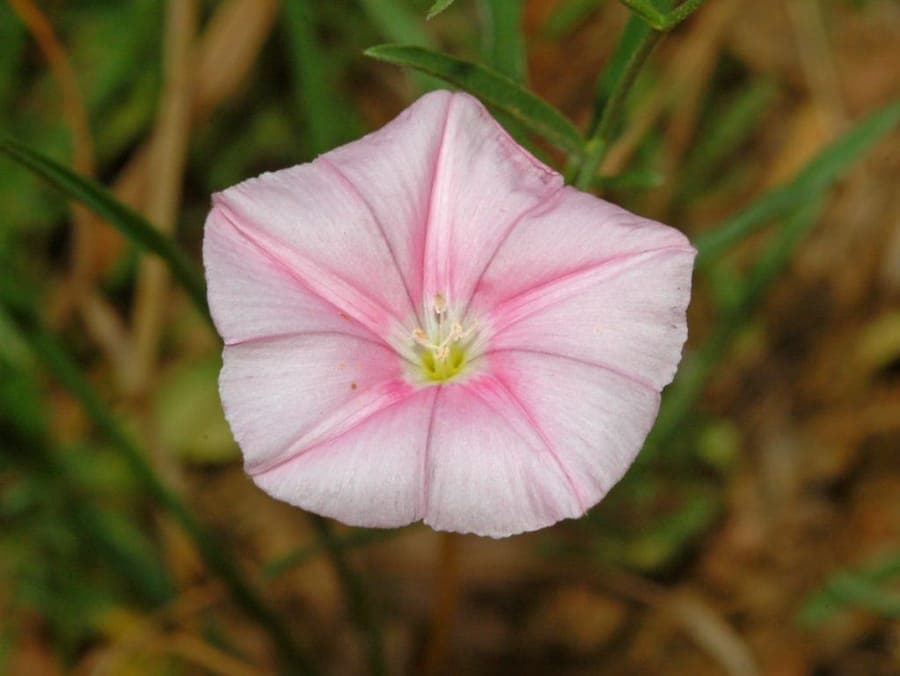
Hectonichus / CC BY-SA 3.0, via Wikimedia Commons
Cantabrian bindweed: complete guide to Convolvulus cantabrica
Convolvulus cantabrica
Want to see Cantabrian bindweed: complete guide to Convolvulus cantabrica in your garden?
1 minute, no credit card
Overview
Convolvulus cantabrica, commonly known as Cantabrian bindweed, is a perennial plant in the family Convolvulaceae native to southern and central Europe, the Mediterranean basin and extending east to Afghanistan. Its vast native range - spanning Spain, France, Italy, the Balkans, Turkey, the Caucasus, Iran and beyond - speaks to an impressive adaptability to warm, dry, calcium-rich conditions. Unlike its invasive relative the field bindweed (Convolvulus arvensis), this species is well-behaved in a garden setting. It forms a low, spreading, densely branched subshrub 30 to 60 cm tall, with softly hairy grey-green stems and narrow, lance-shaped leaves. From May through July it produces a continuous succession of trumpet-shaped flowers in shades of pink to soft purple, each about 2 to 3 cm wide. For gardeners seeking colour with very low maintenance, this plant is a rewarding choice. Visit gardenworld.app to discover garden designs that incorporate drought-tolerant Mediterranean plants.
Appearance and bloom cycle
The plant's stems are covered in silvery hairs, giving it a slightly glaucous, soft-textured appearance even when not in flower. Leaves are oblong to narrowly elliptic, 2 to 4 cm long. Flower buds appear from May and the blooming continues steadily until late July. Individual flowers follow the classic Convolvulus pattern: they open fully in the morning sunshine and close in the evening or on cloudy days. The flowers are borne in clusters of one to three at the tips of side shoots. In peak bloom, a well-established plant produces dozens of open flowers at any one time, creating a billowing effect of pink-mauve. After flowering, small, dry seed capsules form. In cold climates, above-ground stems die back in winter, but the woody rootstock is persistent and regenerates in spring.
Ideal location
Full sun is essential for best flowering - at least six hours of direct sunlight per day. Dry slopes, rock gardens, gravel borders, low retaining walls and south-facing beds are all ideal. The plant is at its best when it can enjoy the same baking conditions it experiences in its Mediterranean homeland: hot summers, full exposure and fast-draining soils. In partial shade, flowering diminishes significantly and the plant becomes leggy. A sheltered position against a south-facing wall helps in cooler climates. Avoid placing the plant in low-lying areas where cold air pools in winter or where water collects after heavy rain.
Soil
Convolvulus cantabrica thrives on well-drained, alkaline to neutral soil with a pH of 7.5 to 8. Sandy, gravelly or stony soils suit it perfectly. Rich, moisture-retentive garden soil is counterproductive and promotes lush, floppy stems at the expense of flowers. If your soil is clay-based, work in generous quantities of coarse grit or gravel before planting, or build a raised bed. A top-dressing of decorative stone chippings around the base of the plant improves drainage and air circulation and helps prevent slug damage at the crown.
Watering
Once established, Cantabrian bindweed requires very little supplemental watering. In the first season after planting, water weekly to help the root system develop. After that, water only during prolonged dry spells of more than three weeks. Standing water and poor drainage are harmful, especially in winter when cold wet soil can rot the crown. Container-grown specimens need more frequent watering, but always allow the compost to dry out fully between applications. Stop watering entirely in winter if temperatures drop below freezing.
Free design
Want to see Cantabrian bindweed: complete guide to Convolvulus cantabrica in your garden? Make a free design now.
Pruning
In early spring, when new shoots are visible at the base, cut all stems back to 10 to 15 cm above ground level. This promotes a compact, bushy habit and encourages abundant flowering. There is no need to deadhead individual flowers during summer - the plant manages this efficiently itself and the succession of buds keeps the display going. At the end of the season, you can shorten any excessively long stems for tidiness. After a hard frost that kills all top growth, cut back to ground level in March and wait for the rootstock to regenerate. Gardenworld.app offers design inspiration showing how low-maintenance perennials like this fit into a practical garden plan.
Maintenance calendar
February to March: assess overwintering; remove dead stems; apply a light dressing of lime if soil pH is below 7. April: new shoots emerge; cut back any remaining old stems; water to help establishment. May to July: peak flowering season; enjoy the display with minimal intervention. August: blooms diminish; optional light trim. September to October: stop feeding; let the plant prepare for dormancy. November to January: keep soil dry; apply a dry straw mulch over the crown if heavy frost is forecast.
Winter hardiness
Convolvulus cantabrica is rated USDA zones 7 to 9. With excellent drainage and a sheltered south-facing position it can survive zone 6 (average minimum -17 to -23 degrees Celsius) with protection. A dry mulch of straw or bark chips over the crown through December and January is advisable in zone 7. In zone 8 or 9, the plant overwinters without any protection. In colder zones, grow it as a summer annual, or lift the crown before the first hard frost and store it in a frost-free shed.
Companion plants
Pair Cantabrian bindweed with other sun-loving, drought-resistant Mediterranean plants. Lavender (Lavandula angustifolia) and rosemary bloom in a similar colour range and share the same soil preferences. Low-growing stonecrops (Sedum) act as a ground-level filler. Lamb's ears (Stachys byzantina) adds silvery texture that contrasts beautifully with the pink flowers. Small ornamental alliums provide early spring interest before the bindweed comes into bloom. Trailing rosemary or Phlomis fruticosa work well as taller framework plants. Look for all of these at specialist garden centres in the Mediterranean or dry-garden sections.
Ecological value
Convolvulus cantabrica is an excellent nectar source for bees, hoverflies and butterflies. The open, trumpet-shaped flowers are particularly attractive to long-tongued bumblebees and solitary bees such as mining bees. In a wildlife-friendly dry garden or on a sunny bank, this plant contributes meaningfully to pollinator habitat without the invasive tendencies of common bindweed.
Closing
Cantabrian bindweed is a resilient, ornamental plant that brings a long season of pink-purple flowers to sunny, dry gardens from May to July. Its drought tolerance, modest size and ecological value for pollinators make it an ideal choice for rock gardens, gravel borders and Mediterranean-style planting schemes. It thrives where many plants struggle, turning poor, fast-draining soil into a colourful feature. Find it at specialist nurseries and garden centres in late spring. To see how this plant fits into your own garden design, upload a photo of your front yard at gardenworld.app and receive a personalised Mediterranean planting plan.
Want to see Cantabrian bindweed: complete guide to Convolvulus cantabrica in your garden? Make a free design now.
Upload a photo, pick a style, and get a photorealistic design with plant list in under a minute.
10,000+ gardens designed already
No credit card required


Similar plants
Spreading alkaliweed: complete guide
Cressa truxillensis
Full growing guide for Cressa truxillensis, the salt-tolerant groundcover of alkaline flats: location, soil, watering, pruning and winter care.
Betony-leaved bindweed: complete guide
Convolvulus betonicifolius
Full guide to betony-leaved bindweed (Convolvulus betonicifolius): origin, appearance, ideal site, soil, watering and garden uses.
Ivyleaf morning glory: complete guide
Ipomoea hederacea
Everything about Ipomoea hederacea: location, soil and climbing care. A fast-growing annual vine with blue funnel flowers for sunny walls and pergolas.