
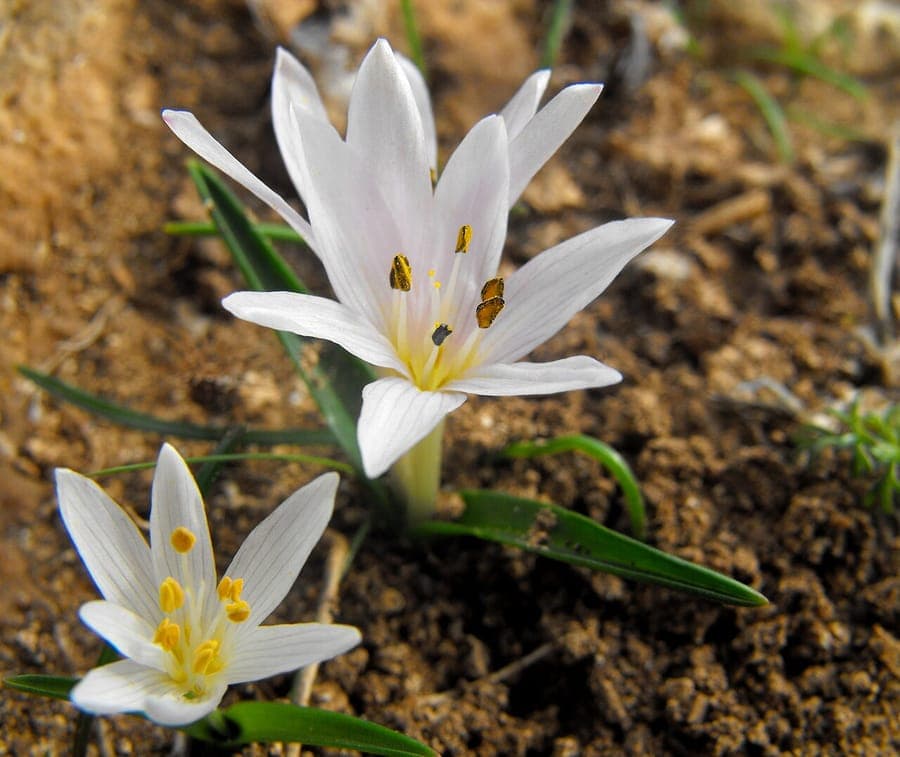
Jeffrey Sciberras / CC BY-SA 3.0, via Wikimedia Commons
Autumn Crocus Colchicum cupanii: complete guide
Colchicum cupanii
Want to see Autumn Crocus Colchicum cupanii: complete guide in your garden?
1 minute, no credit card
Overview
Colchicum cupanii is a small cormous perennial in the family Colchicaceae, native to a wide Mediterranean arc stretching from southern France and Corsica through Italy, Sardinia, Sicily, Albania, Greece, Crete, and across the sea to Algeria and Tunisia. It was first described in 1827 by the Sicilian botanist Giovanni Gussone and belongs to the same genus as the familiar large autumn crocus, though it is notably more slender and compact. In the wild it colonises dry, stony hillsides, open scrub and limestone grasslands at low to moderate altitudes. For gardeners who want late-season colour with minimal effort, this species offers an elegant, low-maintenance solution. You can explore garden designs featuring autumn-flowering bulbs at gardenworld.app.
Appearance and bloom cycle
The plant grows from small, egg-shaped corms between 2 and 4 cm across. In September and October, and sometimes into November, slender flower stems emerge directly from the ground before any foliage appears - a phenomenon sometimes called "naked ladies" in folk terminology, referring to the leafless stems. The flowers are crocus-like in form, with six perianth segments in lilac to rose-purple, measuring 3 to 5 cm across. After flowering, usually in January through March, narrow strap-shaped leaves appear and grow throughout winter and spring before dying back in May. A mature corm can produce two to four flowers simultaneously, making even a small planting visually effective in autumn borders.
Ideal location
Colchicum cupanii performs best in a full-sun to lightly shaded position. South-facing or south-west-facing borders, rock gardens, raised beds and dry slopes are all suitable. The species requires a warm, dry dormancy period in summer, mirroring conditions in its Mediterranean homeland. Planting against a south-facing wall in cooler climates helps accumulate the warmth the corms need during the growing season. Avoid low-lying positions where water pools after rain. In shade, flowering may be reduced, but the plant will tolerate dappled light under deciduous trees provided the summer soil is dry.
Soil
This species thrives in well-drained, calcium-rich soil with a pH of 7.5 to 8. Heavy clay must be amended with coarse grit and horticultural sand to improve drainage. On light, sandy or stony soils the plant is entirely at home. A layer of coarse gravel over the planting area helps prevent moisture sitting around the corms and deters slugs. Soil fertility is not critical - Colchicum cupanii does well on lean to moderately fertile ground and does not benefit from heavy annual feeding. Excess nitrogen encourages lush foliage at the expense of flowers.
Watering
During the autumn flowering period, the plant needs little supplemental water unless conditions are exceptionally dry. In that case, a modest weekly watering of 1 to 2 litres per group of corms is sufficient. Through winter and early spring when leaves are present, natural rainfall generally meets the plant's needs. Once the foliage begins to yellow in May, stop watering entirely. The summer dormancy must be dry: corms should receive as little moisture as possible between June and August. Overwatering in summer is the primary cause of corm rot in Mediterranean bulbous plants.
Free design
Want to see Autumn Crocus Colchicum cupanii: complete guide in your garden? Make a free design now.
Pruning
Colchicum cupanii requires virtually no pruning. Spent flowers may be left to fall naturally. It is essential, however, to allow the spring foliage to grow and yellow naturally before removal. The leaves manufacture the reserves stored in the corm for the following year's bloom. Cutting back green leaves prematurely leads to weakened flowering or complete failure to bloom the next autumn. If the yellowing foliage in a mixed border is visually distracting, plant low-growing neighbours such as hardy geraniums or creeping thyme to mask it without harming the leaves.
Maintenance calendar
September to October: prime flowering season; enjoy and photograph for design inspiration at gardenworld.app. November to December: flowers finish; corms rest underground. January to March: foliage emerges; no action required. April to May: leaves grow and begin to yellow; cease watering. June to August: full summer dormancy; keep dry; lift and divide overcrowded corms if desired. Late August: plant new corms 8 to 10 cm deep and 10 cm apart.
Winter hardiness
Colchicum cupanii is rated USDA zones 6b to 9. In its Mediterranean homeland, ground frost is rare. In northern European gardens (zones 7-8), the species is reliably hardy provided drainage is excellent. On wet soils in cold winters, corm losses can occur. A dry mulch of straw or bark chips applied in December offers useful protection. Corms grown in containers can be moved to an unheated but frost-free shed or garage during severe cold snaps.
Companion plants
Pair Colchicum cupanii with other autumn-flowering gems such as Cyclamen hederifolium, whose marbled foliage bridges the gap between the crocus flowers and the following spring. Sternbergia lutea, which produces bright yellow crocus-like flowers at almost the same time, creates a striking contrast. Low carpeting plants - creeping thyme, stonecrops (Sedum) or alpine phlox - fill the space during summer dormancy and give the bed a tidy appearance. In a rock garden, small ornamental sages or dwarf lavender complete the Mediterranean mood without competing aggressively for root space.
Closing
Colchicum cupanii is a charming and somewhat overlooked autumn crocus that rewards gardeners with minimal effort for maximum seasonal impact. Its Mediterranean origins, slender lilac flowers emerging from bare earth, and compact corm size make it an ideal candidate for rock gardens, dry gravel borders and warm walled beds. When planted in groups of ten or more, the massed lilac cups create a genuinely striking display that few other autumn plants can match for surprise value. Because the flowers appear before the leaves, the effect each September feels almost magical - bare ground suddenly studded with colour. Corms are available from specialist bulb nurseries and garden centres in late summer; look for them alongside the Colchicum autumnale range. Buy named cultivars for larger flowers if impact is the priority. To see how this plant might fit into your own front garden, upload a photo at gardenworld.app and receive a personalised planting design featuring Mediterranean bulbs and drought-tolerant companions.
Want to see Autumn Crocus Colchicum cupanii: complete guide in your garden? Make a free design now.
Upload a photo, pick a style, and get a photorealistic design with plant list in under a minute.
10,000+ gardens designed already
No credit card required


Similar plants
Mountain autumn crocus: complete guide
Colchicum montanum
Grow Colchicum montanum successfully: planting depth, drainage, companion plants, and autumn blooming tips for this mountain bulb.
Corsican autumn crocus: complete guide
Colchicum corsicum
Everything about Colchicum corsicum: bloom time, ideal site, bulb care, toxicity and winter hardiness for gardeners.
Bellwort: complete guide
Uvularia grandiflora
Uvularia grandiflora, a woodland treasure. Discover cultivation, elegant appearance and shade-loving characteristics.