
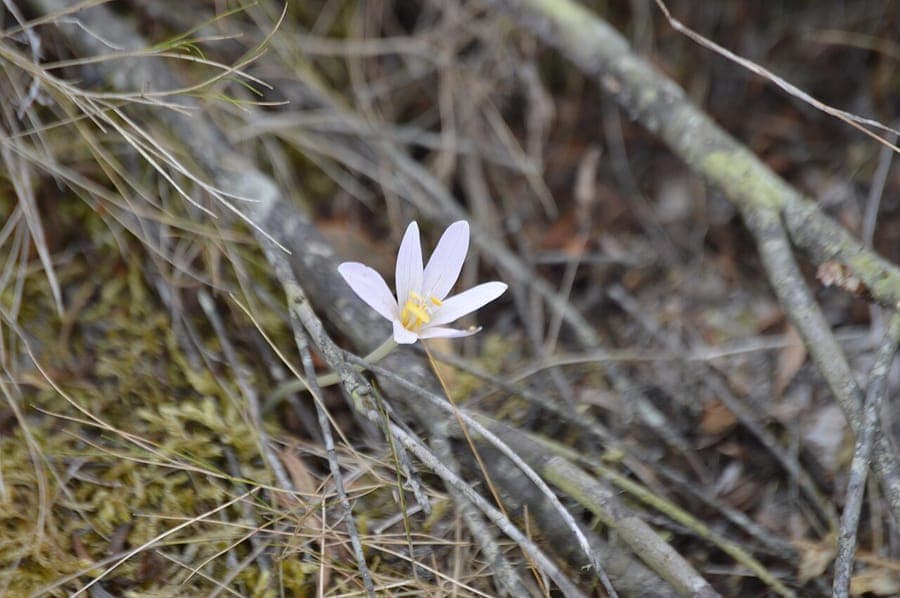
Zoovolunteer1961 / CC BY-SA 4.0, via Wikimedia Commons
Corsican autumn crocus: complete guide
Colchicum corsicum
Want to see Corsican autumn crocus: complete guide in your garden?
1 minute, no credit card
Overview
The Corsican autumn crocus (Colchicum corsicum) is a rare, small-bulbed perennial belonging to the family Colchicaceae. It is endemic to the islands of Corsica and Sardinia, where it grows on rocky, well-drained slopes, in Mediterranean scrubland and among thin soils overlying granite and limestone. The species was formally described in 1879 by the British botanist J.G. Baker and is accepted as a distinct species by Plants of the World Online and the World Flora Online. On gardenworld.app you can explore how to incorporate specialist bulbs like this into a broader garden planting scheme.
Like all Colchicum species, Colchicum corsicum follows a distinctive growth cycle that catches most gardeners by surprise: the flowers emerge from bare earth in late summer and autumn, with no leaves in sight. The leaves appear in winter and early spring and die back by early summer. This behaviour means the plant is invisible for months and then produces blooms without any fanfare of foliage. It is a remarkable sight in a rock garden or gravel bed and often prompts questions from visitors who cannot imagine what is flowering.
This species is smaller and more delicate than the more widely known Colchicum autumnale found on European meadows. Its flowers are finer and its leaves narrower. It is a plant for enthusiasts of rare or unusual bulbs who appreciate botanical precision as much as garden effect. Note that all parts of the plant are toxic to humans and animals.
Appearance and bloom cycle
Colchicum corsicum produces small corms that persist underground through the summer. In August and September, the flowers push directly through the bare soil, appearing before any leaf growth. Each corm typically produces two to five flowers over the course of several weeks. The blooms are crocus-like in shape, funnel to star-shaped, with six petals in shades of soft purple-lilac to rose-pink. They stand 5 to 8 cm tall and are delicate and elegant in character.
Once the flowers fade, usually by October, the plant disappears below ground again. From January through to April, the narrow, upright, dark green leaves emerge. These are typically 10 to 20 cm long, resembling broad crocus foliage. The leaves photosynthesize and feed the corm through late winter and spring. By May or June they turn yellow and die back completely, leaving the plant invisible underground until the following August. It is important never to cut the leaves back while they are still green, as the corm depends on them to build up its energy reserves for the next flowering season.
Ideal location
This plant needs a warm, sunny to lightly semi-shaded spot, with a Trefle light score of 7 out of 10 indicating it performs best with at least four to six hours of direct sun each day. It thrives in conditions that mimic its rocky, wind-swept native habitat: excellent drainage, low soil fertility and warmth stored in surrounding rocks or gravel.
In the garden, a rock garden, raised bed, gravel garden or sunny dry border are ideal settings. It can also be planted between low ground-cover perennials that die back by late summer, allowing the Colchicum flowers to emerge through the carpet. Avoid damp, heavy or poorly draining soils, as persistent moisture around the corm during the summer dormancy period will cause rot.
Soil requirements
Colchicum corsicum prefers soils with a pH between 5.0 and 5.5, which is mildly acidic - somewhat unusual for a Mediterranean species but reflecting the granite-dominated soils of Corsica. It requires a poor, dry, free-draining substrate with minimal organic matter. Rich garden soil or clay-heavy beds lead to excessive leaf growth and poor or absent flowering.
When planting, work coarse grit, sharp sand or fine gravel into the existing soil to improve drainage. Avoid adding garden compost or fertiliser. If planting in containers, use a specialist alpine or bulb mix with added grit. Specialist bulb nurseries and garden centres in the UK and Ireland stock appropriate gritty compost blends for Mediterranean bulbs.
Free design
Want to see Corsican autumn crocus: complete guide in your garden? Make a free design now.
Watering
This species is distinctly drought-tolerant and has a genuine dormancy requirement during summer. The corm is underground and at rest from May through July, and this period must be dry to prevent rot. Do not water the planting area during summer dormancy. In a typical British or Dutch garden the summer rainfall may be sufficient; in areas of heavier summer rain, raised beds or overhead protection may be needed.
In late summer, just before the flowers appear, a small amount of moisture can help trigger blooming. During the leaf period from January to April, light watering is acceptable when rainfall is scarce, but the soil should never become waterlogged. Allow the upper layer to dry between waterings. In containers, keep the compost barely moist during the growing season and completely dry during summer.
Managing the plant
Colchicum corsicum needs no traditional pruning. The flowers naturally collapse and shrivel after blooming, and the leaves die back on their own schedule in late spring. Resist the urge to tidy up the yellow leaves prematurely, as the corm requires this foliage to store energy for the following year's flowers. Only remove leaves once they have turned fully brown and dry.
If you wish to allow the plant to seed around naturally, leave the seed capsules to ripen and split. Be patient: seedlings take several years to reach flowering size. For a neat appearance in a formal setting, the spent flower remnants can be carefully lifted and discarded, but this has no effect on the corm's health.
Maintenance calendar
January to April: leaf growth period; allow foliage to develop fully and feed the corm naturally. May to July: full dormancy; no watering, no attention needed. August: flower buds emerge; if the soil is extremely dry, a cautious light watering can help trigger blooming. September: peak flowering; enjoy the purple blooms. October to December: post-bloom dormancy; protect corms from excessive wet with a gravel mulch and ensure good drainage through winter.
Winter hardiness
Colchicum corsicum is reliably perennial in USDA zones 6 to 9. In practice this covers much of maritime western Europe, including southern Britain, the Benelux countries and the milder parts of France and Germany. The main threat in northern European winters is not frost per se but persistent wet soil around the corms during dormancy. Excellent drainage is more critical than frost protection.
In areas with cold winters, a layer of coarse grit or gravel around and over the planting area provides both drainage and modest insulation. In containers, bring pots under cover during winter and keep almost dry. In coastal areas of southern England, the plant can survive outdoors with no special protection as long as drainage is adequate. Garden centres in the UK occasionally stock Colchicum bulbs in late summer, when they should be planted immediately for autumn flowering.
Companion plants
Because the Corsican autumn crocus is small and flowers in autumn while most plants are winding down, it pairs well with low-growing companions that serve as a carpet without smothering the emerging flowers. Good partners include Sedum (stonecrops), Thymus serpyllum (wild thyme), Festuca glauca (blue fescue) and Sempervivum (houseleek). All share a preference for dry, gritty, well-drained soils.
Cyclamen hederifolium is a particularly harmonious companion, also flowering in autumn with a similar surprise effect from bare earth. Together they create a sustained display from late August through October. Avoid tall or competitive neighbours that would shade or crowd the small Colchicum blooms. For garden design ideas combining rare bulbs and rock garden plants, visit gardenworld.app for inspiration and planning tools.
Closing thoughts
The Corsican autumn crocus is a specialist's plant that rewards careful placement and the discipline to leave it undisturbed. Its delicate purple flowers in August and September bring colour to a garden at precisely the moment when most other blooms are fading. With the right dry, gritty soil, full sun and strict summer drought, it is more straightforward to grow than its rarity might suggest. Always keep in mind that all parts of the plant are toxic and handle it with care around children and pets.
Want to see Corsican autumn crocus: complete guide in your garden? Make a free design now.
Upload a photo, pick a style, and get a photorealistic design with plant list in under a minute.
10,000+ gardens designed already
No credit card required


Similar plants
Mountain autumn crocus: complete guide
Colchicum montanum
Grow Colchicum montanum successfully: planting depth, drainage, companion plants, and autumn blooming tips for this mountain bulb.
Autumn Crocus Colchicum cupanii: complete guide
Colchicum cupanii
Complete growing guide for Colchicum cupanii: site requirements, soil preparation, watering, hardiness and companion planting ideas.
Bellwort: complete guide
Uvularia grandiflora
Uvularia grandiflora, a woodland treasure. Discover cultivation, elegant appearance and shade-loving characteristics.