
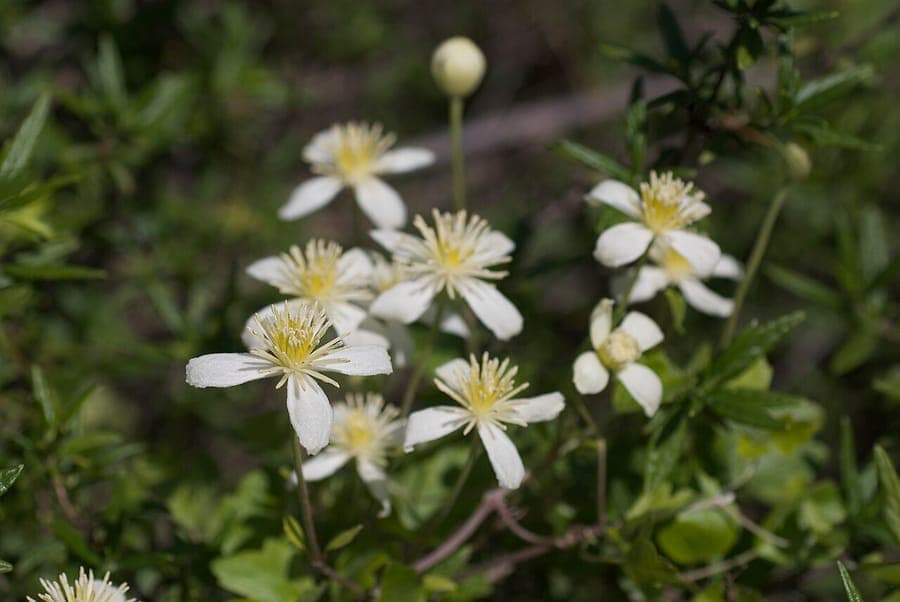
Eric in SF / CC BY-SA 3.0, via Wikimedia Commons
Clematis lasiantha: complete guide
Clematis lasiantha
Want to see Clematis lasiantha: complete guide in your garden?
1 minute, no credit card
Overview
Clematis lasiantha, commonly called pipestem clematis, is a vigorous, fast-growing climbing vine from the Ranunculaceae family. Native to California and northern Mexico, this clematis is valued for its abundance of white flowers and exceptional adaptation to dry climates.
Unlike many clematis varieties, pipestem clematis is exceptionally drought-tolerant and low-maintenance. Once established, the plant demands minimal water or feeding. The flowers feature hairy sepals, giving them a distinctive textured appearance.
Appearance and bloom
Pipestem clematis grows as a vigorous, woody climbing vine with delicate leaflets. The leaves are green and elegantly composed of three leaflets. From April through May, large, open white flowers with four petals and prominent yellow stamens appear.
The flowers measure approximately 4-6 centimeters across and are notably hairy - especially the sepals, which give the characteristic fuzzy appearance. After flowering, decorative silvery seed heads develop and remain attractive through winter.
Ideal location
Place pipestem clematis in a warm, sunny location. The plant also tolerates partial shade but flowers most abundantly in full sun. This makes it ideal for south-facing walls, pergolas, and fence lines. Choose a location with good air circulation.
The plant requires space to ramble and ultimately reaches 4-6 meters long. Provide support via trellis, wires, or other framework.
Soil
Pipestem clematis thrives on dry to moderately moist soil and is not particular about composition. Sandy, loamy, and even clayey soils are acceptable as long as drainage is good. The plant prefers slightly acidic to neutral soil (pH 6.5-7.5).
At planting, amend with compost, but thereafter additional feeding is unnecessary. This plant thrives on poor, dry soils.
Free design
Want to see Clematis lasiantha: complete guide in your garden? Make a free design now.
Watering
Once established, pipestem clematis is exceptionally drought-tolerant. This represents one of the major advantages of this variety. Water regularly during the first growing season, but afterward rarely. During very dry summers, occasional water prevents flowering decline.
Overwatering is more dangerous than underwatering. Ensure good drainage and avoid waterlogged conditions.
Pruning
Pipestem clematis flowers on old wood and requires minimal pruning. After flowering, carefully remove tangled growth and damaged sections. Following bloom (July-August), light pruning may shape the plant, but is not strictly necessary.
Heavy pruning results in flower bud loss. Better to allow one wild year than to remove all growth.
Maintenance calendar
March: Check for winter damage, remove dead wood. April-May: Enjoy abundant blooms, water minimally. June-August: Allow plant growth, light maintenance pruning. September-October: Prepare for dormancy. November-February: Winter rest, no maintenance required.
Winter hardiness
Clematis lasiantha is hardy to zones 8-9, meaning it cannot reliably stay outdoors in all European regions. In areas with severe winters, the plant requires protection or indoor overwintering. Where hardy, above-ground wood dies but roots regenerate in spring.
Companion plants
Combine pipestem clematis with other drought-tolerant vines such as Virginia creeper and climbing shrubs. Against walls, it grows beautifully alongside forsythia or other flowering shrubs. The white flowers contrast beautifully with dark foliage.
In Mediterranean gardens, it pairs well with roses and lavender.
Conclusion
Pipestem clematis is an excellent choice for those seeking a fast-growing, floriferous climbing vine without daily watering requirements. With minimal maintenance, this clematis provides years of white flower profusion on walls and pergolas.
Local garden centers typically stock planting material. For garden design ideas, consult gardenworld.app.
Want to see Clematis lasiantha: complete guide in your garden? Make a free design now.
Upload a photo, pick a style, and get a photorealistic design with plant list in under a minute.
No credit card required


Similar plants
Drummond's anemone: complete guide
Anemone drummondii
Discover Drummond's anemone (Anemone drummondii): a silvery-grey mountain plant for cool rock gardens and alpine troughs.
Korean clematis: complete guide
Clematis serratifolia
Clematis serratifolia is a hardy climber with fragrant yellow bell flowers in August-September. Pruning group 3, location and care tips.
Aquilegia brevistyla: complete guide
Aquilegia brevistyla
Discover Aquilegia brevistyla, the elegant North American columbine. Growing tips, shade tolerance, and design ideas for woodland and shadowed gardens.