
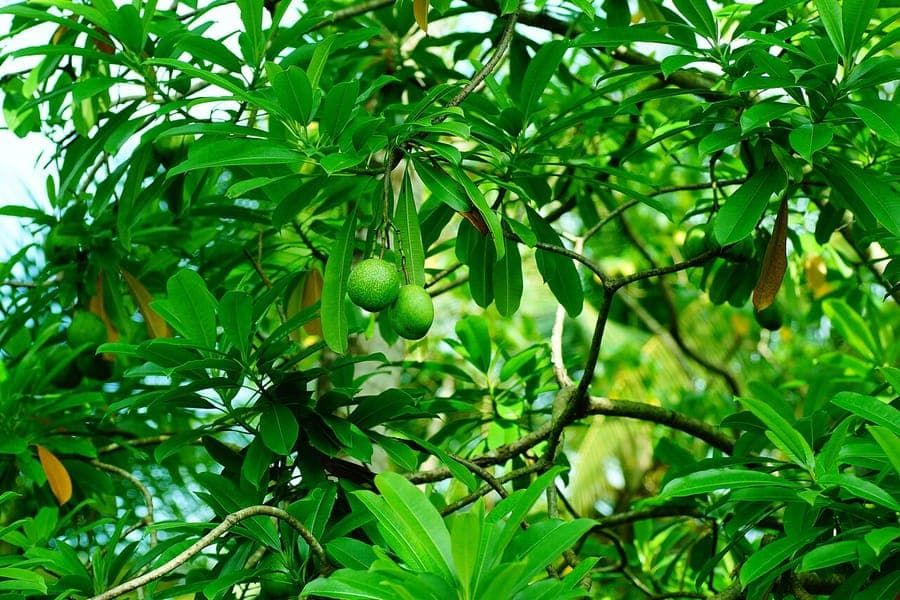
Vengolis / CC BY-SA 3.0, via Wikimedia Commons
Cerbera odollam: complete guide
Cerbera odollam
Want to see Cerbera odollam: complete guide in your garden?
1 minute, no credit card
Overview
The Pong-pong tree (Cerbera odollam), also known as sea mango or Chattankai, is a fascinating tropical plant native to southern India through the Pacific. This beautiful tree produces striking white flowers with yellow centers and characteristic kidney-shaped, golden-yellow fruits. Although the plant is highly toxic and must be handled carefully, it remains a botanically valuable specimen for tropical flora enthusiasts. In the Netherlands, the plant is primarily cultivated in greenhouses and specialized collections.
Appearance & Bloom
Cerbera odollam is a deciduous to semi-evergreen tree that can reach up to 10 meters in its natural habitat. In container culture, this plant typically reaches 2-4 meters. The leaves are dark green, glossy and elongated, typical of many tropical species. Flowers appear during warm seasons (April-October) and are especially present during rainy periods. They are pure white with yellow or red centers, fragrant, and approximately 3-4 centimeters in diameter. The characteristic fruits that follow are smooth, golden-yellow, and have a hard shell with a single large seed.
Ideal Location
The Pong-pong tree requires a very warm, bright location with at least 6-8 hours of direct sunlight daily. In the Netherlands, this plant must be kept for most of the year in a heated greenhouse or sunny indoor window, with minimum winter temperatures around 15-18 degrees Celsius. During summer months (June-August), plants can carefully be placed outdoors in very sheltered locations with southern exposure. Avoid all types of drafts and strong wind fluctuations.
Soil
Cerbera odollam grows best in a well-draining, nutrient-rich potting soil based on coconut fiber or peat substrate, supplemented with approximately 25-30% perlite or river sand for optimal drainage. A pH between 6.5-7.5 is ideal. The plant cannot tolerate standing water around the roots. Use terracotta pots with multiple drainage holes. Repotting after 2-3 years is beneficial.
Free design
Want to see Cerbera odollam: complete guide in your garden? Make a free design now.
Watering
Cerbera odollam should be kept moist but not excessively wet. During the growing season (April-October), the soil should remain moist but not waterlogged. Reduce watering significantly during winter months when temperatures are lower. Use rainwater or distilled water, as tap water with high chlorine content can cause leaf browning. Mist the foliage occasionally to maintain humidity levels around 60-70%, which mimics its natural rainforest habitat.
Pruning
The Pong-pong tree responds well to moderate pruning after the flowering period. This helps maintain a more compact, bushy form and stimulates new leaf growth. Always remove dead branches and weak growth shoots. Prune carefully in early spring before new growth begins. Always wear gloves as all parts of the plant are toxic.
Maintenance Calendar
January-February: Minimal watering; check for pests. March-April: Gradually increase temperature; water more. May-October: Regular watering and feeding; flowering possible. November-December: Reduce watering; prepare for rest period; gradually lower temperature.
Winter Hardiness
Cerbera odollam is absolutely not winter hardy in the Netherlands. The plant cannot tolerate temperatures below 12-15 degrees Celsius and must overwinter in heated greenhouses with other tropical plants. Prolonged exposure to temperatures below 10 degrees Celsius can cause permanent damage to roots and stems. Protect against all frost.
Companion Plants
In greenhouse collections, Cerbera odollam works well with other tropical foliage such as Anthurium, Monstera and Ficus species. Never plant directly together in the same pot due to toxicity. Create space between individuals so air circulation remains optimal.
Closing
Cerbera odollam is a beautiful but demanding tropical specimen, perfectly suited for dedicated greenhouse keepers with experience in subtropical collections. With care for warmth, light, and humidity, this exceptional tree will provide fascination for many years with its elegant white flowers and golden-yellow fruits. Always keep the plant away from children and pets due to toxic properties.
Want to see Cerbera odollam: complete guide in your garden? Make a free design now.
Upload a photo, pick a style, and get a photorealistic design with plant list in under a minute.
10,000+ gardens designed already
No credit card required


Similar plants
Asclepias speciosa: complete guide
Asclepias speciosa
Showy milkweed: striking pink-white flowers, fragrant blooms. Essential monarch butterfly host plant.
Plumeria obtusa: complete guide
Plumeria obtusa
Discover the Singapore graveyard flower: an exotic evergreen with mesmerizing white blooms and exquisite fragrance. Expert cultivation, care, and maintenance tips.
Wrightia arborea: complete guide
Wrightia arborea
Wrightia arborea, known as doodhi, is an elegant tree from South Asia with delicate white flowers. Discover how to cultivate this exotic plant.