
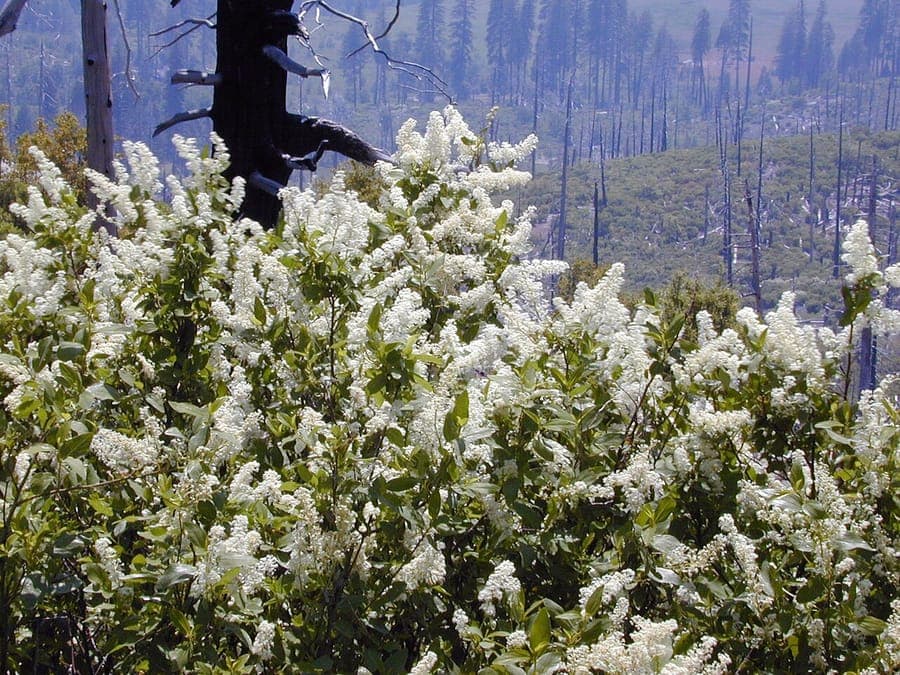
Dawn Endico, Menlo Park, California / CC BY-SA 2.0, via Wikimedia Commons
Deerbrush ceanothus: complete guide
Ceanothus integerrimus
Want to see Deerbrush ceanothus: complete guide in your garden?
1 minute, no credit card
Overview
Ceanothus integerrimus, commonly called deerbrush or deerbrush ceanothus, is a deciduous to semi-evergreen shrub native to the western United States and northern Mexico. Its native range extends across California, Oregon, Washington, Arizona, and New Mexico, where it grows in chaparral, open woodland, and mountain slopes from near sea level up to considerable altitudes. First formally described in 1838 by Hooker and Arnott, it belongs to the family Rhamnaceae and is one of the more widely distributed and ecologically significant species within the genus Ceanothus.
The common name deerbrush reflects its ecological role: deer, and in some areas elk, browse heavily on the leaves and young shoots. This heavy grazing pressure has shaped the plant's resilience and its capacity to resprout vigorously after damage, whether from browsing animals, fire, or pruning. In garden cultivation, this resilience translates into a forgiving and adaptable shrub that handles the occasional hard pruning or drought episode without permanent harm.
For the gardener, the principal attraction is the flowering display. Each spring, typically in May and June, the branches become clothed in dense panicles of white to pale blue flowers that attract a wide range of bees, bumblebees, and butterflies. The flowers are fragrant in a light, fresh way, and a bush in full bloom is genuinely attractive. Combined with its drought tolerance once established, this makes it a valuable addition to dry, sunny borders and Mediterranean-style gardens. On gardenworld.app you can explore planting designs that incorporate drought-tolerant flowering shrubs like deerbrush for summer-dry conditions.
The growth habit is multi-stemmed with a moderate growth rate. Plants can reach 2 to 4 metres in their native range but are usually somewhat smaller in garden cultivation, particularly in cooler, moister climates.
Appearance and bloom cycle
The leaves of Ceanothus integerrimus are distinctive within the genus. The species name "integerrimus" means "most entire" and refers to the characteristically smooth, untoothed leaf margin - a useful identification feature when comparing it to other ceanothus species that have toothed leaves. Leaves are broadly oval to elliptical, 3 to 7 cm long, with a fresh green upper surface and a paler, finely hairy underside. Unlike many cultivated ceanothus varieties, deerbrush is deciduous to semi-deciduous: it drops its leaves in autumn or in response to drought, and this is entirely normal behaviour.
The flowers are produced in elongated panicles in May and June. Botanical sources describe the flower colour as white, though in practice a very pale blue-white to white spectrum is common. The individual flowers are tiny but packed tightly into panicles that can be 10 to 20 cm long, giving the effect of a foamy, cloud-like display. The fragrance is mild and pleasant. Flowering is highly attractive to pollinators, making this a useful plant for biodiversity-focused gardeners.
After flowering, small three-lobed seed capsules develop, turning brown when ripe and splitting to disperse seeds. These fruits are inconspicuous. The bark on older stems is greyish and somewhat roughened; younger stems are greener and more flexible.
The overall habit is broadly spreading and somewhat open, with arching stems growing from a multi-stemmed base. In garden conditions, heights of 1.5 to 2.5 metres are typical.
Ideal location
Deerbrush demands full sun. Five to six or more hours of direct sunshine per day is the minimum for good flowering and healthy, compact growth. Shadier conditions produce a lax, open habit with noticeably fewer flowers. In cloudy or northerly climates, choosing the warmest, most sun-exposed position in the garden becomes especially important.
The species is more tolerant of wind than some of the tenderer ceanothus varieties, reflecting its origins on exposed western American hillsides. However, sustained cold wind in winter can cause leaf browning and dieback on exposed shoots. A position with the shelter of a south-facing wall or a windbreak hedge to the north and west provides the ideal balance.
Avoid frost pockets. Cold air drainage is important for a plant that is borderline hardy in many European climates. A gently sloping position or a raised bed allows cold air to move away from the plant on still winter nights.
In the UK and north-western Europe generally, a south-facing wall position is the safest choice. The reflected warmth helps the wood ripen fully in late summer, which improves cold hardiness. The wall also provides a degree of frost protection on cold nights.
Soil
Soil requirements are crucial. Ceanothus integerrimus has a notably alkaline preference compared to some of its relatives, thriving in soils with a pH of 7.1 to 8.5. This means it actually performs better in the slightly chalky or limey soils found in many gardens than it would in acid conditions - an unusual characteristic among western American shrubs.
Free drainage is the other non-negotiable requirement. The roots of this plant evolved in soils that drain rapidly and dry out in summer. Waterlogged or persistently moist conditions cause root rot, particularly in combination with cold. If your garden soil is heavy clay, improve drainage by incorporating grit or coarse sand generously, or build a raised bed.
Fertility requirements are low. Ceanothus species are adapted to poor soils and support nitrogen fixation through symbiotic bacteria. Rich, heavily fertilised soils produce lush but structurally weak growth with reduced flowering. Apply no nitrogen-rich fertiliser. A surface mulch of coarse gravel keeps the soil cool, conserves some moisture without causing waterlogging, and suppresses weeds without the need for disruptive cultivation near the roots.
Disturbance of the roots of established plants should be minimised. Deep cultivation or aggressive weeding near the base can cause sudden decline even in otherwise healthy shrubs.
Free design
Want to see Deerbrush ceanothus: complete guide in your garden? Make a free design now.
Watering
Once fully established - typically after the first or second growing season - Ceanothus integerrimus is genuinely drought tolerant. In its native California range, it survives months of complete summer drought without supplementary water. In the moister climate of north-western Europe, this means established plants need very little irrigation in all but the most exceptional dry summers.
In the first growing season, consistent watering is necessary. Deep, infrequent watering - once a week in dry weather, allowing the soil to dry substantially between sessions - encourages the deep root development that underpins long-term drought tolerance. Shallow, frequent watering creates a shallow root system that remains dependent on supplementary irrigation.
From the second year onwards, reduce irrigation progressively. In summer, err on the side of less rather than more. Overwatering in summer is the most common cause of failure with ceanothus in European gardens. The problem is often mistaken for drought stress because the symptoms look similar, but applying more water in response makes things dramatically worse.
In winter, wet roots combined with frost represent the greatest risk. Good drainage is far more protective than any amount of winter watering management.
Pruning
The single most important rule for pruning Ceanothus integerrimus is: do not cut back into old, bare wood. Unlike many garden shrubs that regenerate readily from old stumps, ceanothus does not reliably produce new growth from mature, leafless stems. Hard pruning into old wood generally leads to the death of the pruned branches rather than vigorous regrowth.
The correct approach is light post-flowering pruning. Immediately after the flowers have finished - typically late June in most European gardens - trim the flowered shoots back by about one third. Cut to just above a healthy leaf or a visible bud. This keeps the plant shapely, removes the spent flower clusters, and stimulates the new growth on which next year's flowers will form.
Remove dead, damaged, or crossing branches at any time. Always use clean, sharp tools and prune in dry weather to minimise the risk of fungal infection through fresh cuts.
For young plants in the first two to three years, do minimal pruning and allow the plant to establish a strong framework. Light pinching of shoot tips can encourage bushier growth in the early years without the risks associated with harder cutting.
If the plant becomes overly large or woody over many years, gradual renovation over two to three seasons - removing the oldest stems progressively each year after flowering - is safer than attempting a single drastic rejuvenation cut.
Maintenance calendar
January - February: dormancy. Check for frost damage. Ensure drainage around the roots is functioning. No pruning.
March: first signs of growth. Remove any winter-killed shoot tips. No fertiliser needed.
April - May: leaves expand and flower buds develop. No irrigation needed unless soil is completely dry. Observe for early pest activity.
June: peak flowering. Enjoy the display and note pollinator activity. Begin post-flowering pruning as soon as the last flowers fade.
July: new growth following pruning. Keep watering minimal. Watch for spider mite in very hot, dry conditions.
August - September: new shoots ripen and flower buds for next year are initiated. No pruning, no feeding.
October - November: leaves yellow and fall. Apply a mulch of coarse grit around the base. Begin reducing irrigation.
December: dormancy. Protect young plants with horticultural fleece if temperatures below -7 degrees Celsius are forecast.
Winter hardiness
Ceanothus integerrimus is one of the hardier members of its genus, owing to its natural range extending into the mountains of Oregon, Washington, and New Mexico where winters are genuinely cold. It tolerates more frost than the more tender species native to the California coast.
USDA hardiness zones 7 to 8 are the appropriate range. In practical European terms, this means it is reliably perennial in mild maritime climates - the coastal regions of the UK, western France, Belgium, and the Netherlands - and marginally hardy with protection in cooler inland positions. In Germany and other areas with continental winters, container growing or a very sheltered position against a south wall is advisable.
The fatal combination for this plant is frost plus wet roots. A plant on perfectly drained soil will survive temperatures that would kill the same plant sitting in waterlogged ground. Prioritising drainage is the single most effective winter hardiness strategy.
For the first two winters, protect plants regardless of position: mulch the root zone with a 10 cm layer of coarse bark or grit, and drape horticultural fleece over the plant during the coldest spells. After three or four years, established plants in suitable positions develop improved cold tolerance.
On gardenworld.app you can check which garden positions in your area offer the best conditions for borderline-hardy shrubs like deerbrush ceanothus.
Companion plants
Deerbrush ceanothus is most effective when grouped with plants that share its preference for full sun, good drainage, and moderate to low water input. Excellent companions include:
- Lavandula angustifolia (lavender): the classic drought-tolerant pairing, sharing the same flowering season and pollinator appeal.
- Salvia nemorosa and related ornamental salvias: complementary purple flowers provide strong colour contrast to the white ceanothus bloom.
- Cistus species: mediterranean character, excellent drought tolerance, complementary flowering seasons.
- Stachys byzantina (lamb's ear): silver-grey foliage creates a striking textural contrast.
- Phlomis fruticosa (Jerusalem sage): similar soil preference and an interesting structural companion with yellow flowers.
- Low ornamental grasses such as Festuca glauca for textural contrast and year-round interest.
Avoid combining with moisture-loving plants such as hostas or astilbes in the same bed - the cultural conflict makes it difficult to satisfy both without compromising one.
Closing
Ceanothus integerrimus is a rewarding garden shrub for those who can provide its essential requirements: full sun, excellent drainage, and restraint with the watering can. Its white spring flowering display is generous and genuinely beautiful, its contribution to garden biodiversity through pollinator support is significant, and its drought tolerance makes it an increasingly relevant plant in an era of drier summers.
Look for it at garden centres with a good range of shrubs, or from specialist nurseries focusing on drought-tolerant or Mediterranean plants. Plant in spring so it has a full growing season to establish before its first winter. Water well in the first year, then gradually hand over responsibility to rainfall and nature.
Want to see Deerbrush ceanothus: complete guide in your garden? Make a free design now.
Upload a photo, pick a style, and get a photorealistic design with plant list in under a minute.
10,000+ gardens designed already
No credit card required


Similar plants
Fresno mat ceanothus: complete guide
Ceanothus fresnensis
Full guide to Ceanothus fresnensis: a rare California lilac shrub with blue flowers, drought tolerance, and charm for sunny dry gardens.
Point Reyes ceanothus: complete guide
Ceanothus gloriosus
The Point Reyes ceanothus is an evergreen Californian groundcover with blue flowers. Location, soil and pruning explained in detail.