Forest & Kim Starr / CC BY 3.0, via Wikimedia Commons
Natal plum: complete guide
Carissa macrocarpa
Want to see Natal plum: complete guide in your garden?
Full design in HD: €7.99
Look after your Natal plum with the GardenWorld app
Identify plants with your camera and get a care calendar with reminders for this plant.


Overview
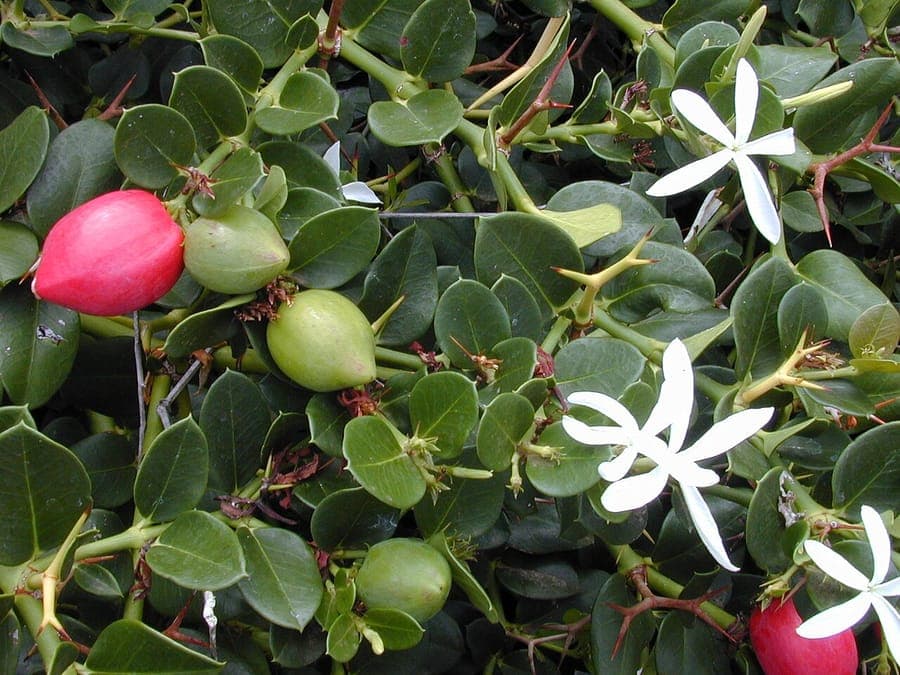
The Natal plum (Carissa macrocarpa) is a beautiful ornamental shrub originating from South Africa. This plant is also known as amatungulu and carissa. The plant grows into an attractive shrub with glossy foliage, white fragrant flowers, and red edible fruits. In warm climates, this is an absolute must-have for your garden.
Appearance and bloom
Carissa macrocarpa is a semi-evergreen shrub that can reach 1.5 to 3 meters in height. The plant features opposite, oval leaves that are glossy dark green. The flowers are small, white to pink, and highly fragrant. They appear in clusters throughout the growing season. The fruits are apple-like, red, and approximately 3 to 4 centimeters in diameter.
Ideal location
This plant thrives in sunny to partially shaded locations. A spot with at least 4 hours of daylight is desirable. The plant grows well against south-facing walls and protected corners. Protect from strong winds and frost. In cold climates, indoor overwintering is necessary.
Soil
Carissa macrocarpa grows well in standard garden soil. Ensure good drainage - wet feet are not desired. The plant tolerates fertile soil better than lean soil. Add planting material and compost when planting. The plant prefers neutral to slightly acidic soil.
Watering
Keep the soil regularly moist but not waterlogged. Water when the top layer feels dry. During the growing period (May-September), water regularly. In winter, water much less frequently. Excessive water causes root rot. Ensure water drains properly.
Free preview
Want to see Natal plum: complete guide in your garden? Make a free preview of your design.
Pruning
Pruning can be done to maintain the shrub's form. Best pruning occurs in early spring (March). Remove long shoots and side branches. This promotes denser growth. Pruning after fruit harvest encourages regrowth and blooming.
Maintenance calendar
March-April: shape the shrub, provide nutrients. May-June: enjoy blooming and vigorous growth. July-August: harvest fruits and enjoy. September-October: water management, plant gradually dormant. November-February: minimal care, overwintering.
Winter hardiness
Carissa macrocarpa can tolerate temperatures down to approximately -5 to -2°C. In warmer regions (zones 9-11), outdoor overwintering is possible. In colder areas, container cultivation and overwintering indoors is necessary. The plant responds poorly to frost periods. Protect from frost with mulch or covers.
Companion plants
This plant pairs beautifully with other exotic plants. Try combinations with bougainvillea, lantana, and hibiscus. Succulents and palms also form attractive combinations. In containers, it works well with other South African plants.
Conclusion
Carissa macrocarpa offers beauty, fragrance, and edible fruits. A plant for those seeking warmth and exotic charm. Purchase your specimen at specialized garden centers for professional advice.
Gardenworld.app helps you design exotic and South African plant combinations.
Frequently asked questions about Natal plum
Is Natal plum winter hardy?
Carissa macrocarpa can tolerate temperatures down to approximately -5 to -2°C. In warmer regions (zones 9-11), outdoor overwintering is possible.
When and how do you prune Natal plum?
Pruning can be done to maintain the shrub's form. Best pruning occurs in early spring (March).
How much water does Natal plum need?
Keep the soil regularly moist but not waterlogged. Water when the top layer feels dry.
Where does Natal plum grow best?
This plant thrives in sunny to partially shaded locations. A spot with at least 4 hours of daylight is desirable.
What soil does Natal plum need?
Carissa macrocarpa grows well in standard garden soil. Ensure good drainage - wet feet are not desired.

See it in your garden
See Natal plum in your garden
One photo of your garden and a few questions. You see the result in about a minute.
Try it with a photoIdentify this plant in your own garden. Identify a plant
Similar plants
Arkansas bluestar: complete guide
Amsonia hubrichtii
Everything about Arkansas bluestar (Amsonia hubrichtii): position, soil, watering, cutting back and hardiness. A prairie perennial with pale blue stars and golden autumn colour.
String of hearts (Ceropegia woodii): care guide
Ceropegia woodii
How to grow string of hearts (Ceropegia woodii): light, watering, potting mix, propagating from tubers, winter care and whether it is safe for cats and dogs.
Wax plant (Hoya carnosa): complete guide
Hoya carnosa
Everything about the wax plant (Hoya carnosa): light, watering, flowering spurs, a cool winter rest, cuttings and toxicity. Not toxic to cats and dogs.
