
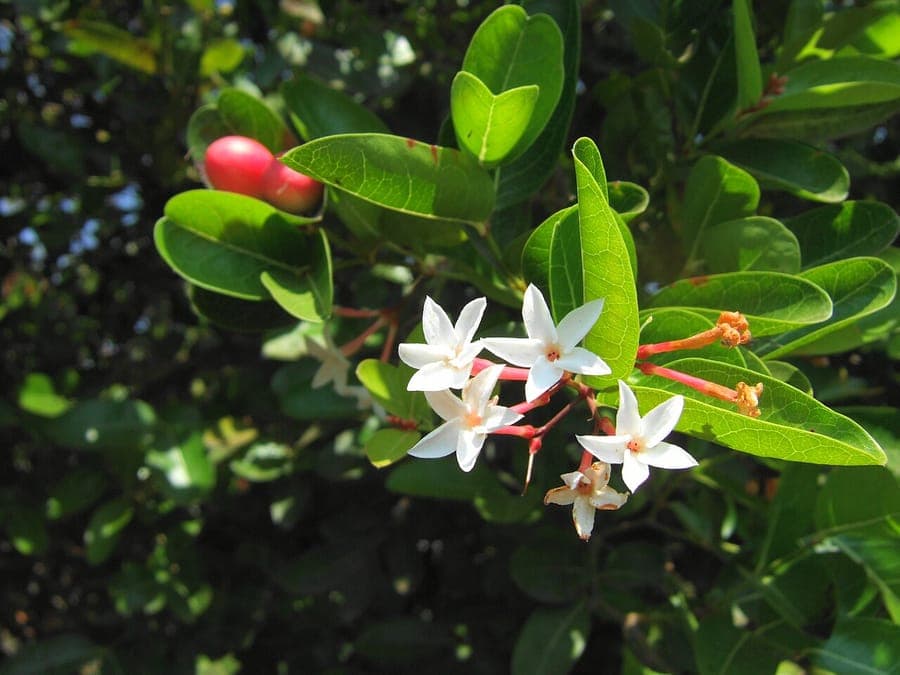
Sakurai Midori / CC BY-SA 3.0, via Wikimedia Commons
Carissa carandas: complete guide
Carissa carandas
Want to see Carissa carandas: complete guide in your garden?
1 minute, no credit card
Carissa carandas: Complete Guide
Overview
Carissa carandas, commonly known as Bengal currants, Carandas plum, or simply Karanda, is a tropical shrub from the Apocynaceae family. Native to India and Bangladesh, this plant is cultivated throughout tropical and subtropical regions for its edible fruits and ornamental value.
Also known as "Christ's thorn" and "Jasmine-flowered carrisa," the plant is appreciated for its beautiful, fragrant white flowers that closely resemble jasmine blossoms.
Appearance & Bloom
Carissa carandas is a compact shrub, typically 1-3 meters tall, with dense foliage. The leaves are oval, opposite, and glossy dark green.
Flowering occurs during warm seasons, producing small, star-shaped white or pale pink flowers with an intoxicating fragrance. Each flower has five petals and attracts numerous insects.
The fruits are approximately 1-2 cm long, constricted berries that ripen from green-red to deep dark red. When fully ripe, they are sweet with a pleasant aroma.
Ideal Location
Carissa carandas performs best in warm, sunny climates.
Select a spot with:
- Full sun (minimum 6 hours direct sunlight daily)
- Protection from extreme winds
- Adequate space for natural growth habit
- Warm climate (minimum 15°C, ideal 20-30°C)
It can also be grown in containers in conservatories or greenhouses in temperate regions.
Soil
Carissa carandas grows well in diverse soils as long as they drain well. Ideal conditions include:
- Well-draining soil (sandy-loam mixture)
- Neutral to slightly acidic pH (6.0-7.0)
- Moderately moist (never stagnant)
- Added organic matter promotes growth
The plant tolerates drought once established but prefers regular watering.
Watering
Carissa carandas requires regular water during growing season.
Water management:
- Water regularly during growing season (March-October)
- Allow soil to partially dry between waterings
- Winter: much less water needed
- In containers: ensure good drainage
- Good drought tolerance once established
Free design
Want to see Carissa carandas: complete guide in your garden? Make a free design now.
Pruning
Carissa carandas responds well to pruning and can be shaped.
- Young plants: Pinch tips to promote bushy growth
- Maintenance pruning: Thin dense branches in February/March
- Shaping: Can be pruned as hedge or formal shrub
- Seed control: Remove spent seed pods after ripening
Maintenance Calendar
January-February: Prune, apply fertilizer March-April: New growth begins, water regularly May-July: Flowering and fruit set, maintain consistent watering August-October: Fruit ripening, continue watering November-December: Prepare for dormancy, reduce watering
Winter Hardiness
Carissa carandas is tropical and frost-sensitive. In areas where temperatures drop below 10°C, it must be moved to protected locations.
Winter protection:
- Temperatures above 10°C essential (preferably 15°C+)
- Protected location against frost
- Container cultivation in frost-prone areas
- Field planting only in tropical/subtropical gardens
Companion Plants
Carissa carandas pairs well with:
- Other tropical fruit plants (mango, guava)
- Ornamental shrubs (bougainvillea, ixora)
- Flowering vines (passiflora)
- Palms (for larger compositions)
Feeding & Fertilization
Carissa carandas responds well to regular fertilization:
- Balanced fertilizer during growing season
- Extra phosphorus promotes flowering and fruiting
- Monthly applications March-October
Closing Thoughts
Carissa carandas is a beautiful tropical fruiting shrub that provides both attractive flowers and edible fruits. In tropical and subtropical regions, it deserves a prominent place in garden and fruit production.
The beautiful white flowers, pleasant aroma, and sweet fruits make it a valuable addition to warm-climate gardens. Once established, it maintains itself with minimal daily care.
Available from tropical garden suppliers. Visit GardenWorld.app for warm-climate garden designs incorporating fruit-producing plants.
Want to see Carissa carandas: complete guide in your garden? Make a free design now.
Upload a photo, pick a style, and get a photorealistic design with plant list in under a minute.
No credit card required


Similar plants
Asclepias speciosa: complete guide
Asclepias speciosa
Showy milkweed: striking pink-white flowers, fragrant blooms. Essential monarch butterfly host plant.
Plumeria obtusa: complete guide
Plumeria obtusa
Discover the Singapore graveyard flower: an exotic evergreen with mesmerizing white blooms and exquisite fragrance. Expert cultivation, care, and maintenance tips.
Wrightia arborea: complete guide
Wrightia arborea
Wrightia arborea, known as doodhi, is an elegant tree from South Asia with delicate white flowers. Discover how to cultivate this exotic plant.