
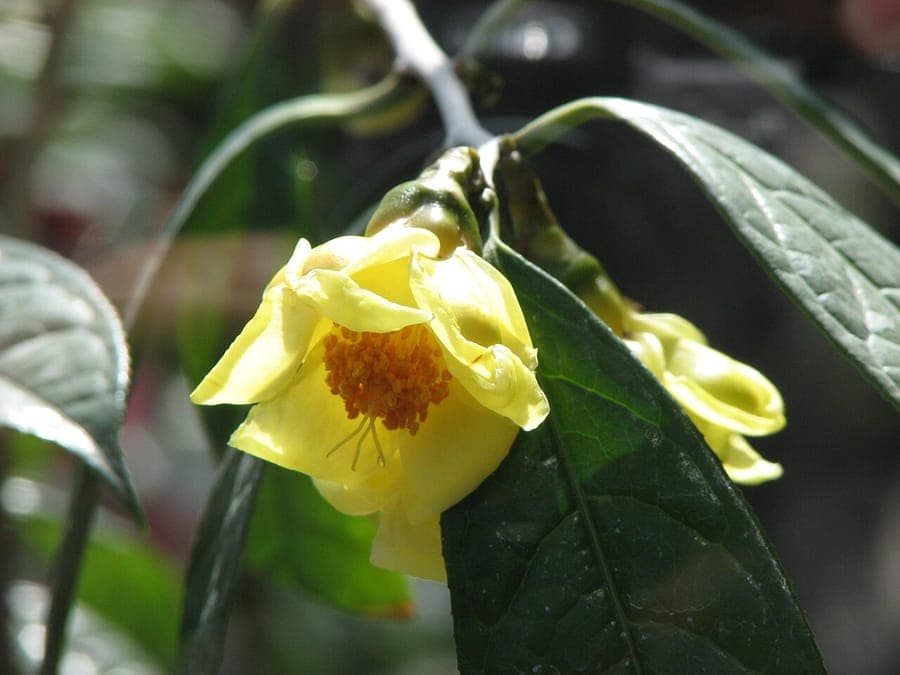
self / CC BY-SA 3.0, via Wikimedia Commons
Yellow Camellia: complete guide
Camellia petelotii
Want to see Yellow Camellia: complete guide in your garden?
1 minute, no credit card
Overview
Camellia petelotii, also known as Golden Camellia or Yellow Camellia, is a fascinating shrub native to southeastern China and Vietnam. This plant is particularly renowned for its rare yellow flowers, which contrast with the more common red and white varieties in the genus. In temperate to warm gardens, it represents a unique choice for those seeking something special.
Appearance and Bloom
The Golden Camellia grows into a compact to medium-sized shrub, typically 2 to 3 meters tall. The leaves are glossy, dark green, elliptic-lanceolate, adding beautiful texture against the blooms. The leaves are semi-persistent and remain throughout most of the year.
The flowers are the true highlight of this plant. They appear as semi-double to double blooms with numerous petals in soft yellow to golden yellow color. The flowers are fragrant and typically appear in winter through early spring, providing valuable seasonal interest.
Ideal Location
The Golden Camellia prefers bright, dappled light. In warm climates, partial shade can be beneficial, particularly in the south where afternoon sun is intense. In temperate climates, it prefers full sun to light dappled shade.
The plant flourishes best with protection from strong winds and frost-laden breezes. A location on the north or east side, sheltered by larger plants or structures, is ideal. In areas with hot summers, protection from afternoon sun can be beneficial.
Soil
The Golden Camellia is very particular regarding soil type. It thrives best in acidic, well-draining soil with a pH between 5.5 and 6.5. Good drainage is essential, as the plant does not tolerate waterlogging.
Amendment with compost or other organic material helps improve soil structure. Mulching around the plant helps with moisture retention and temperature moderation. Ensure mulch does not touch the stem directly.
Watering
The Golden Camellia prefers consistently moist soil, especially during the growing season. Water regularly when the soil surface feels dry. Avoid waterlogging, as this causes root rot.
In winter, water less but ensure the soil never dries completely. In warm climates, additional water may be needed. Use soft water when possible to prevent alkalinity.
Free design
Want to see Yellow Camellia: complete guide in your garden? Make a free design now.
Pruning
The Golden Camellia responds well to moderate pruning. Pruning after blooming helps maintain shape and enhances future flowering. Remove dead or diseased wood and crossing branches to improve internal air circulation.
Avoid heavy pruning, as this can impede flowering. Light shaping pruning is usually sufficient. Disinfect tools between cuts.
Maintenance Calendar
Autumn: Preparation for blooming. Feed with phosphate-rich fertilizer to stimulate flower bud development. Ensure consistent moisture.
Winter: The blooming period. Minimal care needed. Water as necessary to maintain consistent moisture.
Spring: Post-bloom, prune and shape. Resume regular feeding. Monitor for pests.
Summer: Growing season. Water regularly. Maintain mulching. Provide shade in extremely hot areas.
Winter Hardiness
The Golden Camellia is moderately cold-hardy and tolerates temperatures around -8 to -12 degrees Celsius, depending on the specific provenance of the plant. In areas with more severe freezing, protection may be necessary, especially for young plants.
In subtropical and temperate climates, it thrives well. In colder areas, protection in the form of burlap wraps or protective structures can help. Avoid locations where early frosts can damage young growth.
Companion Plants
The Golden Camellia combines well with other acid-loving plants such as Rhododendrons and Azaleas. Grouping with evergreen groundcovers such as Liriope creates a full, interesting plant combination.
Consider planting in the shade of larger trees such as Japanese maples. This provides shelter and interesting size contrast. For early spring bloom continuity, group with yellow Forsythia for color succession.
Closing Thoughts
Camellia petelotii is a unique and rare shrub for those seeking something special. With its golden yellow flowers, fragrant aroma, and refined character, it offers much decorative value. Specialized nurseries and rare plant growers typically stock this species. For inspiration on integrating this exotic camellia into your garden, visit gardenworld.app. Discover more acid-loving plants on gardenworld.app.
Want to see Yellow Camellia: complete guide in your garden? Make a free design now.
Upload a photo, pick a style, and get a photorealistic design with plant list in under a minute.
10,000+ gardens designed already
No credit card required


Similar plants
Franklin tree: complete guide
Franklinia alatamaha
Everything about growing Franklinia alatamaha: soil, location, winter hardiness, pruning and companions. A unique tree extinct in the wild, stunning in cultivation.
Camellia crapnelliana: complete guide
Camellia crapnelliana
Discover Crapnell's camellia, a rare and elegant Asian plant with glossy green foliage and white blooms. Perfect guide for cultivation success.
Camellia granthamiana: complete guide
Camellia granthamiana
Discover Grantham's camellia, known as the poached egg camellia with pure white blooms. Perfect guide for exotic plant enthusiasts.