
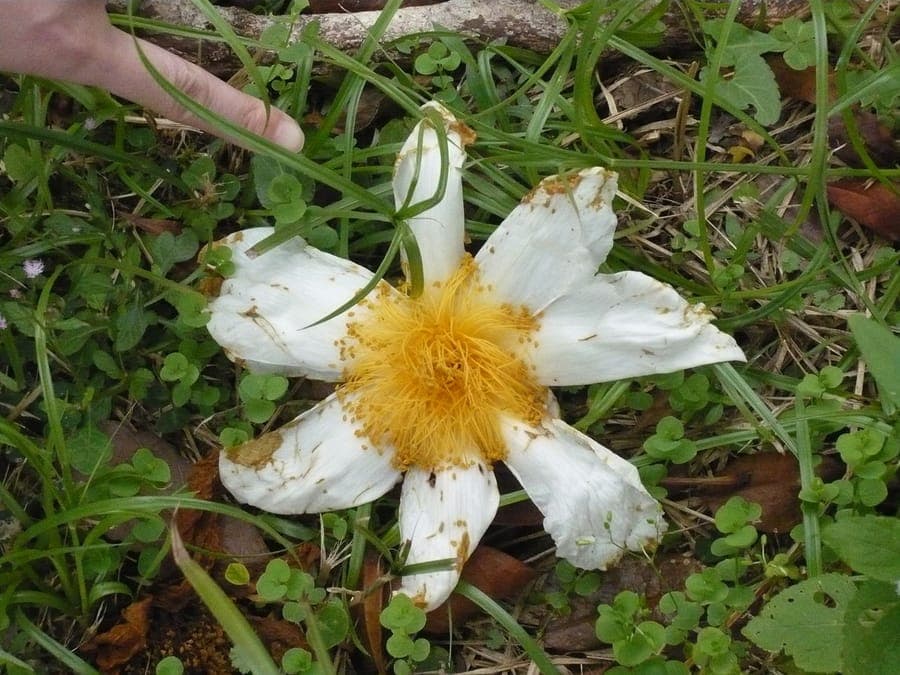
小為 / CC BY-SA 3.0, via Wikimedia Commons
Camellia granthamiana: complete guide
Camellia granthamiana
Want to see Camellia granthamiana: complete guide in your garden?
1 minute, no credit card
Overview
Camellia granthamiana, commonly known as Grantham's camellia or the poached egg camellia, is a stunning plant from eastern Guangdong in China. Belonging to the Theaceae family, the same family as tea and other camellia species, this plant stands out with its striking large, pure white flowers with golden stamens that resemble the yolk in a poached egg. This plant is an absolute showstopper in any garden.
This species is known for its exotic beauty and relatively uncommon cultivation outside China. The flowers are exceptionally large and impressive, making this plant a perfect choice for gardeners seeking something special and unusual.
Appearance and Bloom
Grantham's camellia grows as an elegant shrub with dense foliage. The leaves are glossy dark green, lance-shaped, averaging 7-10 centimeters in length. The plant has a refined, smooth texture.
The flowers are the absolute highlight. These are very large, reaching 12 centimeters in diameter, with pure white petals forming an almost perfect circular shape. The yellow stamen in the center truly resembles the yolk in a poached egg, hence the alternative name. Flowers typically grow singly or in very small clusters.
Blooming extends from October through February, depending on location and climatic zone. This makes the plant extremely valuable for winter interest.
Ideal Location
Camellia granthamiana thrives in half-shade to full shade. Avoid direct afternoon sun, especially in warm regions. The plant appreciates sheltered spots protected from harsh winds.
The ideal growing spot contains:
- Morning sun with afternoon shade
- Protection from strong winds
- Air circulation to prevent disease
- Distance from heat-absorbing surfaces
- Shelter from larger trees
In the UK or northern Europe, cultivate this plant against a south-facing wall with afternoon shade or beneath larger trees.
Soil
Camellia granthamiana requires slightly acidic to neutral soil. Recommended pH range is 5.5-6.5. Add organic material such as compost, leaf mold, and acidic sand.
Ideal soil composition:
- 45% acidic peat or coir
- 25% compost or leaf mold
- 20% orchid bark or coarse sand
- 10% perlite for aeration
Ensure perfect drainage. Camellias cannot tolerate waterlogging. In containers, use specialized camellia compost.
Free design
Want to see Camellia granthamiana: complete guide in your garden? Make a free design now.
Watering
Camellia granthamiana requires consistently moist soil, especially during the growing season from May to October. Water regularly but never to the point of drowning. Winter watering can be slightly reduced, but ensure soil never completely dries.
Watering guidelines:
- Water in morning or early evening
- Use rainwater or soft water when possible
- Ensure good water drainage in containers
- Mist foliage during warm periods
- Excessive water causes root rot; insufficient water causes flower and bud loss
Pruning
Camellia granthamiana requires minimal pruning. The plant grows naturally elegant. Prune only when necessary for shape or to remove damaged parts.
Minimal pruning consists of:
- Removing crossing branches
- Cutting spent flowers and fruit immediately after blooming
- Removing weak or diseased wood with disinfected pruners
- Avoid heavy pruning; this plant recovers slowly
Maintenance Calendar
January-March: Bloom reaches peak January-February. Protect against extreme weather. April-May: Growth accelerates. Regular watering. Occasional feeding. June-August: Warmest season. Provide shade and consistent moisture. September-October: Preparation for blooming. Bud formation accelerates. November-December: Blooming reaches full glory. Enjoy the flowers.
Winter Hardiness
Camellia granthamiana is moderately cold-hardy. In USDA zone 7-8 and above, the plant can be grown outdoors with winter protection. In harsh climates, container cultivation in protected environments is recommended.
Winter protection measures:
- Protect from frost below -10 degrees Celsius
- Wrap containers in insulation material
- Position against south-facing wall in sheltered spot
- In severe winters: move to unheated greenhouse
In the UK and northern Europe, the plant can be grown outdoors in sheltered locations, but winter protection is recommended.
Companion Plants
Camellia granthamiana combines beautifully with:
- Other acid-loving plants (Rhododendron, Pieris)
- Loropetalum chinense - red foliage tints
- Helleborus niger - Christmas rose with white blooms
- Sarcococca confusa - fragrant white flowers in winter
- Elaeagnus ebbingei - silvery foliage
These combinations create visual interest and texture.
Closing
Camellia granthamiana is an exceptional plant for gardeners seeking something special and rare. The enormous white flowers resembling poached eggs make this an absolute showstopper in winter. While cultivation requires some attention, the result is well worth the effort.
Specimens can be found at specialized camellia nurseries and premium garden centers. GardenWorld.app offers design advice for integrating this rare plant into your garden.
With proper placement, consistent watering, and careful pruning, you'll enjoy this exceptional camellia for years.
Want to see Camellia granthamiana: complete guide in your garden? Make a free design now.
Upload a photo, pick a style, and get a photorealistic design with plant list in under a minute.
No credit card required


Similar plants
Franklin tree: complete guide
Franklinia alatamaha
Everything about growing Franklinia alatamaha: soil, location, winter hardiness, pruning and companions. A unique tree extinct in the wild, stunning in cultivation.
Camellia crapnelliana: complete guide
Camellia crapnelliana
Discover Crapnell's camellia, a rare and elegant Asian plant with glossy green foliage and white blooms. Perfect guide for cultivation success.
Yellow Camellia: complete guide
Camellia petelotii
Discover the Golden Camellia with its rare yellow blooms. Learn how to grow this Asiatic shrub for exotic garden beauty and winter color.