
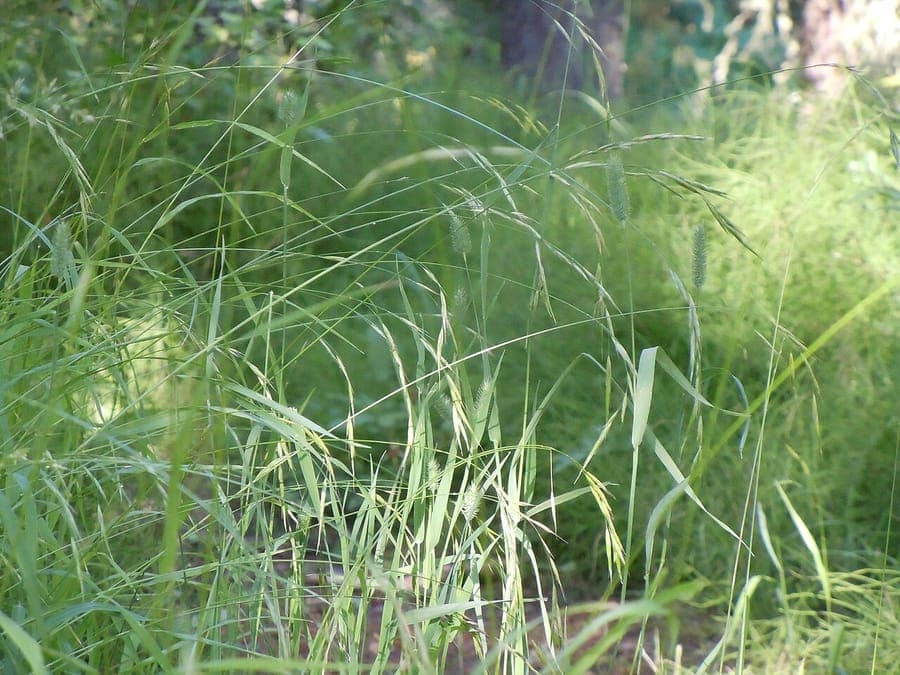
Matt Lavin from Bozeman, Montana, USA / CC BY-SA 2.0, via Wikimedia Commons
Columbia brome: complete guide
Bromus vulgaris
Want to see Columbia brome: complete guide in your garden?
1 minute, no credit card
Overview
Bromus vulgaris, commonly known as Columbia brome or Columbian brome, is a rhizomatous perennial grass belonging to the family Poaceae. Native to the western regions of North America, it grows naturally across British Columbia, Alberta, Washington, Oregon, Idaho, Montana, Nevada, Utah, Wyoming, and California - often in the partial shade of coniferous and mixed forests, along mountain stream banks and shaded ravines. The species was formally described in 1900 based on specimens from the Pacific Northwest. It is classified as a graminoid with a moderate growth rate, spreading slowly via underground rhizomes rather than aggressive self-seeding. Gardeners looking for a graceful native grass for shaded corners will find Columbia brome a rewarding choice. For curated garden design ideas featuring native grasses like this one, visit gardenworld.app.
Appearance and bloom cycle
Columbia brome forms open, airy clumps of mid-green foliage with medium-textured blades that ripple beautifully in the slightest breeze. The leaves are flat and somewhat lax, creating a soft, arching mass that integrates well with woodland plantings. The flowering stems rise above the foliage in summer, typically reaching 60-100 cm in height, and bear loose, drooping panicles with narrow spikelets that take on a yellowish-brown tint as they ripen. The flowers themselves are not showy - brome grasses are wind-pollinated and rely on appearance rather than colour - but the graceful movement of the stems and seed heads throughout the summer season is a genuine ornamental asset. After the seeds disperse in late summer, the dried stems and heads remain attractive into autumn. Unlike many invasive brome species that are considered weeds, Bromus vulgaris behaves well in cultivation and does not spread aggressively.
Ideal location
One of the most valuable qualities of Columbia brome is its tolerance of shade. In its natural habitat it thrives under the canopy of Douglas fir, western red cedar, and other large trees, receiving only filtered or dappled light. In the garden, a position under deciduous trees, along a north-facing wall, or at the edge of a shrubbery suits it perfectly. It will also perform in partial sun, provided the soil remains reasonably moist, but full southern exposure in hot summers may cause the foliage to look stressed. USDA hardiness zones 5 through 8 cover most of its successful cultivation range. In the UK and northern Europe, it can be grown in zones equivalent to those conditions without difficulty, making it suitable for most British and continental European gardens.
Soil
Columbia brome is adaptable in terms of soil, reflecting the variety of woodland substrates it occupies in the wild. It prefers a moderately fertile, well-drained but moisture-retentive soil with a pH between 5.4 and 7.9 - essentially the range of most garden soils. Sandy loam enriched with leaf mould or garden compost is ideal. Heavy clay that stays waterlogged will cause problems; in that case, improve drainage by incorporating grit and organic matter before planting. This grass does not demand high fertility; too much nitrogen can lead to lush but floppy growth. A single application of balanced fertiliser or well-rotted compost in early spring is sufficient for most years.
Watering
In its mountainous native range, Columbia brome receives consistent rainfall throughout the growing season, and it performs best when it does not experience prolonged drought. Young plants should be watered regularly during the first growing season to help them establish a strong root system. Once established, the rhizomatous root network gives them moderate drought resistance, particularly when grown in shade. In sunny positions or during extended dry spells, supplemental watering is beneficial. Water deeply but infrequently to encourage deep rooting. Avoid overhead watering if possible, as wet foliage can encourage fungal issues; water at the base of the plant instead.
Free design
Want to see Columbia brome: complete guide in your garden? Make a free design now.
Pruning
Columbia brome requires minimal pruning. The main task is to cut back the old foliage in late winter or very early spring - typically in March - to within 5-10 cm of the ground, just as the new growth begins to emerge. This removes the untidy winter remnants and encourages a flush of fresh green leaves. Throughout the growing season, any yellowing or dead stems can be removed for neatness. If you want to prevent self-seeding, remove the flowering stems before the seeds fully ripen in late summer. Those who enjoy the visual interest of dried seed heads in winter can leave them in place until February. No summer pruning is necessary.
Maintenance calendar
January and February: leave the plant undisturbed; enjoy the architectural interest of the winter stems. March: cut back old foliage to 5-10 cm; apply a layer of compost around the base. April: monitor new growth; water if spring is dry. May: flower stems begin to emerge; increase watering on sunny sites. June and July: peak ornamental season; enjoy the graceful panicles. August: seeds ripen; remove heads if self-seeding is unwanted. September and October: growth slows; apply mulch to protect roots over winter. November and December: plant is dormant; no intervention needed unless frost is extreme.
Winter hardiness
As a native of the mountainous Pacific Northwest and the Rocky Mountain region, Bromus vulgaris is well accustomed to cold winters and heavy snow. It is reliably hardy in USDA zones 5 to 8. In zone 5 it can experience temperatures down to around minus 29 degrees Celsius without permanent damage. The rhizome-based growth habit means that even if the above-ground portions are killed by severe frost, the plant will regenerate from the roots in spring. In garden centres across the UK and Europe, this grass should be treated as a fully hardy perennial. Young plants in their first winter may benefit from a light mulch of straw or bark chips to protect the root zone.
Companion plants
Columbia brome looks excellent alongside other shade-tolerant perennials. Hostas of varying leaf sizes and colours provide the classic woodland contrast, while ferns such as Dryopteris filix-mas or Polystichum setiferum create a lush, textured backdrop. Astilbe species bring summer flowers in pinks and whites that complement the soft grass plumes beautifully. Epimedium makes an ideal low groundcover beneath and around the grass clumps. For a seasonal highlight, add Digitalis purpurea or Campanula latifolia for summer colour. Luzula sylvatica is another grass-like plant that thrives in similar conditions and makes a harmonious neighbour. Planning these combinations is easy with gardenworld.app, which helps you visualise planting schemes for shade gardens.
Closing thoughts
Columbia brome is a rewarding and underused native grass for gardens that have shade or partially shaded areas that are often difficult to plant. Its graceful panicles, shade tolerance, and undemanding nature make it an excellent candidate for woodland gardens, naturalistic plantings, and shaded borders. Look for it at specialist native plant nurseries and well-stocked garden centres across the UK and Europe. Once established, it asks for little beyond an annual spring cut-back and occasional watering during dry spells, giving years of elegant presence in the garden.
Want to see Columbia brome: complete guide in your garden? Make a free design now.
Upload a photo, pick a style, and get a photorealistic design with plant list in under a minute.
10,000+ gardens designed already
No credit card required


Similar plants
Sporobolus pungens: complete guide
Sporobolus pungens
Sporobolus pungens is a stoloniferous Mediterranean coastal grass with outstanding salt and drought tolerance, perfect for seaside and dry gardens.
Mediterranean aegilops: complete guide
Aegilops biuncialis
Everything about Aegilops biuncialis, a Mediterranean annual grass with ornamental spikes and outstanding drought tolerance for dry gardens.
Silver bluestem: complete guide
Bothriochloa saccharoides
Full guide to Bothriochloa saccharoides (silver bluestem): site, soil, watering, winter hardiness, pruning, and garden companions.