
Wikimedia Commons / Public domain, via Wikimedia Commons
Kalm's brome grass: complete guide
Bromus kalmii
Want to see Kalm's brome grass: complete guide in your garden?
1 minute, no credit card
Overview
Bromus kalmii, commonly known as Kalm's brome, wild chess or prairie brome, is a native perennial grass from eastern North America. The species is named after the Swedish-Finnish botanist Pehr Kalm, who conducted plant surveys across northeastern North America in the mid-eighteenth century and whose name was applied to many of the species he first documented. Bromus kalmii belongs to the grass family Poaceae and forms a clump-forming, rapidly growing graminoid that is native to a broad range stretching from Manitoba and Quebec in Canada south through the Great Lakes region and down to Virginia and West Virginia. In its natural habitat it grows in open meadows, at the edges of prairies, in open woodland clearings and along roadsides on relatively fertile, somewhat moist soils. As an ornamental grass, Bromus kalmii remains little known in European gardens, but its fine texture, graceful nodding seed heads and vigorous growth habit make it an interesting choice for naturalistic borders and prairie-style plantings. At gardenworld.app you can explore garden designs where ornamental grasses provide structure and movement in modern naturalistic borders.
Appearance and bloom cycle
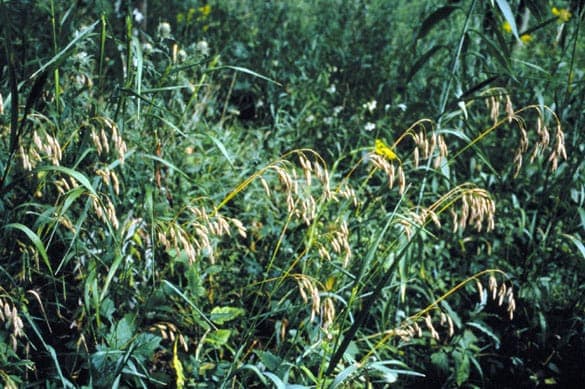
Bromus kalmii grows as a compact, bunch-forming grass with fine, narrow leaves of a bright, fresh green. The clump typically reaches 60 to 90 cm in height. In summer, the flower stems rise well above the foliage to heights that can sometimes exceed one metre. The inflorescences are open, drooping panicles with narrow-oval spikelets that take on a golden-yellow hue as they ripen. The colour sequence moves from green through gold to brown as the growing season progresses, making this grass decorative across multiple seasons. As a summer-blooming grass, it fills the period after early spring flowers have finished. After ripening, the dried stems remain standing and add structural interest to the border through autumn and into winter.
Ideal location
In its native range on the North American plains and forest edges, Kalm's brome experiences full sun or light shade. In the garden it performs best in an open, sunny to lightly shaded position. Good air circulation around the clump promotes healthy growth and reduces the risk of fungal problems. As a native prairie species it is ideally suited to naturalistic borders, wildlife gardens and prairie-style plantings. It also works well in larger ornamental grass borders alongside other decorative grasses and complementary perennials. Avoid deeply shaded positions where reduced light and poor air movement limit growth and flowering.
Soil
Bromus kalmii is adaptable in terms of soil composition. In its native habitat it grows in loamy to clay-rich soils with significant organic matter content, at a pH of 5.7 to 7. It prefers soils with moderate to good moisture retention but is also tolerant of temporary drought. Heavy clay soil is manageable as long as winter waterlogging is avoided. In the garden, ordinary well-cultivated soil is quite adequate. Adding compost improves structure and provides the moderate nutrient levels this grass prefers. Avoid excessively nitrogen-rich soils as these can promote overly soft, floppy stems.
Watering
In its native range, Kalm's brome experiences a temperate climate with regular rainfall throughout the growing season. In the garden, established plants can generally rely on natural rainfall without supplemental watering. During dry spells, some additional watering is beneficial, but the grass tolerates short dry periods without lasting damage. Newly planted specimens need more consistent moisture during their first season while establishing their root system. Avoid standing water or poor drainage in winter, as this can cause root problems. Once established, this grass is largely self-sufficient and requires minimal irrigation attention.
Free design
Want to see Kalm's brome grass: complete guide in your garden? Make a free design now.
Pruning
Like most perennial ornamental grasses, Bromus kalmii requires cutting back just once per year. Cut the clump back to 10 to 15 cm above ground level, ideally at the end of winter or in early spring before new shoots begin to emerge. This encourages a fresh, dense clump and keeps the plant vigorous. In the meantime, any broken or particularly untidy stems can be removed as needed. The dried flower and seed material is genuinely decorative through winter and can be left standing if you appreciate the seasonal structure it provides to the border.
Maintenance calendar
February - March: Cut the clump back to 10 to 15 cm. Remove all old dried material. Apply a thin layer of compost around the base if the soil is depleted. April - May: New shoots grow rapidly. No feeding needed unless the soil is very poor. June - July: Flower stems appear and the grass blooms. The nodding spikelets are at their most ornamental. August - October: Spikelets ripen and colour shifts from golden-green to brown. The structure remains decorative well into autumn. At gardenworld.app you can see how grasses like this provide this kind of multi-season interest in border designs. November - January: Leave the dried stems for winter interest. Cut back early if the clump becomes too dishevelled before spring.
Winter hardiness
Bromus kalmii originates from regions with genuinely continental winters, from Manitoba and Quebec down to Virginia. It is an exceptionally hardy species, reliably rated for USDA zones 3 to 8, making it suitable for virtually all of the Netherlands, Belgium, Germany and a large part of northern and central Europe. The clump tolerates severe frost without any protection and does not need mulching in normal winters. It is among the hardier decorative grasses available for temperate European gardens and can be treated as fully permanent once established.
Companion plants
Bromus kalmii fits beautifully into prairie borders and naturalistic plantings. Pair it with North American native perennials such as Echinacea purpurea, Rudbeckia fulgida, Monarda didyma and Aster novae-angliae for an authentic prairie look. As a grass among flowering perennials it provides movement, texture contrast and seasonal continuity. Other decorative grasses such as Panicum virgatum, Schizachyrium scoparium and Sorghastrum nutans share similar growing requirements and planting styles. In more conventional mixed borders it works well alongside Phlox paniculata or Helenium. Look for this grass at specialist perennial nurseries and at garden centres in spring and summer.
Closing
Kalm's brome is an underused ornamental grass that deserves a wider audience among gardeners interested in naturalistic planting. Its rapid growth, fine texture, graceful nodding spikelets and multi-season ornamental value make it a versatile and low-maintenance choice. It is among the hardiest decorative grasses available, completely suited to temperate European conditions without any special treatment. Give it a sunny, open spot with ordinary garden soil and it will reward you year after year with a vigorous, flowing clump that brings life and movement to any border. At gardenworld.app you can see how grasses like this integrate beautifully into front garden and mixed border designs.
Want to see Kalm's brome grass: complete guide in your garden? Make a free design now.
Upload a photo, pick a style, and get a photorealistic design with plant list in under a minute.
10,000+ gardens designed already
No credit card required


Similar plants
Sporobolus pungens: complete guide
Sporobolus pungens
Sporobolus pungens is a stoloniferous Mediterranean coastal grass with outstanding salt and drought tolerance, perfect for seaside and dry gardens.
Mediterranean aegilops: complete guide
Aegilops biuncialis
Everything about Aegilops biuncialis, a Mediterranean annual grass with ornamental spikes and outstanding drought tolerance for dry gardens.
Silver bluestem: complete guide
Bothriochloa saccharoides
Full guide to Bothriochloa saccharoides (silver bluestem): site, soil, watering, winter hardiness, pruning, and garden companions.