
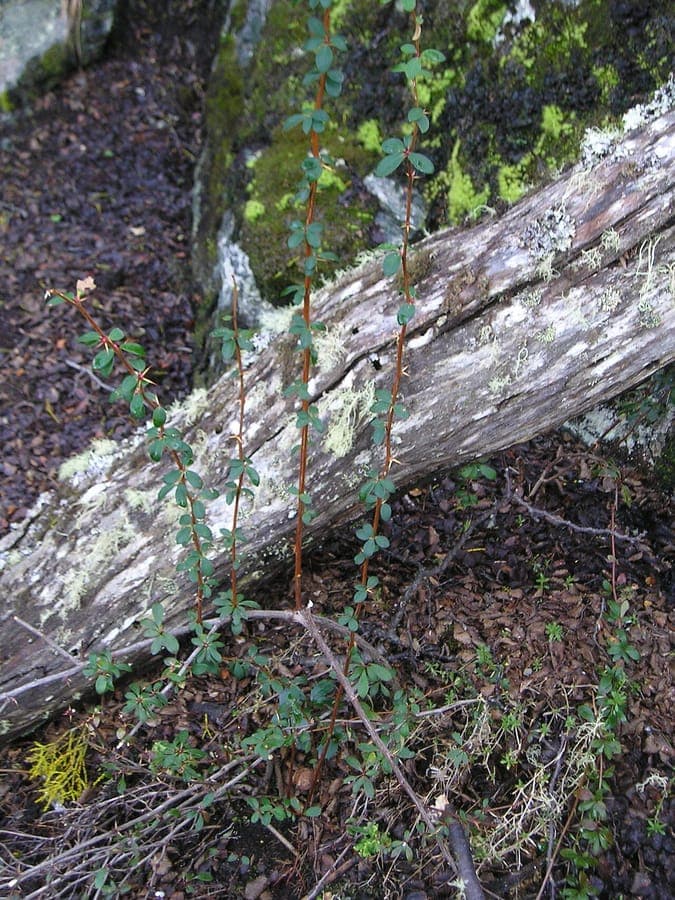
No machine-readable author provided. Heretiq assumed (based on copyright claims). / CC BY-SA 2.5, via Wikimedia Commons
Berberis microphylla: complete guide
Berberis microphylla
Want to see Berberis microphylla: complete guide in your garden?
1 minute, no credit card
Overview
Berberis microphylla, commonly known as calafate, is a robust shrub from the Berberidaceae family. This plant originates from southern Chile and Argentina, particularly famous in Patagonia. The name "microphylla" refers to its tiny leaves, giving the plant a refined appearance.
This is a popular choice for garden designers seeking reliable, hardy plants with interesting texture. The calafate produces yellow flowers in spring and red berries in fall, making it a visually interesting addition to any garden.
Appearance and Growth
Berberis microphylla is a compact-growing shrub typically reaching 1 to 2 meters tall. The leaves are extremely small, approximately 0.5 to 1.5 cm long, giving the plant refined, almost delicate texture despite being an extremely hardy plant.
The plant has dark, glossy leaves that can turn red under stress or in autumn. In spring, small yellow flowers appear in clusters, followed by attractive red berries that later turn blue-purple. These berries are edible and popular in South America.
Ideal Location
Berberis microphylla grows best in full sun. The plant tolerates at least six hours of direct sunlight daily. In very hot climates, some afternoon shade can help, but full sun is generally best.
The plant is extremely tolerant of windy conditions, making it perfect for coastal areas or windy gardens. It can also grow in partial shade, but growth will be less compact and flowering-fruiting less abundant.
Avoid locations with stagnant water or very wet soil.
Soil Type
Berberis microphylla is exceptionally flexible regarding soil type. It grows well in virtually all soils except very heavy clay. The plant tolerates both poor and nutrient-rich soils.
Prefer moderately draining soil. The plant can tolerate drought once established and grows reasonably well in chalky soils. No special soil preparation needed - simply plant in your normal garden soil.
Acidic, neutral and alkaline soils are all tolerated well.
Free design
Want to see Berberis microphylla: complete guide in your garden? Make a free design now.
Watering
Once established, Berberis microphylla is extremely drought-tolerant. In the first year after planting, water regularly to encourage good root establishment. After that, supplemental water is usually unnecessary except in extremely dry periods.
In gardens with normal rainfall, supplemental water usually isn't needed. The plant can tolerate precipitation from 500 to 1200 mm annually.
Avoid excessive moisture, which can cause root rot.
Pruning
Berberis microphylla is extremely tolerant of pruning. The plant can be heavily pruned in spring to maintain form or control growth. It responds well to pruning and regrows quickly.
Prune after flowering for best results, but the plant tolerates pruning at almost any time of year. For hedge trimming, prune twice per season.
Also remove old branches to improve garden light penetration.
Maintenance Calendar
Spring: Plant flowers yellow. Perform pruning if needed. Water regularly if newly planted.
Summer: Monitor growth. Enjoy blooms. Await fruit formation.
Fall: Red berries appear. Leaves may turn red. Berries can be harvested for consumption.
Winter: Very little maintenance needed. Plant remains hardy. Light pruning possible if needed.
Winter Hardiness
Berberis microphylla is extremely hardy, tolerating temperatures to -15 degrees Celsius and possibly lower. This makes it ideal for harsh mountain climates and cold gardens.
The plant tolerates frost well and will thrive in cold climates. No protection needed, even in very severe weather.
Companion Plants
Berberis microphylla combines well with:
- Other mountain plants for an alpine garden
- Juniperus for structure and form
- Grasses for movement and contrast
- Lavender for color and fragrance
- Santolina for yellow-green texture
Mix with groundcover plants to create interesting compositions.
Conclusion
Berberis microphylla is an excellent choice for garden designers seeking hardy, low-maintenance plants. With its tiny leaves, yellow flowers and red berries, it adds texture and visual interest throughout the year.
Find Berberis microphylla at OBI and other garden centers. See gardenworld.app for design inspiration with mountain plants and shrubs. Discover more guides on gardenworld.app.
Want to see Berberis microphylla: complete guide in your garden? Make a free design now.
Upload a photo, pick a style, and get a photorealistic design with plant list in under a minute.
No credit card required


Similar plants
Heavenly bamboo: complete guide
Nandina domestica
Everything about heavenly bamboo (Nandina domestica): planting, pruning, hardiness, and colour impact. Note: berries are toxic to birds and pets.
Colorado barberry: complete guide
Berberis fendleri
Everything about Berberis fendleri, the Colorado barberry with yellow flowers and red berries. Perfect as a thorny hedge or specimen shrub in dry gardens.
Jeffersonia diphylla: complete guide
Jeffersonia diphylla
Discover Twinleaf, a charming woodland plant from North America. White flowers, unique foliage, perfect for shady borders.