
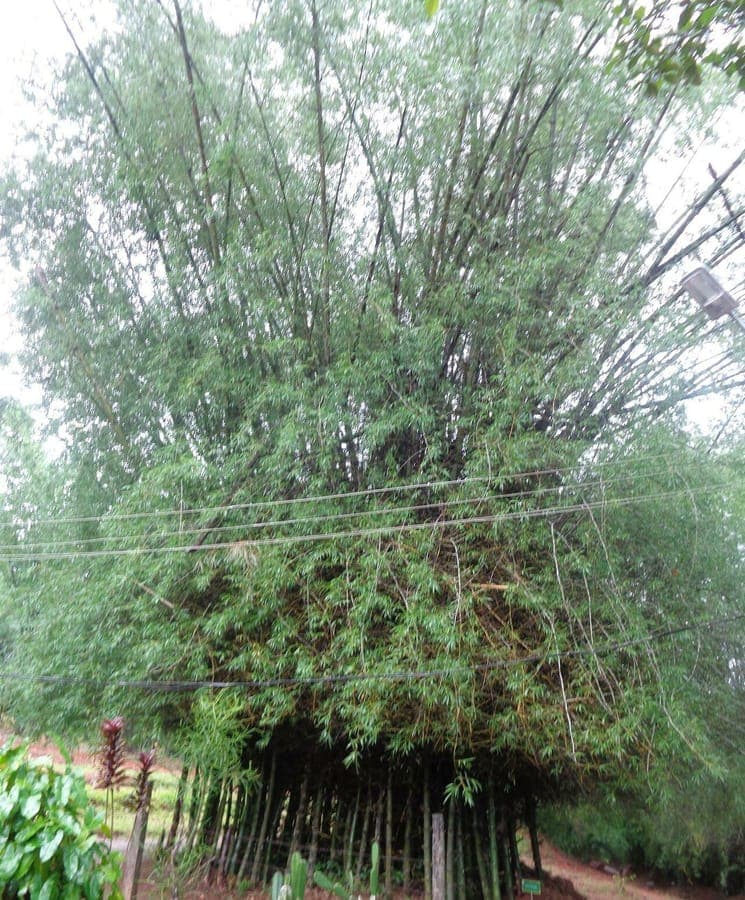
Dvellakat / CC BY-SA 4.0, via Wikimedia Commons
Indian Thorny Bamboo: complete guide
Bambusa bambos
Want to see Indian Thorny Bamboo: complete guide in your garden?
1 minute, no credit card
Bambusa bambos, commonly called Indian thorny bamboo or reed bamboo, is an impressive bamboo species distinguished by characteristic spiny protrusions. Native to the Indian subcontinent and Southeast Asia, this bamboo has naturalized in warm regions worldwide.
Overview Indian thorny bamboo is a graminoid featuring strong, upright growth habit. This species can achieve substantial height, creating dramatic vertical structures in gardens. The plant is renowned for resilience and adaptability across diverse climates.
Appearance and Bloom The foliage consists of elongated, green leaves arranged gracefully along slender culms. The culms are smooth but adorned with characteristic spiny projections defining its distinctive appearance. Flowers and seeds are inconspicuous and play minor roles in visual appeal.
Ideal Location Indian thorny bamboo thrives in full sun to partial shade positions. In warm climates, light dappled shade promotes optimal performance. Ensure locations offer wind protection, as strong gusts can cause culm breakage.
Soil This bamboo prefers well-draining, fertile soil. Neutral to slightly acidic pH suits optimal growth. Incorporate organic matter at planting to improve water retention and nutrient availability.
Watering Regular watering is essential, particularly in establishment years. Maintain uniformly moist soil without waterlogging. Mature plants tolerate drought periods better, though consistent moisture promotes vigorous development.
Pruning Pruning manages form and size effectively. Remove dead or damaged culms regularly. Lower branches can be removed to enhance light penetration and aesthetic profile.
Maintenance Calendar Feeding is crucial for this robust grower. Supply monthly nutrients during growing season. Winter feeding can reduce as growth slows.
Winter Hardiness In temperate climates, winter protection may be necessary. Mulch base areas to protect roots from frost. In very cold regions, consider container cultivation for winter indoor relocation.
Companion Plants Indian thorny bamboo creates perfect backdrops for lower-growing species. Combine with tropical flowering shrubs, ferns, and shade-tolerant understory plants. Its height provides excellent screening and privacy functions.
Conclusion Indian thorny bamboo is an impressive addition to warm gardens. Its unique texture and vertical lines add drama and architectural interest. Available from quality garden suppliers. Design complete garden schemes via gardenworld.app incorporating such structural elements.
Want to see Indian Thorny Bamboo: complete guide in your garden? Make a free design now.
Upload a photo, pick a style, and get a photorealistic design with plant list in under a minute.
No credit card required


Similar plants
Sporobolus pungens: complete guide
Sporobolus pungens
Sporobolus pungens is a stoloniferous Mediterranean coastal grass with outstanding salt and drought tolerance, perfect for seaside and dry gardens.
Mediterranean aegilops: complete guide
Aegilops biuncialis
Everything about Aegilops biuncialis, a Mediterranean annual grass with ornamental spikes and outstanding drought tolerance for dry gardens.
Silver bluestem: complete guide
Bothriochloa saccharoides
Full guide to Bothriochloa saccharoides (silver bluestem): site, soil, watering, winter hardiness, pruning, and garden companions.