
Andrey Zharkikh from Salt Lake City, USA / CC BY 2.0, via Wikimedia Commons
Cutleaf balsamroot: complete guide
Balsamorhiza macrophylla
Want to see Cutleaf balsamroot: complete guide in your garden?
1 minute, no credit card
Overview
Cutleaf balsamroot (Balsamorhiza macrophylla), also known as Idaho balsamroot, is a robust herbaceous perennial from the Asteraceae family. Its natural range covers Idaho, Montana, Oregon, Utah, and Wyoming, where it thrives on mountain slopes, sagebrush plains, and open ridgelines at moderate to high elevations. The species name macrophylla, meaning 'large-leaved', immediately signals its most striking feature: the deeply dissected, broad foliage that sets it apart from its close relatives. Described by Nuttall in 1840, it was once classified as a variety of Balsamorhiza hookeri, to which it is closely related. In garden cultivation it remains scarce in Europe, though its combination of spectacular foliage, showy flowers, and drought tolerance makes it well worth seeking out. It is closely related to Balsamorhiza hookeri and was at one time classified as a variety of that species. Like all balsamroots, it develops a thick, deep taproot that can persist for decades and sustains the plant through even the most severe summer droughts. Visit gardenworld.app to see how prairie perennials like this can anchor a low-maintenance front garden design.
Appearance and bloom cycle
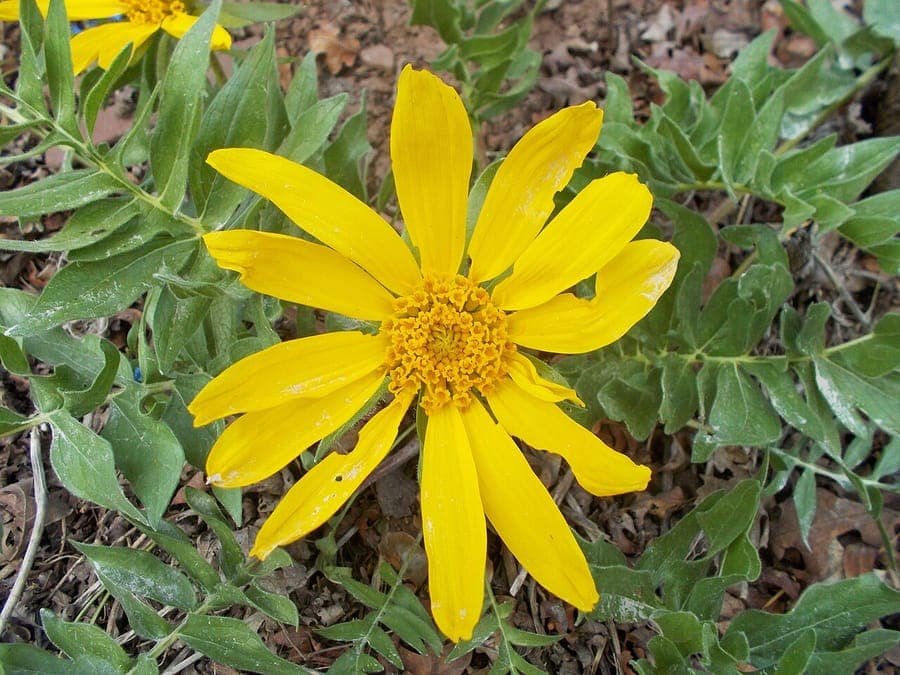
The basal rosette of cutleaf balsamroot is its defining feature. The leaves are large - often 40 to 50 cm long and up to 20 cm wide - and deeply pinnately divided, giving each frond a feathery, almost fern-like silhouette. A covering of fine grey-white hairs gives the foliage a soft texture and a slightly silver sheen that helps the plant reflect heat and reduce water loss. Multiple flowering stems rise from the rosette between May and early July, each carrying a single, broadly rayed yellow flowerhead measuring 6 to 10 cm across. These resemble oversized daisies or small sunflowers and are rich in nectar and pollen. Bumblebees, solitary bees, hoverflies, and butterflies all visit regularly. After flowering, small brown achenes ripen and attract seed-eating birds.
Ideal location
Full sun exposure is essential. Cutleaf balsamroot requires a minimum of six unobstructed hours of direct sunlight per day. It excels on south- or west-facing slopes, in rock gardens, gravel gardens, and open dry borders. It works beautifully as a bold specimen plant in a xeriscape design, where its large foliage rosette creates a strong architectural form even outside the flowering period. Avoid positions with overhead shade, heavy clay soils, or poor air circulation. The plant is not suited to sheltered, warm microclimates with humid air, as these conditions encourage fungal problems.
Soil requirements
This species demands excellent drainage above all else. It grows naturally on well-drained, lean soils - sandy loams, gravelly substrates, and shallow soils over rock - with a pH tolerance of 6.3 to 8.6. Heavy, wet clay soils lead to rapid decline, especially through winter. If planting into a heavier soil type, excavate a generous hole and amend it with coarse horticultural sand and fine gravel. Adding rich compost or fertiliser is counterproductive: nutrient-poor conditions trigger more prolific flowering, while overly rich ground produces excessive leafy growth at the expense of blooms.
Free design
Want to see Cutleaf balsamroot: complete guide in your garden? Make a free design now.
Watering
Once established, cutleaf balsamroot manages extended dry spells with ease. The first growing season requires regular moisture to allow the deep taproot to anchor itself. From the second year onward, natural rainfall in most temperate European climates provides adequate moisture. During dry spells exceeding four weeks, a thorough watering every two weeks is sufficient. Winter waterlogging is the primary risk: the crown must never sit in standing water during cold months. Always ensure the site drains freely between rainfall events.
Cutting back
Maintenance is light. Once the flowers have finished, the stems can be removed at the base of the rosette for a tidy look, or left in place to allow the seeds to ripen for bird food and possible self-seeding. In early spring, before new leaves push up from the crown, clear away the previous year's old, dry foliage. The basal rosette itself does not need cutting. No drastic annual cutback is necessary or advisable.
Maintenance calendar
January-February: plant dormant; keep drainage clear and avoid letting water pool around the crown. March: begin removing old dry leaves; check the crown for any sign of rot after a wet winter. April: new leaf growth begins slowly; no feeding required. May: first flower buds emerge; enjoy the early blooms appearing above the large rosette. June: peak flowering; leave undisturbed for pollinators. July: blooming winds down; decide on seed head management. August: dry summer conditions; water deeply every two weeks if needed. September: rosette remains ornamental; check drainage ahead of autumn rains. October: plant pulls energy back to roots. November-December: full dormancy; no special treatment required on free-draining sites.
Winter hardiness
Cutleaf balsamroot is extremely cold-tolerant, surviving temperatures below -30 degrees Celsius in its native mountain habitats. It sits comfortably in USDA zones 3 to 8, making it suitable for all of temperate Europe, including Scandinavia. In the Netherlands, Belgium, and northern Germany it overwinters reliably without any protection, provided the soil drains freely. Wet, poorly drained conditions in winter are far more dangerous than cold temperatures alone. On a well-prepared, open site, no winter protection is needed.
Companion plants
Cutleaf balsamroot combines naturally with other drought-tolerant prairie and steppe species. Penstemon species in blue, purple, and pink shades offer excellent tonal contrast to the yellow flowerheads. Salvia nemorosa, Echinacea pallida, and Gaillardia aristata thrive under similar conditions. Fine ornamental grasses available from specialist nurseries and garden centres bring lightness and movement to the planting. Low Artemisia species pick up the silver-grey tones of the balsamroot's foliage. Avoid moisture-demanding companions such as Astilbe or Ligularia, which require conditions the balsamroot cannot tolerate.
Closing thoughts
Cutleaf balsamroot is a plant with genuine presence - its vast, finely divided foliage and generous golden blooms are striking at every stage of the season. It demands almost nothing beyond good drainage and full sun, and in return it delivers weeks of flowers, support for pollinators, and year-round structure. For anyone redesigning a dry, sun-drenched front garden, this species deserves serious consideration. Explore more ideas for prairie-style planting at gardenworld.app and find out how to make your outdoor space both beautiful and resilient.
Want to see Cutleaf balsamroot: complete guide in your garden? Make a free design now.
Upload a photo, pick a style, and get a photorealistic design with plant list in under a minute.
10,000+ gardens designed already
No credit card required


Similar plants
Hooker's balsamroot: complete guide
Balsamorhiza hookeri
Hooker's balsamroot (Balsamorhiza hookeri) is a drought-tough western prairie perennial with bold golden flowers, ideal for sunny, dry garden borders.
Serrate balsamroot: complete guide
Balsamorhiza serrata
Serrate balsamroot (Balsamorhiza serrata) is a rare western prairie perennial with toothed leaves and vivid golden flowers, thriving in dry, open, sun-drenched gardens.