
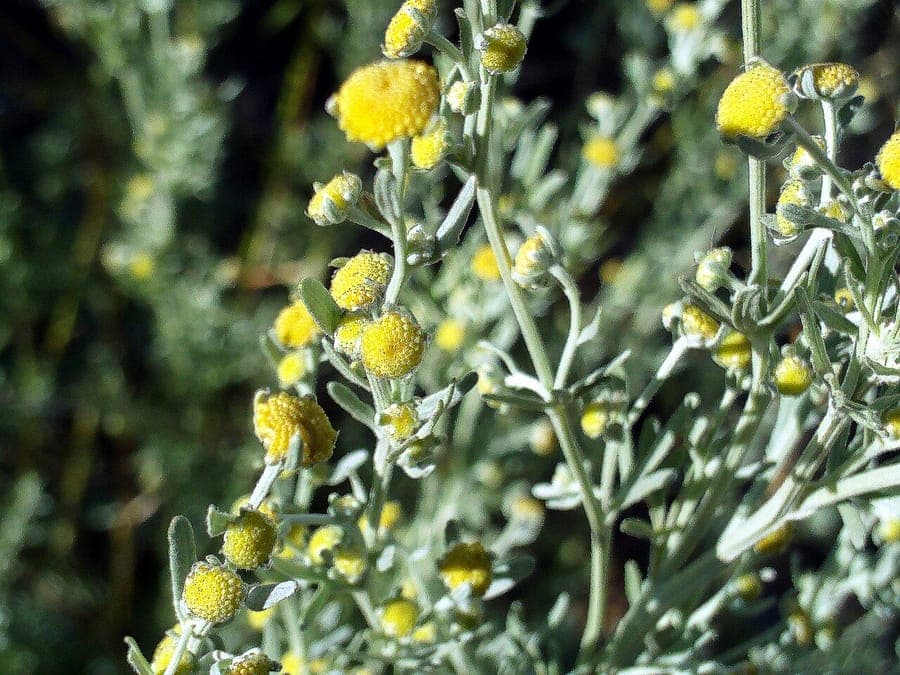
Javier martin / Public domain, via Wikimedia Commons
Camomile-leaved wormwood: complete guide
Artemisia chamaemelifolia
Want to see Camomile-leaved wormwood: complete guide in your garden?
1 minute, no credit card
Overview
Artemisia chamaemelifolia, commonly known as camomile-leaved wormwood, is an aromatic perennial in the daisy family Asteraceae. Described scientifically in 1779 by the French botanist Villar, this species is native to a wide natural range covering mountainous regions of southern France, Spain, Switzerland, and Italy, extending through the Balkans, the Caucasus, Turkey, and as far east as Iran. The species name "chamaemelifolia" translates literally as "with leaves like chamomile" (Matricaria), referring to the finely dissected, pinnate foliage that gives the plant its delicate, lace-like appearance. This fine grey-silver texture is the plant's most distinctive ornamental quality and persists attractively throughout the growing season. When brushed or crushed, the leaves release a pleasantly sharp, medicinal scent characteristic of the Artemisia genus. Garden designers using gardenworld.app regularly select this species for dry Mediterranean-style borders where textural contrast and minimal maintenance are priorities.
Appearance and bloom cycle
Camomile-leaved wormwood forms a semi-upright, compact mound of growth, typically 30 to 60 cm tall and of similar width. The leaves are finely pinnate, divided into thread-like segments that create an almost feathery texture - a striking contrast to broader-leaved neighbours in a border planting. The leaf colour ranges from silver-grey to near-white in dry periods, when the fine hair covering is most pronounced. In July and August, the plant sends up airy, plume-like flowering stems that rise above the foliage cushion. The individual flower heads are small, yellow-white, and not particularly showy, but they are produced in abundance and give the plant a frothy, effervescent quality during its bloom period. After flowering the stems can be cut back to maintain a compact shape, or left in place as attractive winter structure.
Ideal location
Camomile-leaved wormwood is at home on dry, rocky, and well-drained sites in full sun. In nature it grows on limestone slopes and in open, dry vegetation across its native range, which provides clear guidance on its garden preferences. A full sun position is essential - in shade the plant becomes lax and loses its characteristic compact form. It is exceptionally well suited to rock gardens, gravel borders, Mediterranean-themed plantings, and dry slopes. Planting against a warm south-facing wall, at the base of a sun-drenched bank, or in a raised gravel bed provides ideal conditions. Container growing on a sunny terrace is perfectly possible provided the pot has excellent drainage. The plant is tolerant of heat and sea breeze, making it suitable for coastal gardens.
Soil
Dry, free-draining soil with low to moderate fertility is ideal. Artemisia chamaemelifolia prefers a slightly alkaline to neutral pH of around 6.5 to 8.0, but tolerates mildly acidic conditions. It is well adapted to calcareous soils and thrives on stony, gravelly, or scree substrates where water drains away rapidly. Heavy, waterlogged soils are problematic - winter waterlogging around the crown is the primary cause of plant loss with this species. On heavy soils, incorporate coarse sand and grit before planting to improve drainage. In containers, mix standard potting compost with 30 to 40 per cent perlite or fine grit. No supplementary feeding is necessary; a lean soil promotes the characteristic compact, silver-grey growth that makes this plant so attractive.
Watering
Once established, camomile-leaved wormwood is markedly drought-tolerant and needs virtually no supplementary watering during dry summer periods. It is naturally adapted to the Mediterranean climate with hot, dry summers and wetter winters. In border plantings in temperate climates, natural rainfall is usually sufficient for established plants. Young plants in their first year benefit from occasional watering until they have developed a strong root system. In containers, check moisture more regularly and water only when the top layer of compost is completely dry. Overwatering is the most common mistake with this species and leads to rotting at the crown and rapid decline. A mulch around the base is not necessary and can even be counterproductive if it traps moisture against the stems.
Free design
Want to see Camomile-leaved wormwood: complete guide in your garden? Make a free design now.
Pruning
An annual light trim is recommended to keep camomile-leaved wormwood compact and fresh-looking. The best time for the annual cut-back is early spring, just as new growth begins to emerge (March to early April). Cut the plant back to 10 to 15 cm above ground level, always retaining some green tissue - cutting into dead wood can produce bare patches that are slow to recover. The flowering stems can also be shortened after blooming in August or September if desired. Avoid hard pruning in autumn, which increases susceptibility to frost damage. In older, more open specimens, the annual cut-back rejuvenates growth and maintains the silver-grey foliage cushion that is the plant's greatest ornamental asset.
Maintenance calendar
March-April: cut back to 10-15 cm above ground once frost has passed and new growth is visible; remove previous year's old foliage. May-June: vigorous new growth; no special care needed; occasional watering for young plants during extreme drought. July-August: flowering; decorative plume-like stems appear; optional trim after blooming. September: plant settles into rest; check site drainage before autumn rains. October-November: protect the crown of young plants in frost-prone areas with a layer of coarse sand or grit (avoid wet organic mulch). December-February: dormant period; dried stems and grey foliage provide winter interest.
Winter hardiness
Artemisia chamaemelifolia is reasonably cold-hardy and survives average winters in temperate climates without difficulty, provided the site drains freely. It is typically rated as hardy in USDA zones 5 to 9, meaning it can withstand temperatures down to around -20 degrees Celsius in dry conditions. It is the combination of cold and wet soil that proves fatal: winter waterlogging around the crown is the primary cause of losses. On a well-drained site, no additional winter protection is normally required. On heavier soils, a collar of coarse grit around the base of the plant improves drainage and helps protect the crown. In containers, moving the pot to a sheltered position or frost-free space during severe frost spells is advisable. Once established in the right conditions, this species is a long-lived and reliable garden plant.
Companion plants
The silver-grey foliage texture of camomile-leaved wormwood makes it an outstanding companion plant in dry and Mediterranean-style borders. It combines beautifully with purple and blue-flowering perennials such as lavender, sage (Salvia), catmint (Nepeta), and rockrose (Cistus). The fine leaf structure provides a striking contrast to bolder, rounded forms such as agapanthus or ornamental alliums. It also works well alongside other members of the Artemisia genus for a cohesive silver planting theme. For dry Mediterranean border combinations including this and related species, gardenworld.app offers design tools that help visualise planting schemes before any plants are purchased. Look for this species at specialist nurseries and perennial plant sections of good garden centres.
Closing thoughts
Camomile-leaved wormwood is an elegant, unassuming perennial that excels in dry, sunny garden conditions. Its silver, finely cut foliage provides texture and colour contrast throughout the growing season, while the aromatic scent adds a further sensory dimension. It is self-sufficient, drought-tolerant, and largely trouble-free when planted in the right conditions. With an annual cut-back in early spring it remains compact and attractive for many years. For any gardener creating a Mediterranean or dry border planting, Artemisia chamaemelifolia is a natural and indispensable choice.
Want to see Camomile-leaved wormwood: complete guide in your garden? Make a free design now.
Upload a photo, pick a style, and get a photorealistic design with plant list in under a minute.
10,000+ gardens designed already
No credit card required


Similar plants
Mediterranean aegilops: complete guide
Aegilops biuncialis
Everything about Aegilops biuncialis, a Mediterranean annual grass with ornamental spikes and outstanding drought tolerance for dry gardens.
Maqui berry: complete guide to Aristotelia chilensis
Aristotelia chilensis
Everything about the maqui berry shrub: cultivation, care, harvesting, and garden value of this handsome fruiting evergreen.