
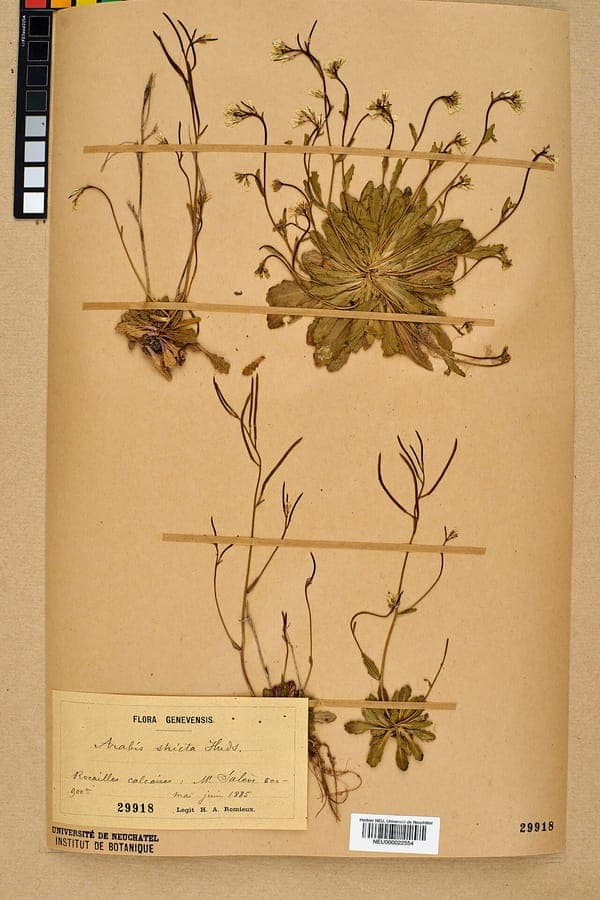
Neuchâtel Herbarium / CC BY-SA 3.0, via Wikimedia Commons
Arabis scabra: complete guide
Arabis scabra
Want to see Arabis scabra: complete guide in your garden?
1 minute, no credit card
Overview
Arabis scabra, also known as Bristol rock-cress or rough rockcress, is an elegant alpine plant native to Western Europe. This little gem naturally occurs in mountain areas from France to the Alps, especially on rocky slopes. The plant is renowned for its delicate white flowers and compact growth habit.
Arabis scabra is a popular choice for gardeners seeking an alpine beauty without complicated care. With its silky foliage and pure white flowers, it is a valuable addition to rock gardens and alpine schemes.
Appearance and Bloom
Arabis scabra grows as a compact, mat-forming herb reaching 10-30 cm in height. The stems are slender and branched, covered with fine, silky hairy foliage. The leaves grow densely along the stem in a grayish-green color.
Flowers appear from May through July and are the highlight of this plant. They are small, approximately 1 cm in diameter, with four white, round petals. The flowers stand in clusters at the stem tips. After flowering, thin, long seed pods form.
Ideal Location
Arabis scabra thrives best in full sun to light shade. Plant it in a location receiving at least 5-6 hours of direct sunlight daily. In warmer climates, light shade can help.
This plant is ideal for rock gardens, alpine troughs, steep slopes, and between stones. It grows well in masonry and can emerge from crevices. Perfect for border edges and elevation changes.
Soil
Arabis scabra grows best in well-drained, lean soils. The plant accepts sandy, gravel, and even poor soils where many other plants would fail. It tolerates rocky and stony soils excellently.
Add gravel or coarse sand if your soil is too clayey. The pH can be neutral to slightly acidic (7.0-7.5). This plant feels at home in poor, dry soils.
Free design
Want to see Arabis scabra: complete guide in your garden? Make a free design now.
Watering
Arabis scabra is extremely drought-tolerant. Once established, it accepts long dry periods without supplemental water. After planting, water regularly until well-established (approximately 2-3 weeks).
Ensure water drains well - this plant cannot tolerate wet feet. In rainy summers, supplemental water is usually unnecessary. In dry summers, water only during extremely arid conditions.
Pruning
Arabis scabra requires minimal pruning. After flowering, you can remove faded flowers to maintain a tidy appearance. Trim the sides slightly if it becomes too sprawling, but be careful not to remove too much.
The plant naturally maintains its compact form, so extensive pruning is usually unnecessary.
Maintenance Calendar
Spring (March-May): Remove dead wood, plant new specimens.
Summer (June-August): Deadhead faded flowers, monitor for pests.
Autumn (September-October): Minimal activity.
Winter (November-February): Plant dormancy, no maintenance needed.
Winter Hardiness
Arabis scabra is extremely hardy and suitable for all northern European climate zones. The plant tolerates temperatures well below freezing. The strong, deep roots help it through harsh winters.
The plant may experience problems in extremely wet winters due to excess moisture. Ensure excellent drainage during winter.
Companion Plants
Arabis scabra grows well with other alpine and rock plants:
- Other Arabis species (A. alpina, A. blepharophylla)
- Basket-of-gold (Aurinia saxatilis)
- Saxifrage species
- Stonecrops (Sedum species)
- Thyme (Thymus species)
- Ornamental grasses for texture
Conclusion
Arabis scabra is a charming alpine plant that brings natural beauty to rock and mountain gardens. With its delicate white flowers, compact growth, and drought tolerance, it is perfect for gardeners seeking something rare without fuss.
Available from specialized alpine plant suppliers, Arabis scabra is a valuable addition to alpine garden designs. Explore gardenworld.app for alpine plant combinations and rock garden ideas for your garden transformation.
Want to see Arabis scabra: complete guide in your garden? Make a free design now.
Upload a photo, pick a style, and get a photorealistic design with plant list in under a minute.
10,000+ gardens designed already
No credit card required


Similar plants
Brassica cretica: complete guide
Brassica cretica
Brassica cretica, the Cretan cabbage, grows wild on Aegean cliffs. Discover how to grow this drought-tolerant, yellow-flowered Mediterranean perennial.
Corsican cabbage: complete guide
Brassica insularis
Corsican cabbage is a rare Mediterranean rock cabbage with white flowers and blue-green leaves. Location, soil and winter protection.
Prostrate cabbage: complete guide
Brassica procumbens
Prostrate cabbage is a creeping North African cliff plant with yellow flowers. Discover location, soil type and winter protection.