
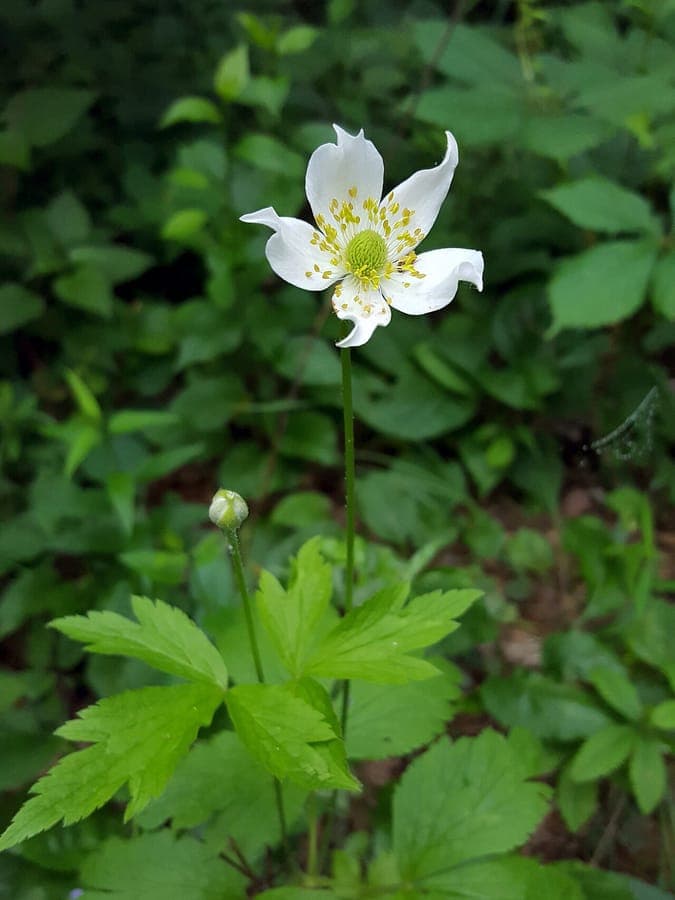
Eric Hunt / CC BY-SA 4.0, via Wikimedia Commons
Anemone virginiana: complete guide
Anemone virginiana
Want to see Anemone virginiana: complete guide in your garden?
1 minute, no credit card
Overview
Anemone virginiana, commonly known as Thimbleweed or Tall Anemone, is an elegant wildflower native to North America. This graceful perennial belongs to the Ranunculaceae family and grows naturally from Canada through the eastern United States. The common name refers to the distinctive thimble-like seed heads that develop after flowering.
Appearance and Bloom
The plant reaches heights of 40-100 cm with elegant, branching flower stems. Pure white flowers, approximately 2-3 cm in diameter, appear abundantly from July through August. After blooming, distinctive fluffy seed heads develop that remain ornamental throughout autumn. The leaves are trifoliate with deeply divided segments, giving the plant an airy, delicate appearance.
Ideal Location
Thimbleweed performs best in dappled shade to partial sunlight. A north-facing location or beneath deciduous trees is ideal. Protect from intense afternoon sun in hot climates. The plant appreciates somewhat sheltered spots with good air circulation.
Soil
Requires consistently moist, well-draining soil rich in organic matter. Ideal composition includes garden soil mixed with peat moss or leaf mold. Heavy clay soils should be amended with sand and humus. Soil pH should be neutral to slightly acidic.
Free design
Want to see Anemone virginiana: complete guide in your garden? Make a free design now.
Watering
The plant prefers regular water supply, particularly during growing season. Maintain moist soil without waterlogging. Apply mulch to retain moisture. Water daily during dry periods to support vigorous growth and flowering.
Pruning
Pruning is not essential for plant health. Remove only dead or damaged stems in spring. After flowering, you may leave seed heads for self-sowing or remove them for neater appearance.
Maintenance Calendar
April: Plant acquisition and installation. May-June: Apply mulch layer. July-August: Water regularly during bloom. September: Remove seed heads if desired. October: Clear dead foliage. November-March: Winter dormancy, minimal care required.
Winter Hardiness
Anemone virginiana is fully hardy to zone 3, surviving temperatures to -45 degrees Celsius. No supplemental protection needed in temperate climates. In hot climates, shade is beneficial.
Companion Plants
Pairs beautifully with other wildflowers like Echinacea, Monarda, and Phlox. Excellent as understory planting beneath shrubs. Combines well with ferns and ornamental grasses.
Closing
Anemone virginiana brings ethereal elegance and natural beauty to any garden. With minimal maintenance and proper moisture, this wildflower will bloom reliably for years. Available at major garden centers. Learn more about garden design at gardenworld.app/en and gardenworld.app/nl.
Want to see Anemone virginiana: complete guide in your garden? Make a free design now.
Upload a photo, pick a style, and get a photorealistic design with plant list in under a minute.
No credit card required


Similar plants
Drummond's anemone: complete guide
Anemone drummondii
Discover Drummond's anemone (Anemone drummondii): a silvery-grey mountain plant for cool rock gardens and alpine troughs.
Korean clematis: complete guide
Clematis serratifolia
Clematis serratifolia is a hardy climber with fragrant yellow bell flowers in August-September. Pruning group 3, location and care tips.
Aquilegia brevistyla: complete guide
Aquilegia brevistyla
Discover Aquilegia brevistyla, the elegant North American columbine. Growing tips, shade tolerance, and design ideas for woodland and shadowed gardens.