
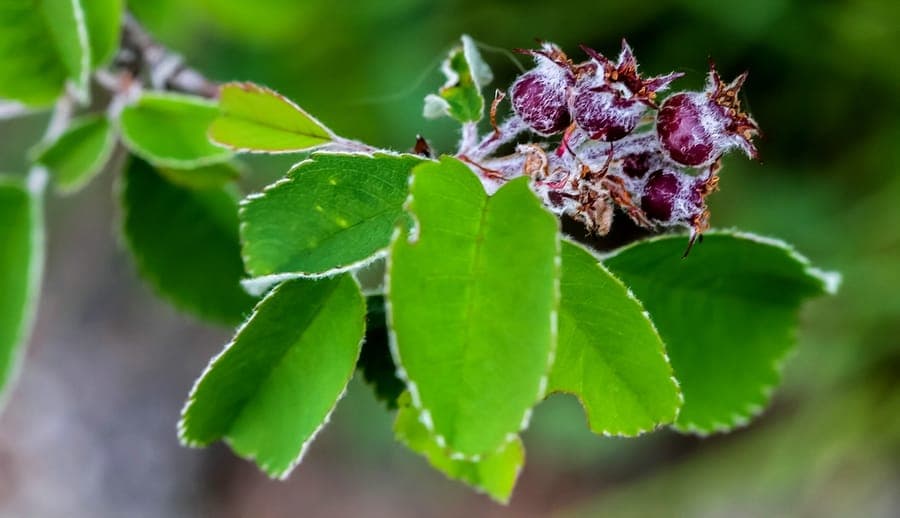
Hedwig Storch / CC BY-SA 3.0, via Wikimedia Commons
Coastal serviceberry: complete guide
Amelanchier obovalis
Want to see Coastal serviceberry: complete guide in your garden?
1 minute, no credit card
Overview
Coastal serviceberry (Amelanchier obovalis) is a deciduous, multi-stemmed native of the eastern United States, naturally occurring from Delaware, Pennsylvania, and New Jersey south through Maryland, Virginia, the Carolinas, and into Georgia. Described botanically in 1903 by William Willard Ashe from an original description by Andre Michaux, it belongs to the rose family (Rosaceae) and shares the genus with many beloved ornamental serviceberries. While it is less widely sold at nurseries than Amelanchier lamarckii or Amelanchier canadensis, coastal serviceberry is an excellent choice for naturalistic plantings, wildlife-friendly gardens, and anyone who wants a compact, multi-season native plant. At gardenworld.app you can explore how this species fits into a complete planting scheme for your front or back yard.
The plant forms a clump of multiple stems rising from a single root crown, reaching a moderate height and spread over several years. Its moderate rate of growth means it fills in steadily without overwhelming smaller garden spaces. What makes coastal serviceberry genuinely special is its sequence of interest across the entire season: brilliant white flowers in early spring before the leaves emerge, sweet edible berries ripening in late spring and early summer, and then warm autumn foliage in shades of orange, red, and gold.
Appearance and bloom cycle
Coastal serviceberry produces its flowers in upright clusters known as racemes, typically opening in April in most of its native range. The individual flowers are white, with five narrow, slightly reflexed petals that give the blossoms an airy, almost delicate quality. The flowering period lasts two to three weeks, and in mild springs it can begin in late March. Because the flowers appear before or just as the leaves are unfolding, the display is especially clean and striking.
The leaves are oval to obovate in shape - the species name "obovalis" refers to this reverse egg-shape - with a medium texture and fresh green colour. They remain healthy and clean through summer and then turn outstanding shades of warm orange and red in autumn before falling.
After flowering, small round fruits develop. They pass through green and then red before fully ripening to a blue-purple in May and June. The berries are edible and have a mild, pleasantly sweet flavour that is often compared to blueberries. They are popular with birds, which strip the plant quickly in some gardens.
Ideal location
Coastal serviceberry grows best in full sun to light partial shade. It naturally occupies open woodland edges, scrubby coastal plains, and sandy upland forests - habitats that receive good light for most of the day. In the garden, a position that gets at least four to six hours of direct sun per day will reward you with the most abundant flowering and berry production.
The plant works well in a mixed border, as a specimen in a naturalistic planting, as part of a wildlife hedge, or as understory planting beneath light, airy-canopied trees. Its multi-stemmed habit gives it a natural, informal character that suits relaxed garden styles more than clipped, formal designs.
Avoid placing it in low spots where water sits for extended periods, or in dense dry shade. While it adapts to a range of conditions, waterlogged soil is the greatest risk to its long-term health.
Soil
Coastal serviceberry prefers a slightly acid to neutral soil with a pH between 5 and 7. Its native coastal habitats are often sandy and well-drained, with a reasonable supply of organic matter from leaf litter and decaying plant material. Replicating these conditions in the garden gives the best results.
When planting, enrich the planting hole with mature compost to improve organic content and moisture retention. On heavy clay soils, working in coarse grit or perlite will improve drainage significantly. Chalk or very alkaline soils above pH 7 are not suitable: the plant can develop chlorosis (yellowing of the leaves caused by lime-induced iron deficiency).
Apply a mulch of 5 to 8 cm of bark, wood chip, or compost around the base of the plant, keeping it clear of the stems. This layer holds moisture, suppresses weeds, and moderates soil temperature through both summer and winter.
Free design
Want to see Coastal serviceberry: complete guide in your garden? Make a free design now.
Watering
In its first growing season, coastal serviceberry needs regular watering to establish a strong root system. Water deeply once a week - more frequently during hot, dry spells - allowing the upper few centimetres of soil to dry between waterings but never letting the root zone dry out completely.
From the second year onward, established plants are considerably more drought-tolerant. They can cope with short periods of summer dryness without lasting harm, especially if the soil contains good organic matter. In very dry summers, supplemental watering is still worthwhile to maintain vigour and berry production.
Water at the base of the plant rather than overhead to reduce the risk of fungal leaf problems. Avoid persistent waterlogging at any time of year.
Pruning
Coastal serviceberry naturally develops a well-structured, bushy form and needs relatively little intervention. The main annual task is removing dead, diseased, or damaged wood in late winter or very early spring, before growth begins.
If shaping is needed, the best time to cut is immediately after flowering - in May once the blossoms have faded. Pruning at this point avoids removing flower buds that the plant will set on new growth through summer for the following year.
For long-term rejuvenation, remove one third of the oldest, thickest stems at the base every three to four years. This hard coppicing of a portion of the stems encourages vigorous new shoots from the root crown and keeps the plant young and floriferous.
Avoid heavy pruning that removes most of the canopy at once. This weakens the plant significantly and may reduce flowering for two or three seasons.
Maintenance calendar
February - March: Inspect for winter damage. Remove dead or crossing stems. Top-dress around the base with acid compost if the soil is borderline pH.
April - May: Enjoy the white spring flowering. Prune lightly for shape immediately after bloom. Keep watering if the spring is dry.
June - July: Harvest ripe berries for culinary use or leave them for birds. Check for any signs of fungal disease and treat early.
August - September: Reduce watering gradually as days shorten. Avoid nitrogen-heavy feeds at this point.
October - November: Enjoy autumn colour. After leaf fall, apply a fresh layer of mulch around the base.
December - January: Dormant period. No active management needed.
Winter hardiness
Coastal serviceberry is rated for USDA zones 4 to 9, meaning it tolerates winter temperatures down to approximately -34 degrees Celsius in zone 4 through relatively mild winters in zone 9. In practice, this makes it fully hardy across the UK, the Netherlands, Belgium, and most of central Europe. It is well suited to coastal climates where winters are wet but not excessively cold, and it handles late frosts in April with minimal damage to already-opened flowers.
Newly planted specimens benefit from a thick mulch in their first winter to insulate the root zone. Established plants need no winter protection in most temperate European gardens. In regions with very wet winters, good drainage matters far more than frost protection.
Companion plants
Coastal serviceberry pairs naturally with plants that share similar soil preferences and complement its seasonal display:
- Vaccinium corymbosum (highbush blueberry): same soil pH preference, similar berry season and autumn colour
- Cornus stolonifera (red osier dogwood): contrasting winter stem colour, native habitat overlap
- Fothergilla gardenii (dwarf fothergilla): simultaneous white, fragrant spring flowers and brilliant autumn foliage
- Viburnum dentatum (arrowwood viburnum): summer white flowers and blue-black autumn berries
- Aquilegia canadensis (eastern columbine): red-and-yellow spring flowers at ground level, complementing the overhead white blossom
Seeking advice on plant spacing and garden design? gardenworld.app offers tools and inspiration for creating a cohesive planting plan suited to your garden dimensions and style.
Closing thoughts
Coastal serviceberry (Amelanchier obovalis) is a compact, multi-season native plant that earns its place in any garden seeking beauty and ecological value. Its white spring flowers light up the garden before most other plants stir; its sweet edible berries delight both people and wildlife; and its warm autumn foliage provides a fitting seasonal finale.
The species is not always easy to find at mainstream garden centres but is worth seeking from specialist nurseries and online sources. Once established, it is a low-maintenance, long-lived companion that repays minimal care with decades of seasonal pleasure.
Want to see Coastal serviceberry: complete guide in your garden? Make a free design now.
Upload a photo, pick a style, and get a photorealistic design with plant list in under a minute.
10,000+ gardens designed already
No credit card required


Similar plants
Juneberry: complete guide
Amelanchier canadensis
Juneberry (Amelanchier canadensis) is an elegant shrub with stunning white spring flowers, edible red berries, and brilliant fall foliage. Discover our comprehensive care guide.
Juneberry: complete guide
Amelanchier lamarckii
Everything about the Juneberry (Amelanchier lamarckii): spring blossom, autumn colour, edible berries and care. Expert tips for this versatile four-season tree.
Amelanchier alnifolia: complete guide
Amelanchier alnifolia
Saskatoon serviceberry is a North American shrub with white spring flowers, stunning autumn color, and edible dark berries. Learn cultivation, wildlife benefits, and landscape uses.