
Abu Shawka / CC BY-SA 4.0, via Wikimedia Commons
Black Thorn Aloe: complete guide
Aloe melanacantha
Want to see Black Thorn Aloe: complete guide in your garden?
1 minute, no credit card
Overview
Aloe melanacantha, commonly called Black Thorn Aloe, is a fascinating compact succulent native to South Africa's Cape Provinces. The name "melanacantha" refers to the dark, nearly black spines characteristic of this species, distinguishing it from many other aloe varieties.
This unique plant is prized by collectors for its compact growth and striking physical characteristics. It is ideal for container cultivation and offers year-round visual interest.
Appearance and bloom
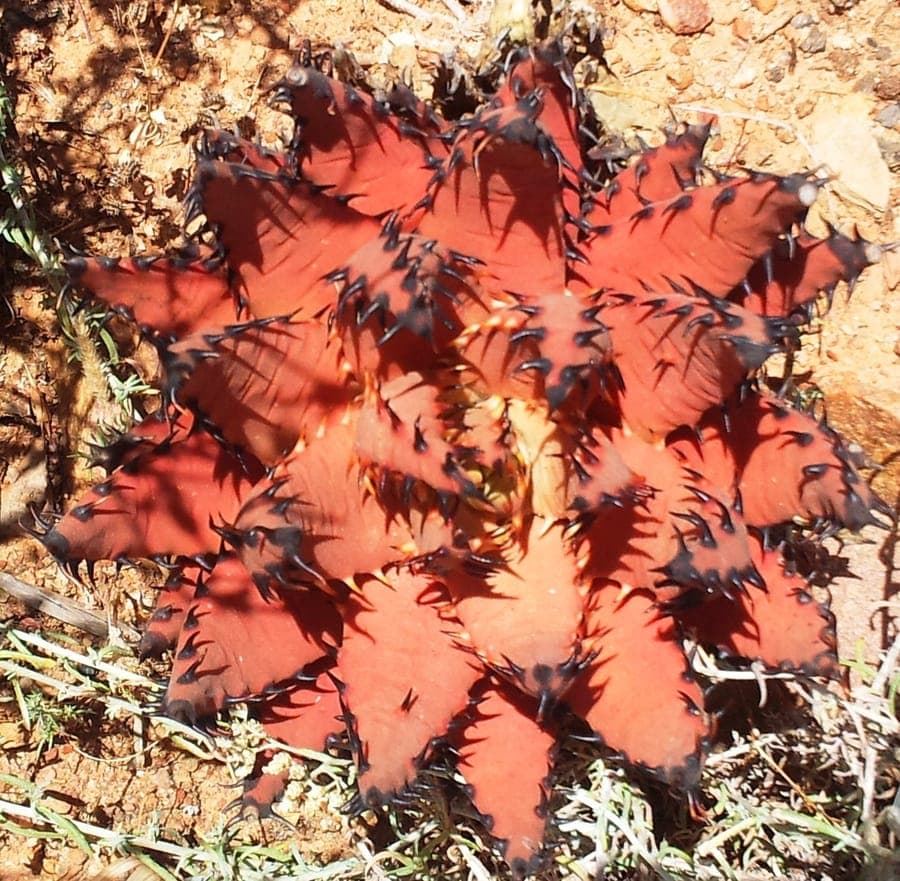
Black Thorn Aloe forms densely stacked rosettes of gray-green leaves typically growing 20-40 cm tall. The most striking feature is the dark, nearly black spines running along the leaf margins. These spines give the plant a distinctive, dramatic appearance.
The leaves are thick and fleshy, typical of aloe species. From spring through summer, beautiful yellow to orange flowers emerge in vertical inflorescences. The blooms contrast beautifully with gray-green foliage and dark spines.
Ideal location
Black Thorn Aloe thrives best in intensely sunny locations. Minimum 6-8 hours of direct daily sunlight is essential for healthy growth. The dark spines intensify in color with full sun exposure.
Indoors, position near south- or west-facing windows. This is a light-hungry plant. Without sufficient sunlight, the plant may become etiolated (stretched) and fail to flower.
Soil
Black Thorn Aloe requires exceptionally well-draining soil. Use a mix specifically formulated for cacti and succulents, comprising approximately 60% mineral-rich soil, 30% sand or perlite, and 10% organic matter. The plant absolutely cannot tolerate wet feet.
Ensure generous drainage holes in all pots. Many collectors add extra gravel layers to pot bottoms. Water must always flow freely.
Watering
Watering must be done very cautiously. During growing season, water only when soil is completely dry. Water thoroughly but never allow standing water.
During autumn and winter, water much less frequently or not at all. The plant readily adapts to drought. This is a true drought-tolerant species. Overwatering is the primary cause of problems.
Free design
Want to see Black Thorn Aloe: complete guide in your garden? Make a free design now.
Pruning
Minimal pruning is needed due to naturally compact growth. Remove only dead or damaged leaves carefully. Watch for sharp spines when handling this plant.
Once flower spikes fade, they can be carefully removed, though the plant will naturally shed these.
Maintenance calendar
Spring (March-May): Resume watering as temperatures rise. Growth begins. Maximize sun exposure. Optional feeding may start.
Summer (June-August): Peak growing season. Water cautiously but consistently. No feeding needed.
Autumn (September-October): Gradually reduce water as temperatures decline.
Winter (November-February): Minimal water. Plant rests in cooler conditions. No feeding.
Winter hardiness
Black Thorn Aloe is very hardy, tolerating temperatures down to approximately -8 degrees Celsius under dry conditions. This makes it suitable for many temperate climates. It is among the hardiest aloe species.
Wet feet are far more damaging than cold. Ensure good drainage, especially during wet winter months.
Companion plants
Black Thorn Aloe pairs well with:
- Other compact succulents
- Stonecrop and Sedum varieties
- Echeveria and other rosette-formers
- Dark-foliaged plants for contrast
- Ornamental grasses
- Other spine-bearing plants
The dark spines contrast beautifully with lighter-foliaged plant neighbors.
Closing thoughts
Aloe melanacantha is an excellent choice for succulent enthusiasts who appreciate interesting details. The dark spines make this a standout plant in any collection. The compact growth and hardiness make it practical.
With basic care, this plant will thrive and flower for years. Perfect for container cultivation and small gardens. Discover more inspiration for succulent gardens on gardenworld.app. GardenWorld enables you to build unique plant collections with expert guidance.
Want to see Black Thorn Aloe: complete guide in your garden? Make a free design now.
Upload a photo, pick a style, and get a photorealistic design with plant list in under a minute.
No credit card required


Similar plants
Aloe castanea: complete guide
Aloe castanea
Discover Chestnut aloe, a South African succulent. Growth, nutrition, and garden integration for warm climates and container culture.
Aloe pratensis: complete guide
Aloe pratensis
Learn how to grow Meadow aloe, a South African succulent. Nutrition, propagation, and front yard integration for warm climates or containers.
Pretoria aloe: complete guide
Aloe pretoriensis
Discover Aloe pretoriensis, an elegant South African succulent with striking red blooms. Learn care tips, ideal conditions, and companion planting for this hardy, drought-tolerant plant.