
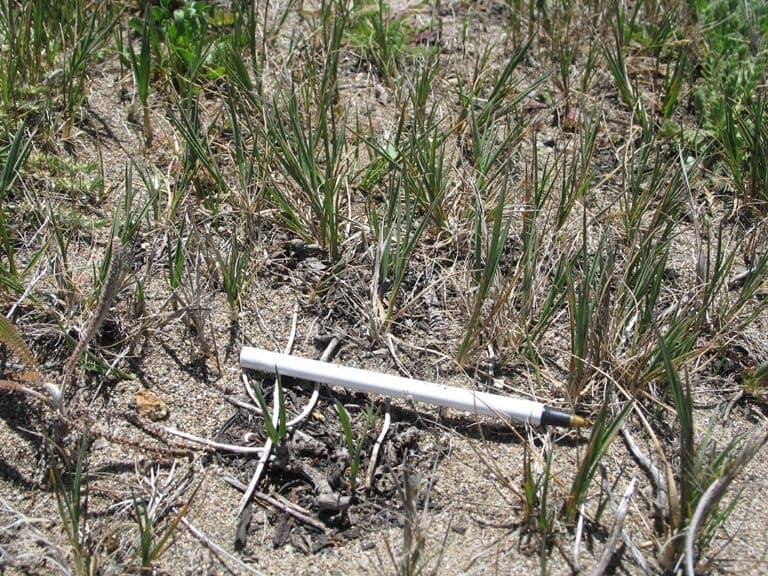
Robert Steers/NPS / CC0, via Wikimedia Commons
Seashore Bentgrass: complete guide
Agrostis pallens
Want to see Seashore Bentgrass: complete guide in your garden?
1 minute, no credit card
Overview
Agrostis pallens, commonly known as seashore bentgrass or dune bentgrass, is a graceful perennial grass belonging to the family Poaceae. Native to the Pacific coast of North America - from British Columbia in Canada south to northwestern Mexico - this species thrives in sandy, open environments close to the sea. Although less commonly found in European gardens, it has much to offer as a low-maintenance ornamental grass with real character.
The Latin epithet 'pallens' translates as 'pale' or 'becoming pale', referring to the light, almost whitish colour the flower heads take on as they mature. The plant spreads via rhizomes (underground stems), forming dense, even mats that suppress weeds and stabilise loose soils effectively. If you are planning a garden featuring flowing ornamental grasses, gardenworld.app offers personalised design inspiration tailored to your space.
Appearance and bloom cycle
Seashore bentgrass is a medium-sized perennial grass that typically reaches 30 to 60 cm in height. The narrow, linear leaves are bright green with a fine, silky texture. In summer - from June through August - open, branched flower panicles appear above the foliage. These airy plumes sway with the slightest breeze, bringing movement and a translucent quality to borders and plant combinations.
The individual flowers are small and inconspicuous green, but together the panicle creates a decorative effect. After flowering, the seeds turn brown and persist on the plant for several weeks, extending the season of interest well into autumn. Because the plant spreads via rhizomes, it gradually forms a dense mat, making it particularly useful as ground cover in challenging spots.
The growth rate is moderate: the plant expands annually but does not become invasive in most garden situations. The medium blade texture makes it easy to pair with both broad-leaved perennials and other fine-textured plants.
Ideal location
In its natural range, seashore bentgrass grows on open, sunny slopes, dune margins, and coastal grasslands. In the garden, it performs best in a full-sun to lightly shaded position. It is well adapted to sea wind and salt spray, making it exceptionally valuable for coastal gardens and exposed front gardens.
The plant also does well in urban settings, provided the spot receives sufficient direct sunlight each day. In gravel gardens, rock gardens, or contemporary urban designs, Agrostis pallens brings a soft, naturalistic quality. Its swaying habit in the wind adds life and movement to otherwise static compositions.
Combine it with other low-growing, drought-tolerant plants such as Sedum, Armeria, or blue fescue (Festuca glauca) for a coherent, easy-care planting scheme. Garden centres across the UK and Ireland carry bentgrass species; ask specifically for Agrostis pallens if it is not on display.
Soil
Agrostis pallens is undemanding in terms of soil, thriving across a wide pH range of 5.5 to 8. It tolerates both sandy and loamy soils as long as drainage is adequate. Rich, poorly drained clay soils are unsuitable: waterlogging during winter is the main cause of plant failure.
When planting in heavy ground, work grit or coarse sand into the upper 20 to 30 cm of soil to improve drainage. Extra fertilising is generally unnecessary and can be counterproductive - overly fertile conditions produce lush but floppy growth that looks less attractive and may need staking.
A lean, well-drained soil is the key to compact, upright plants with the best ornamental effect. This makes seashore bentgrass an ideal choice for low-input gardens where the soil is deliberately kept lean.
Watering
Once established, seashore bentgrass is notably drought tolerant. In its native coastal range it survives long dry summers without supplementary water. In the garden, regular watering during the first growing season is important to help the plant establish a strong root system; after that, irrigation can be greatly reduced.
For established plants: water only during prolonged dry spells lasting more than two weeks, and allow the soil to dry out fully between waterings. Overwatering is more harmful than drought. In the wetter climates typical of northern and central Europe, supplementary watering is rarely needed in normal summers.
In autumn and winter, watering needs drop sharply. Never allow water to pool around the crown during cold months - this is the most common cause of failure in ornamental grasses of this type.
Free design
Want to see Seashore Bentgrass: complete guide in your garden? Make a free design now.
Pruning
Seashore bentgrass requires minimal pruning. The main cut takes place at the end of winter, in February or early March, before new growth begins. Cut or shear the plant back to approximately 10 cm above ground level. This stimulates fresh, vigorous new growth and prevents the centre of the clump from dying out.
No pruning is needed during the growing season. The dried flower plumes from the previous year can be left standing through winter, where they add seasonal interest - especially when frosted. Remove any loose dead leaves by hand if they become unsightly.
After the main late-winter cut, the plant grows back quickly and produces a fresh, neat clump by early May. Avoid cutting during summer's flowering period, as this removes the ornamental plumes.
Maintenance calendar
February - March: cut back to 10 cm, remove dead material, check if the plant has spread too far.
April - May: new growth begins, neighbouring perennials can be fertilised but the grass itself does not need feeding.
June - August: peak of flowering, little maintenance required, water only in extreme drought.
September - October: plumes begin to dry, leave them standing for winter interest.
November - January: no active maintenance, ensure no waterlogging is developing around the roots.
Winter hardiness
Agrostis pallens originates from a climate zone broadly comparable to much of western Europe. It tolerates frost well and is reliably hardy to USDA zone 6, corresponding to minimum temperatures of approximately -23 degrees Celsius. In the UK and Ireland (USDA zone 8-9), the plant overwinters without difficulty.
A deep snow cover is not a problem and can even be protective. What the plant tolerates less well is the combination of wet soil and persistent frost. Good drainage is therefore essential to minimise winter damage.
In harsh winters, leaf tips may freeze and turn brown. This looks temporarily unattractive but the plant almost always recovers quickly once temperatures rise. Mulching with pine needles or a loose layer of twigs is advisable only in the coldest regions.
Companion plants
Seashore bentgrass combines beautifully with plants that prefer dry to moderately moist, open positions:
- Festuca glauca (blue fescue): similar height, contrasting blue-grey colour
- Armeria maritima (thrift): pink flower heads above fine grass foliage
- Sedum spectabile: succulent, broad-leaved contrast to the narrow grass blades
- Achillea millefolium (common yarrow): white or yellow flowers, same site requirements
- Echinacea purpurea (purple coneflower): taller accent behind the grass in the border
For a fully coherent garden design, gardenworld.app allows you to generate a personalised planting plan based on photos of your own garden. Agrostis pallens works particularly well in front garden schemes, gravel surfaces, and as a transitional plant between hard landscaping and planting areas.
In mixed borders, position seashore bentgrass in groups of three to five plants to create a flowing, naturalistic effect rather than isolated single specimens.
Closing
Agrostis pallens is a versatile, low-maintenance ornamental grass that deserves far greater recognition in European gardens. Its fine texture, tolerance for drought and coastal conditions, and modest pruning requirements make it an ideal choice for modern, sustainable planting schemes. Look for it at specialist grass nurseries or ask at well-stocked garden centres - it may not always be on standard display, but most can source it on request.
Whether you are designing a coastal garden, a gravel planting, or a contemporary urban front garden, seashore bentgrass is a plant well worth trying. Given the right conditions - sunny, free-draining - it will reward you with years of graceful, low-effort beauty.
Want to see Seashore Bentgrass: complete guide in your garden? Make a free design now.
Upload a photo, pick a style, and get a photorealistic design with plant list in under a minute.
10,000+ gardens designed already
No credit card required


Similar plants
Sporobolus pungens: complete guide
Sporobolus pungens
Sporobolus pungens is a stoloniferous Mediterranean coastal grass with outstanding salt and drought tolerance, perfect for seaside and dry gardens.
Mediterranean aegilops: complete guide
Aegilops biuncialis
Everything about Aegilops biuncialis, a Mediterranean annual grass with ornamental spikes and outstanding drought tolerance for dry gardens.
Silver bluestem: complete guide
Bothriochloa saccharoides
Full guide to Bothriochloa saccharoides (silver bluestem): site, soil, watering, winter hardiness, pruning, and garden companions.