
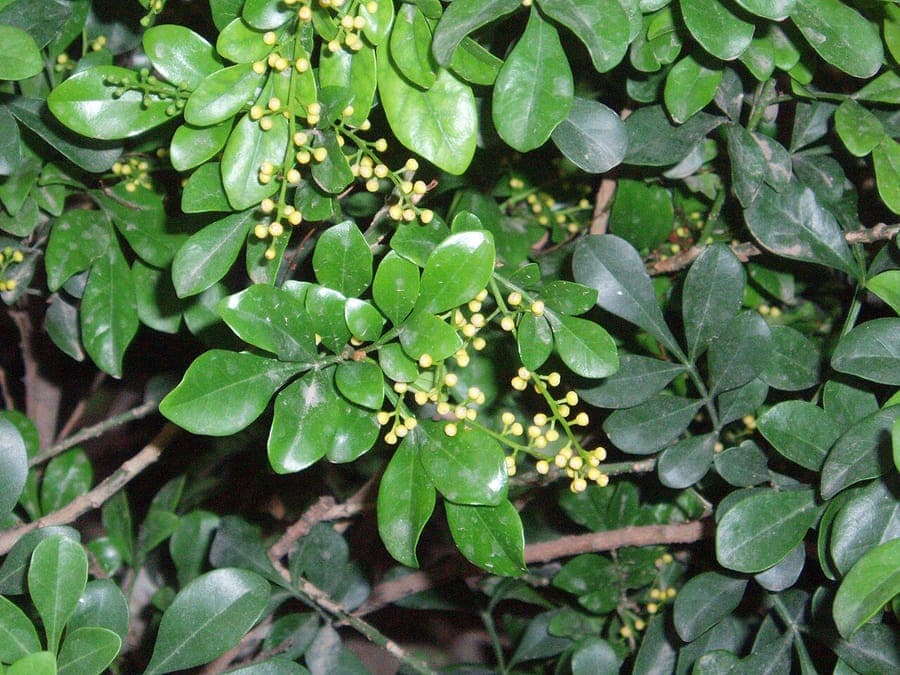
Taken by Fanghong / CC BY 2.5, via Wikimedia Commons
Chinese perfume tree: complete guide
Aglaia odorata
Want to see Chinese perfume tree: complete guide in your garden?
1 minute, no credit card
Overview
The Chinese perfume tree (Aglaia odorata), also known as Siulan or Chinese perfume plant, is a beautiful tropical tree native to Southeast Asia, from China to Malaysia. This member of the Meliaceae family is a semi-woody plant known for its delightfully fragrant yellow flowers and compact growth habit.
In its natural habitat, this tree grows in rainforests and mountainous areas of Thailand, Cambodia, Laos, Vietnam, and southern China, adapting to warm and humid climates. This origin makes it an ideal plant for warm indoor spaces or gardens in tropical regions.
Appearance and Bloom
The Chinese perfume tree is a compact tree or large shrub, usually 2-5 meters tall indoors, but up to 15 meters tall in warm, open gardens. The tree spreads with fine, delicate branches.
The leaves are small, green, and pointed, densely arranged along the twigs. The fine foliage gives the plant a very delicate, elegant appearance.
The flowers are the main feature of this plant. They appear in small, dense florets atop the twigs. Each flower is small, about 3-5 mm in diameter, but highly fragrant. The flowers are bright yellow in color and have a very pleasant, sweet scent reminiscent of incense.
The blooming period can occur year-round in warm climates, with peak bloom in spring and summer. This makes it a valuable plant for continuous fragrance in gardens.
Ideal Location
The Chinese perfume tree thrives best in warm, protected locations with bright light to full sun. This produces the most and most beautiful flowers. The plant also tolerates light shade.
Position this tree carefully in warmer regions outdoors (USDA zones 10-11), or grow it in pots in rooms with bright light. The plant dislikes strong, direct wind gusts.
Soil
The Chinese perfume tree grows well in moist, fertile soil with good organic matter. The plant is not very fussy about soil type, as long as drainage is reasonable.
Provide regular nutrient supply by adding compost or organic matter. Acidic to neutral pH is preferred, but the plant tolerates slightly acidic soils.
Free design
Want to see Chinese perfume tree: complete guide in your garden? Make a free design now.
Watering
The Chinese perfume tree loves regular moisture, especially during the growing season. Water as soon as the top 2-3 cm of soil feels dry. However, avoid excessive waterlogging.
Water regularly during warm periods, about 2-3 times weekly. Water less in cold periods.
Pruning
Pruning can keep the plant more compact and stimulate more flowers. Light pruning in spring promotes dense, compact growth. Pinch tips of young trees to obtain bushier growth.
After blooming (summer), light pruning can be performed for shape and formation. Avoid drastic pruning, as this can reduce growth.
Maintenance Calendar
January-March: Fertilize and light prune. Begin regular watering. April-June: Blooming period. Water and feed regularly. No pruning. July-September: Continuous bloom possible. Water regularly. Light pruning after bloom. October-December: Water less. Winter preparation in cooler climates.
Winter Hardiness
The Chinese perfume tree is not winter-hardy in temperate climates. In areas with temperatures below 10 degrees Celsius, it must be brought indoors or heavily protected. In USDA zones 10-11, it can overwinter outdoors.
Companion Plants
The Chinese perfume tree combines well with other tropical plants such as gerberas, bougainvilleas, and ficus species. Also beautiful with other fragrant plants.
Conclusion
The Chinese perfume tree is a beautiful choice for tropical gardens or indoor spaces with bright light. With its fragrant flowers and compact growth, this tree delivers years of benefit. Enjoy the delightful fragrance of this exotic plant.
Find seedlings or plants in garden centers with tropical selection, especially in spring. For more garden inspiration and tropical plants, visit gardenworld.app!
Want to learn more about tropical plants? Visit gardenworld.app for more tips and advice!
Want to see Chinese perfume tree: complete guide in your garden? Make a free design now.
Upload a photo, pick a style, and get a photorealistic design with plant list in under a minute.
No credit card required


Similar plants
Muskwood: complete guide
Guarea guidonia
Everything about muskwood (Guarea guidonia): tropical origins, appearance, cultivation in conservatories and warm gardens, care and companions.
Trichilia dregeana: complete guide
Trichilia dregeana
Trichilia dregeana is an African tree with beautiful foliage and striking flowers. Learn how to care for this exotic plant in your garden.
Swietenia macrophylla: complete guide
Swietenia macrophylla
Discover Honduran mahogany - a tropical timber tree with architectural beauty. Growing requirements, care guide and sustainability for warm climates.