

Overwintering kitchen herbs: light is the issue
By the GardenWorld editorial team, updated on
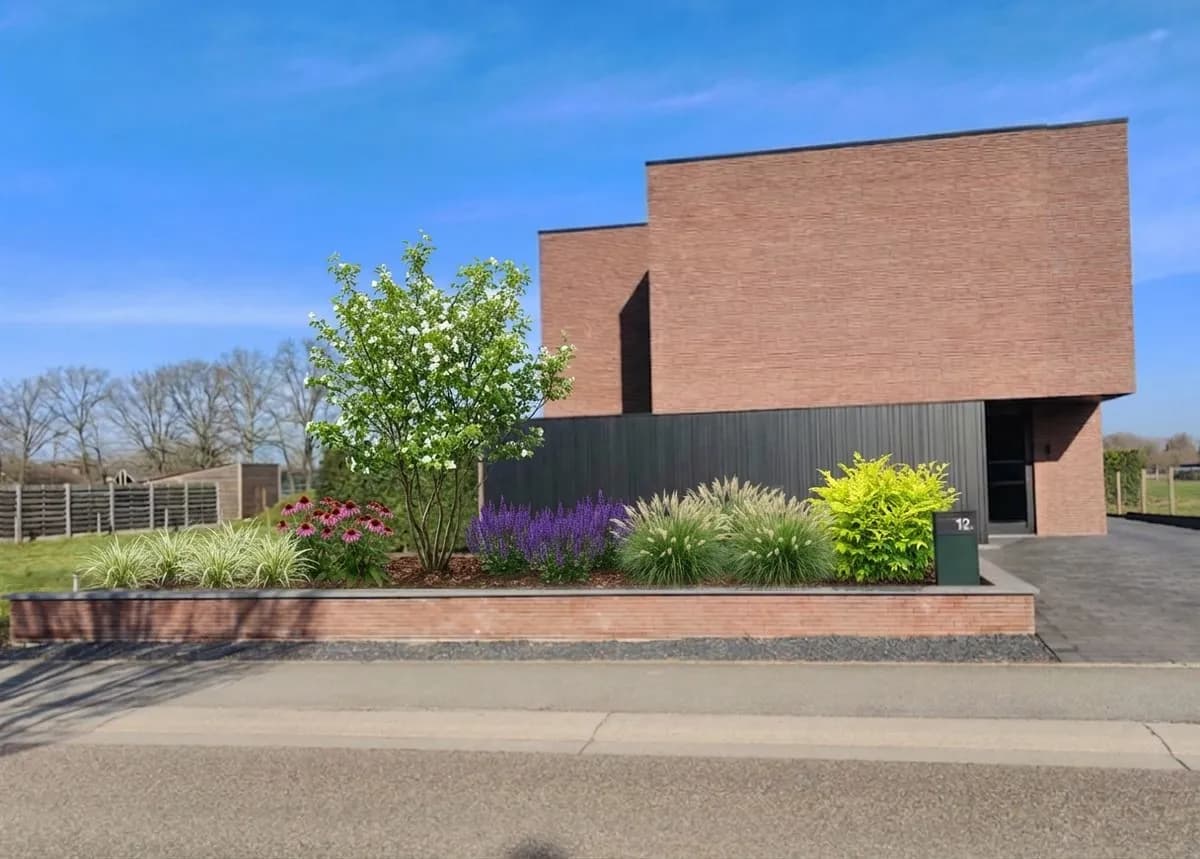
Want to see this in your garden?
Full design in HD: €7.99
Why do your winter herbs die?
The problem is almost never cold or lack of water. It is light. A window lets in less than a third of summer sunlight in October. Herbs on a north-facing windowsill can survive for months without real growth, and eventually they rot anyway. On a south-facing windowsill they do better for a while, but even that is often not enough. The fix is simple: a grow light, about as cheap as two cups of coffee.
Keeping kitchen herbs alive through winter comes down to two things: which variety you pick (some give up fast, others are nearly indestructible) and whether you give them enough light. Skip the grow light and most pots end up in the bin, unless your south window faces the sun directly and you water very carefully.
Grow light: the real tool
A simple LED grow light costing twenty to thirty euros is the difference between herbs that keep growing and herbs that rot. Hang it twenty centimeters above your pots, run it 14 hours a day on a timer, and your herbs will keep growing right through to March.
Without a grow light you have to turn your pots toward the sunniest window every single day, and even then growth stays slow, thin and weak. In December and January even bright afternoon light at the clearest window barely covers the need. With a grow light you get steady, reliable growth all winter.
Which herbs survive winter: yes and no
Herbs that make it through easily
Chervil (Anthriscus cerefolium) overwinters without much trouble and keeps growing slowly, especially with a bit of extra light. Put the pot on a north or east windowsill, no grow light required, and water it sparingly.
Marjoram (Origanum majorana) and oregano (Origanum vulgare) prefer dry, cooler air. They drop some leaves in October and start again afterwards, but stay alive. No grow light needed: a cool windowsill around 15 degrees is ideal, not warmer.
Sage (Salvia officinalis) and thyme (Thymus vulgaris) overwinter most easily of all, especially if you cut them back last year and they grew bushy. Cold and dry by the window, no grow light needed. You can even leave them outside or in an unheated shed, since both tolerate roughly 15 degrees of frost. For these two, winter really is just a rest.
Not sure your windowsill has room for all those pots? On gardenworld.app you can see a preview of your own kitchen or garden before you buy anything.
Herbs that fail without a grow light
Basil (Ocimum basilicum) is the biggest casualty. It wants warmth, at least 15 degrees, and plenty of light. Without a grow light it drops its leaves by December and you find it dead. With a grow light and warmth it can survive, but it never thrives easily.
Parsley (Petroselinum crispum) keeps growing slowly through winter, but only with a grow light. On a windowsill alone it fades out gradually.
Chives (Allium schoenoprasum) follow the same rule: a grow light, or let them rest outdoors through the frost until spring.
Chard (Beta vulgaris subsp. cicla) and spinach (Spinacia oleracea) are seasonal crops. Take them outside or let them go. Do not try to keep them alive indoors all winter.
South window versus grow light
A south-facing window in October, November and December is valuable but not enough on its own. Light measurements show that even the brightest midday sun at a south window in January delivers less than 100 lux, while most herbs want around 1000 lux. In December and January that is a real problem.
The fix: a grow light (LED, 14 to 16 watts) at 20 centimeters distance gives plants exactly what they need. Place it above your sunniest pots and switch it on at 7 am, off at 9 pm. Your herbs will keep growing.
Watering in winter
This part is subtle. Herbs indoors need less water in winter because growth slows down and central heating dries out the air. Water only when the top centimeter of soil feels dry. If your herb is dying, it is rarely the cold, it is usually rot from too much water.
Check every day. Press a finger about a centimeter into the soil. Dry? Water it. Still moist? Wait another two days.
Drainage matters just as much. Make sure every pot has holes in the bottom, otherwise your herb sits in standing water.
Free preview
Create your own garden design
Temperature in the kitchen
Most herbs tolerate temperatures down to about ten degrees. A cool windowsill, around 10 to 12 degrees, is better than a warm room above 20 degrees, because warmth speeds up rot.
Basil is the exception: it wants at least 15 degrees, warmer if possible. Keep it away from a cold window and give it the warmest corner of your kitchen, close to the grow light.
Refreshing your herb pots
In October, cut your herbs back to about ten centimeters above the soil. This pushes out new growth instead of long, thin stems. For basil, pinch off the top so only two leaf pairs remain per stem.
This costs you two weeks of growth, but afterwards you get denser, stronger-looking plants. That beats leaving them alone and finding them dead by December.
Start fresh in March
In March you can sow new herbs or take cuttings from the garden. Days get longer and windowsills warm up. This is your moment to sow fresh basil, parsley and chives for summer.
Do not wait until May. Basil sown in March is ready to pick by May. Basil sown in May is still not fully grown by mid-July.
Common mistakes
The most common mistake is overwatering: herbs grow slowly in winter, and wet soil rots roots faster than it dries out. Feel the soil before you reach for the watering can. A second mistake is a pot with no drainage holes, which drowns the roots within weeks.
Many people bring basil inside too late. Do not wait for the first frosty night in October, since a single cold night is enough to blacken the leaves. Another common mistake is assuming a north window without a grow light is enough for basil or parsley. That window simply does not deliver enough lux, no matter how long the day feels.
Do not place your pots right against a radiator either. The air there gets too dry and too warm, which actually weakens sage and thyme instead of letting them rest. A cooler windowsill, a bit further from the heating, works better for them.
Step by step
Step 1: Hang the grow light
Hang an LED grow light 20 centimeters above your herb pots. Set it on a timer for 14 hours a day, for example 7 am to 9 pm.
Step 2: Cut your pots back
Trim your existing herbs to about ten centimeters tall. This encourages new growth instead of thin, leggy stems.
Step 3: Check the drainage
Make sure every pot has holes in the bottom, and place a saucer underneath.
Step 4: Check the water
Too much water is a death sentence for the roots. Check daily: does the soil feel dry? Water it. Still moist? Wait.
Step 5: Place in the best spot
Put your pots as close as reasonably possible to the grow light. Direct overhead light works best.
Step 6: Wait, then harvest carefully
From September to March your herbs grow slowly. Pinch off leaves carefully, never more than a third of the plant at once.
Frequently asked questions
Can I leave my basil outside? No. Basil dies from frost damage almost immediately. Bring it inside before the first cold nights in October.
My parsley has gone thin and leggy, can I save it? Partly. Cut it back to about five centimeters tall. It will be thinner at first, but it often sprouts again, especially with a grow light.
How much water does an herb need in winter? Much less than in summer. A small pot of basil might need water only once a week. Always check first whether the soil feels dry.
Can I keep winter herbs in a cold greenhouse? Yes, as long as the greenhouse stays above zero degrees. Do not leave them outside once frost sets in.
Herb corner for winter
Here is an ideal setup: a south-facing window with a shelf underneath and a grow light mounted above it. Place your basil and parsley pots directly under the light. To the right, further from the lamp, put your sage, oregano and chervil, since they need less light. Check the water daily and switch the grow light on every evening.
By February and March you still have enough leaves to cook with, and by early March you can start sowing fresh basil for summer.
See it in your own garden first
Want to see how an herb corner would look in your own kitchen or garden? Upload a photo on gardenworld.app and get a free preview of a new design with these herbs. Want the sharp image with a full plant list? That costs 7.99 euros, one time, no subscription.
Create your own garden design
Upload a photo, pick a style, and get a photorealistic design with plant list in under a minute.
Full design in HD: €7.99

Related articles
PlantingGrow basil without killing it: tips for thriving plants
Supermarket basil dies within weeks. Learn how to split the pot, water from below, and pinch the tips to keep it alive for months.
PlantingParsley won't germinate: how to get it growing
Parsley is a slow germinator that tests your patience. Discover why the seed takes so long and how to get it sprouting faster.
PlantingKeeping mint under control in the garden
Mint spreads uncontrollably. Learn how to bury a root barrier, which varieties are less wild, and how to harvest and dry mint.