

A low-maintenance front garden with plants
By the GardenWorld editorial team, updated on
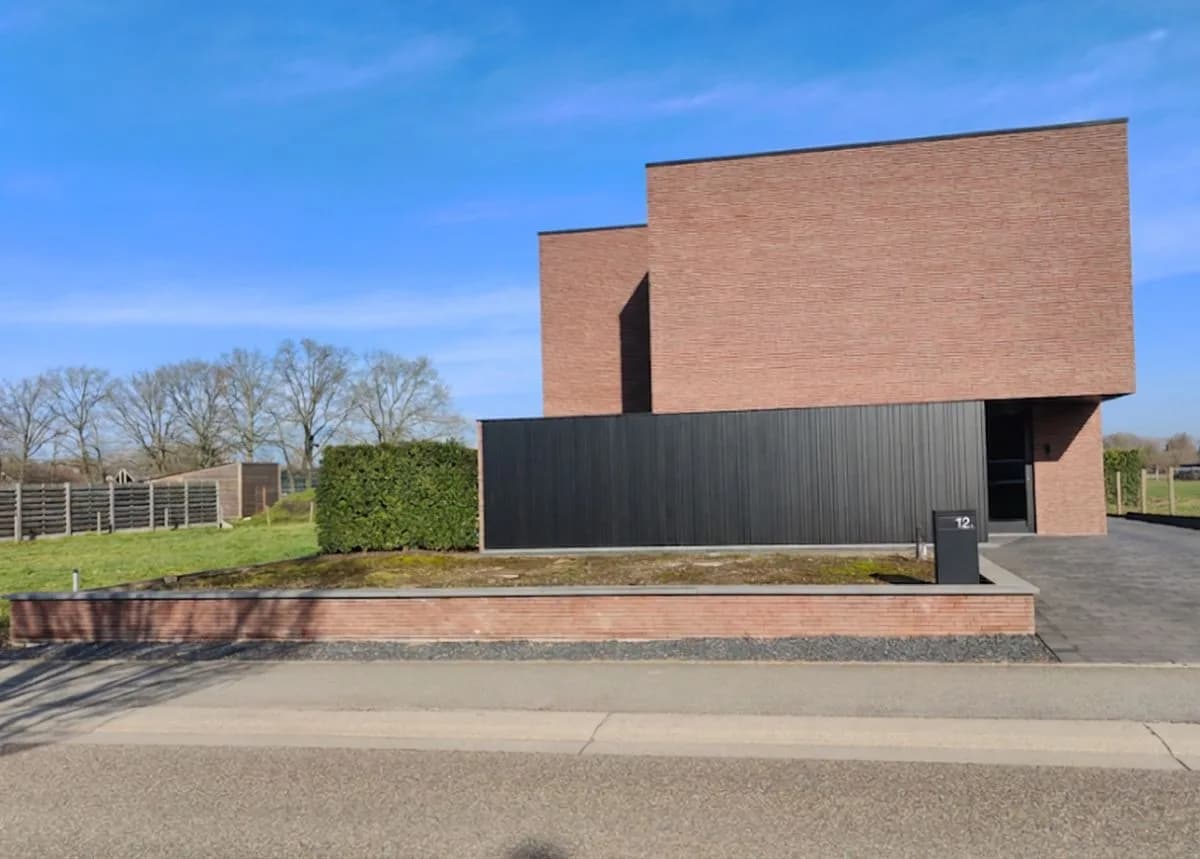
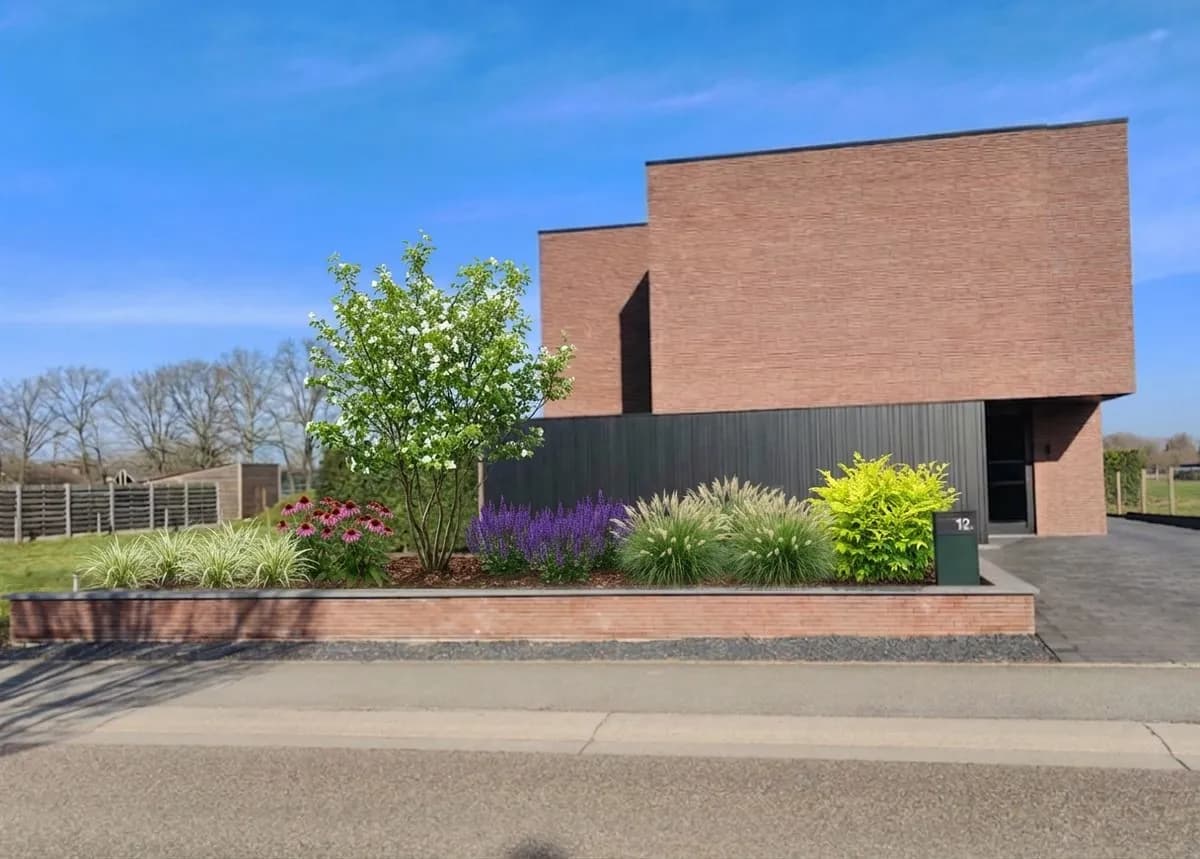
Want to see this in your garden?
Full design in HD: €7.99
A green entrance without constant work
A front garden does not need to demand much attention. Instead of a lawn that needs mowing every two weeks, you can choose groundcovers, permanent shrubs and mulch. This is the formula for a front garden that looks well-maintained year-round, without you spending hours on it. After the first growing season, this design mainly requires patience and the occasional check, not the annual grind.
The key is laying a good foundation: proper drainage, thick mulch layer, and plants that can establish themselves independently in the soil. First year watering in dry spells, then many groundcovers and shrubs can manage with rainwater.
Why groundcovers beat grass
Grass in a front garden is logistically awkward. You need a mower, you have to stick to a schedule (especially May and June every two weeks), and after rain the lawn sometimes gets waterlogged. Groundcovers do the work without all that fuss.
Groundcovers grow horizontally, form a thick carpet that suppresses weeds, and need no cutting tools. Popular choices are evergreen types like Hedera (ivy), Ajuga (ground ivy) and Pachysandra. These grow in shade and part-shade, tolerate compaction, and work well in front gardens. For sunny fronts, use sedum (succulent plants) and thyme, which also handle drought.
Combine groundcovers per zone, not everything haphazardly mixed. This gives calm and makes maintenance easier: all plants in the same zone have the same water needs.
Shrubs: the framework of the front garden
Groundcovers alone feel bare. Add various low shrubs for height variation and winter structure. A 50-square-metre front garden can be well-filled with just 5-7 shrubs.
Choose evergreen shrubs with interesting leaf colour or form: Ilex crenata 'Green Hedge' (compact, dark green), Euonymus 'Emerald Gaiety' (dark green with white edges), Lonicera nitida (fine leaves), or Photinia 'Little Red Robin' (red young foliage). These shrubs grow compact and only need annual shaping in March-April.
Do not plant shrubs in straight lines. Place three to five of the same type in an asymmetric cluster, scattered across the front garden. This works much better than one shrub here and there. Give them two seasons to fill completely.
Mulch: the foundation of low maintenance
Mulch is not just cosmetic. A layer of 5 to 8 centimetres of finely chipped bark, shredded pruning material or gravel does four things at once: it suppresses weeds, retains moisture in the soil, regulates soil temperature, and breaks down slowly into humus.
Mulch must be topped up each spring. A 50-square-metre front garden needs about two big bags of fine bark annually. This is cheaper than regularly pulling weeds and saves you hours of work.
Important: never apply mulch against plant stems. Leave a finger's width space from shrub or groundcover. Otherwise root collars rot and you get fungus. Apply mulch carefully around each plant.
No grass, what instead?
Instead of grass you can choose a walking stone path from front door to gate (on a drainage layer), fine gravel or stone chippings on weed fabric, a mix of gravel paths and groundcovers, or large stone paving with groundcovers between. A classic front garden feels best with a stone path and groundcovers on either side. This provides structure and draws the eye to the front door. Not sure which layout fits your own front garden? On gardenworld.app you can see a path and planting in your own garden before you decide.
Gravel or shingle alone is damper than you think in Belgian and Dutch winters. Combine with groundcovers for best results. Paving under trees becomes slippery with moss. Choose groundcovers there instead.
Watering: intensive first year, then done
The first growing season (May to October) is crucial. New groundcovers want water every two to three weeks, at least 20 litres per square metre in dry spells. This is not drench watering, but controlled soaking.
By the second season you can halve this. By year three, well-chosen groundcovers and shrubs have established themselves and usually manage with rainwater. Exceptions: very dry front gardens (south-facing, close to paving) may need extra water in prolonged drought (more than three weeks). In practice, it rains often enough in Belgium and the Netherlands that this is rarely a problem.
Free preview
Create your own garden design
Step-by-step: from rough to ready
Step 1: Remove existing grass
Cut the grass into blocks of 30 by 30 centimetres and lift them out. Stack them in a corner to compost. This takes two half-days, but then you have a clean start. Remove all grass roots from the soil.
Step 2: Analyse and improve soil
Front gardens are often compacted by foot traffic and rain. Loosen the soil to 15-20 centimetres deep with a rotavator or by hand. Add 40 litres of humus per 10 square metres. This gives groundcovers a good start.
Step 3: Lay the path
Mark the path from gate to front door with a string. Lay weed fabric, spread gravel or stone chippings over it. Gravel drains better than sand. Make the path at least 60 centimetres wide.
Step 4: Plant groundcovers
Plant groundcovers at 25-30 centimetres spacing (not closer, they still grow). Water well after planting. Do this in April or September, not mid-summer. Fast-growing types like Ajuga can go closer, slower types like Geranium wider apart.
Step 5: Position shrubs
Plant shrubs at 60-80 centimetres spacing, depending on their final size. An Ilex crenata grows 1.2 metres tall-wide after 5 years. Place them in asymmetric clusters, not rows. Dig holes twice as wide as the root ball for better establishment.
Step 6: Apply mulch
Spread 5-8 centimetres of mulch over all bare soil. Leave a finger's width gap from stems. Water everything well through the mulch so it settles into the soil. Do this in April or October.
Frequently asked questions
Does this cost much more than laying grass?
Yes, a diverse front garden costs more in year one (around 1,200 to 2,000 euros for 50 square metres). But over five years it is cheaper: grass costs annual mowing, fertilising and renewal. After five years you have recouped your investment and continue saving.
Won't my front garden look drab in winter?
No, if you choose evergreen groundcovers and shrubs. Hedera, Ajuga, Ilex and Euonymus stay green. They may look slightly withdrawn in January (leaves paler), but not drab. Add 3-5 spring flowers (crocus, snowdrops) for a few weeks of colour in February-March.
Can I plant groundcovers myself without a landscaper?
Yes, you only need one to three weekends. Buy potted plants (much cheaper than large plantings). Plant them in wet soil (April or September) and water well. Mulch covers any irregularities and gives a green front by year two.
How long does it take for groundcovers to fully fill in?
Fast-growing types (Ajuga, Lamium) in two seasons. Slower ones (Vinca, Geranium) in three to four seasons. This takes patience. Use mulch in the meantime for a neat appearance. For the first two years you may want extra groundcovers for faster coverage.
Example plans
A sunny south-facing front garden: Sedums and evergreen compact shrubs. Ilex crenata 'Green Hedge' in clusters, Lavandula stoechas (purple lavender) for scent, sedums in different colours (white, red). Gravel on weed fabric. Dry and full sun.
A north-facing shady front garden: Ajuga reptans in purple forms, Hedera Hibernica against any wall, perennial Lamium for silver, two small Euonymus 'Emerald Gaiety' as accent. Mulch. Water regularly in the first year during dry periods.
A mixed front garden (part-light): Combine Geranium macrorrhizum (vigorous groundcover), Vinca minor (fine carpet), two small Ilex crenata, gravel path. Advantage: you meet both sedum and Ajuga preferences, so very flexible in combinations.
See it in your own garden first
Unsure whether these groundcovers and shrubs will really work for your front garden? On gardenworld.app you can see them first in an example of your own garden. Upload a photo, view a free sample design with these low-maintenance plants, and check how they look in colour and size against your house. The detailed design with a complete plant list costs 7.99 euros, one-off, no subscription.
Create your own garden design
Upload a photo, pick a style, and get a photorealistic design with plant list in under a minute.
Full design in HD: €7.99
Related articles
Garden LayoutFront yard design with parking: green and practical combined
Front yard with parking need not be grey concrete. Learn to integrate car space smartly with green planting.
 Garden Layout
Small garden design: how to make every square metre count
Smart tricks to make a small garden feel bigger. From mirrors to vertical planting, get the most from your outdoor space.
 Garden Layout
Low-maintenance garden layout: the ultimate guide
A beautiful garden without constant pruning and raking. Discover how to design your front yard for minimal maintenance and maximum enjoyment.