

Cherry laurel with holes in leaves: shot hole disease
By the GardenWorld editorial team, updated on
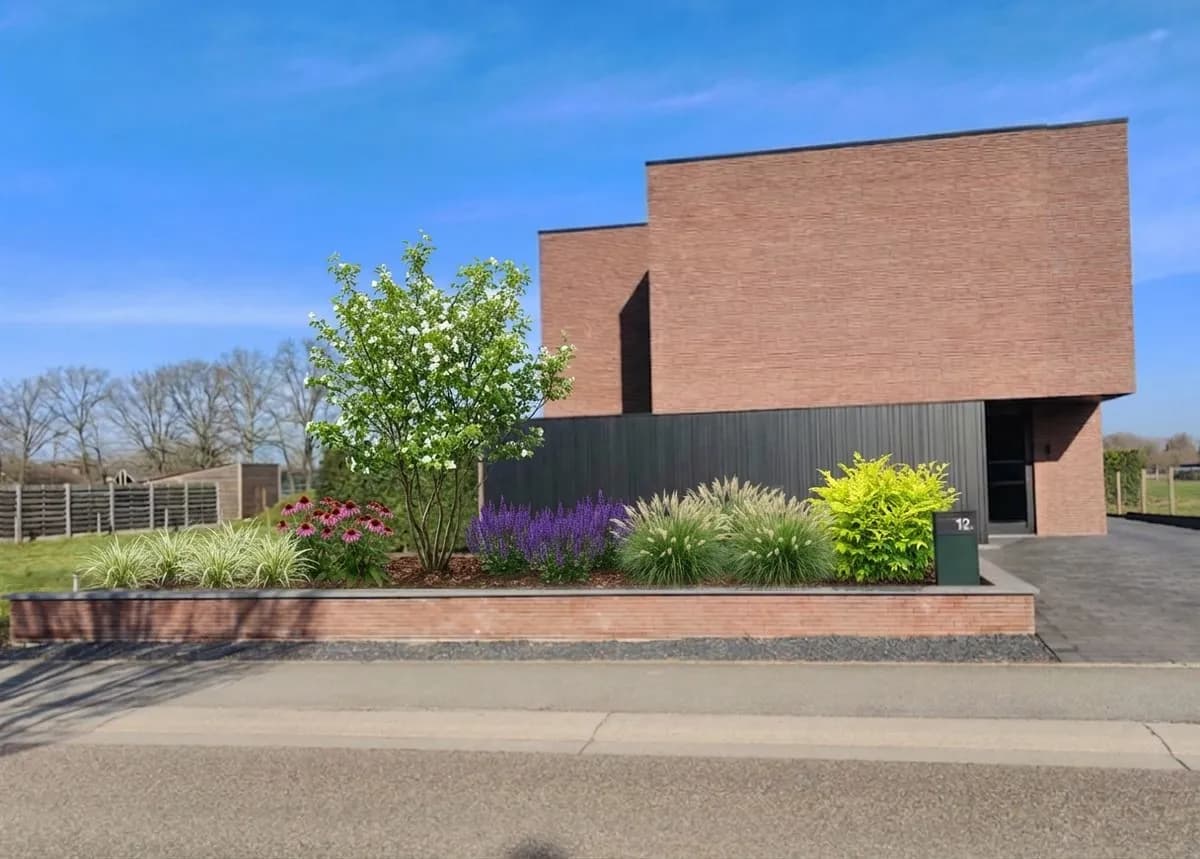
Want to see this in your garden?
Full design in HD: €7.99
Shot hole disease: holes in cherry laurel leaves
Cherry laurel (Prunus laurocerasus) is a popular hedging plant. You find it everywhere across Flanders and the Netherlands, valued for its glossy green leaves and dense growth. But suddenly you notice holes in the leaves, as if shotgun pellets had passed through the hedge. This is shot hole disease. It is both a fungus and a bacterium, depending on the weather pattern. In this article you will learn how to recognise it and what to do about it.
Shot hole disease is not lethal to cherry laurel, but it looks messy and weakens the plant. The spots start brown, develop yellow edges, and eventually fall out, leaving holes behind. Over a few years the branches become bare. On bare patches, insects and other diseases gain entry more easily. You want to prevent it or tackle it as soon as you see it. No chemical control is needed: pruning and good weather do the trick more often than you think.
How to identify shot hole disease on cherry laurel
The symptoms are striking. You see brown spots on leaves, usually 2-5 mm across. The spots have a sharp edge, often surrounded by a yellow halo. After a few weeks these bits of leaf drop out, leaving holes, hence the name "shot hole disease". It really looks as if tiny shotgun pellets have passed through the leaf.
The disease appears especially in wet, mild autumns (September to November) and wet springs (March to May). Warmer dry summers cause far fewer problems. This is a key insight: wet weather helps the fungus and bacterium, dry weather helps you.
The causes: fungus and bacterium
Shot hole disease is caused by two different disease agents. The dominant one is the fungus Stigmina carpophila (also known by the old name Coryneum carpophilum). Additionally, the bacterium Pseudomonas syringae can be involved, which causes bacterial canker in Prunus species. This combination means that the same symptoms can have different causes.
Both love wet, mild conditions. They arrive via spores and bacterial cells that overwinter on dead leaf and twig material. Rain and dew in autumn and spring spread them to healthy leaves. From October through April the risk is greatest. In July and August very little happens, the plant is dry.
This explains why you cannot spray: no chemicals work against both at once and are available to home gardeners. Moreover, spraying only works preventively, not curatively. If you already have holes, pruning helps far better.
What you must do: step 1, collect fallen leaves
This is the first action. Diseased leaves that fall to the ground (or still hang on the plant if you spot them) must go. Collect them, dig them deep in, or put them in the garden waste bin. Not in the compost heap! Compost heaps rarely get hot enough to kill fungal spores and bacteria. They overwinter in dead leaves.
The same rule applies to twigs. Dead or heavily diseased twigs must be pruned out and removed. This considerably reduces the infection source for next autumn.
Step 2: wait for dry weather, then prune
Shot hole disease thrives in wet conditions. As soon as it becomes dry (July, August, sometimes September), it stops spreading. This is your chance.
Wait until it has been dry for at least three days in a row (no rain, no dew). Pruning in dry weather is essential. Why? Because you prevent water droplet transfer: every pruning cut can spread fungi and bacteria if you work in the rain. Dry pruning prevents you yourself from spreading the disease further.
Disinfect pruning saws and shears between cuts (use a quick spray of alcohol or dilute bleach). This takes 20 seconds and lowers the risk of carrying disease from an infected twig to a healthy one.
Step 3: prevent with good spacing
Shot hole disease loves humid air. This worsens if the hedge is too densely planted or stands in shade. Ensure air can circulate. At the next hedge planting: use wider spacing (15-20 cm instead of 10 cm). A loose, airy hedge gets far fewer shot hole problems.
Also, if you prune your hedge too short, the base gets less air movement and stays damp longer. Pruning in a trapezium shape (wide base, narrow top) helps: this allows sunlight to reach the bottom and dries it faster.
Free preview
Create your own garden design
Replace with Ilex crenata or Euonymus?
If you want no more shot hole disease, replace the laurel with Ilex crenata (Japanese holly) or Euonymus japonicus. Both are equally dense and green, grow just as fast, and are far less susceptible to this disease.
Ilex crenata grows slightly slower than cherry laurel (so slightly dearer to buy initially) but is truly a 1-for-1 replacement. Euonymus is cheaper but feels less solid. For large hedges: Ilex crenata. For narrow screening: Euonymus.
You do not have to replace everything at once. Remove the most heavily diseased sections and plant Ilex there. Over a few years the transition is complete.
Not sure whether Ilex crenata or Euonymus would suit your garden? On gardenworld.app you see a sample design with a photo of your own garden first, before you buy or dig anything up.
Common mistakes
Trying to spray
This does not help. Shot hole disease is already inside the leaf when symptoms appear. Preventive spraying is not permitted for home gardeners in the Netherlands and Flanders (glyphosate and many copper-based fungicides are restricted). Pruning is your only weapon.
Composting diseased leaves
If you put diseased leaves in your compost heap and it never reaches 65 degrees (and yours probably will not), then the spores overwinter and infect your garden again next year.
Pruning too hard
Many gardeners prune hard (down to the base) hoping to "prune out the disease". This does not help. It only leads to weakness. Prune gradually: remove 20-30 percent per year, spread over years.
Step-by-step guide
Step 1: Collect leaves and inspect
Gather all fallen leaves around the cherry laurel and remove them. Check for diseased twigs.
Step 2: Remove heavily diseased leaves by hand
Gently pull off or cut out heavily diseased shoots with secateurs. Dispose of everything in the waste bin, not compost.
Step 3: Wait for dry weather
Wait until it has been dry for at least three days in a row (no rain, no overnight dew).
Step 4: Prune in dry weather
Disinfect pruning saws and shears. Prune gently: 20-30 percent of the plant per year, gradually.
Step 5: Improve air circulation
Check that air can flow around the hedge. Remove dead twigs inside. A loose hedge recovers faster.
Step 6: Check overwintering leaves
In November and March, when wet periods threaten, collect extra leaves to remove spores.
Step 7: Consider replacement
If the problem persists for years, replace the most heavily diseased section with Ilex crenata or Euonymus.
Frequently asked questions
Does shot hole disease stay forever?
No. With regular leaf collection and pruning in dry weather it diminishes considerably. After 3-4 years of consistent care it is often completely gone, especially in drier years. Wet, mild autumns bring it back, but less severely.
Can I keep cherry laurel anyway?
Yes. You do not have to replace it immediately. Accept that shot hole disease is worse in some years than others. Dry year? Barely visible. Wet year? Holes in the leaves. This is normal for cherry laurel in our climate zone.
Is it harmful to the plant?
Not seriously. Cherry laurel recovers. If a large share of the leaves, say roughly 40 percent or more, show symptoms and keep dropping (three consecutive wet years), the plant can weaken. But a single infection? No problem.
Do nematodes or predators work?
No. This is not a pest but a plant disease. Predators and nematodes do not help. Pruning and patience are your friends.
When to prune: the calendar
October-November: many leaves drop. Collect and prune. Maintenance pruning in dry spells.
December-February: frost risk. Do not prune, the plant does not recover.
March-May: wet period. Avoid pruning in rain. Collect leaves.
June-September: dry weather. This is your main pruning season. Easy to work in dry conditions.
Comparison: cherry laurel vs. alternatives
Cherry laurel: dense, green, fast growing, but susceptible to shot hole disease in wet years. Annual maintenance pruning needed.
Ilex crenata: dense, green, slightly slower growth, less vulnerable to shot hole disease. Costs a bit more. Stronger long-term.
Euonymus: good alternative, cheaper, less solid appearance. For narrow screening excellent.
See it in your own garden first
Unsure whether cherry laurel still works in your garden? Upload a photo of your garden on gardenworld.app and see a free sample of a new design with these plants. The sharp image with full plant list costs 7.99 euros, once, no subscription.
Create your own garden design
Upload a photo, pick a style, and get a photorealistic design with plant list in under a minute.
Full design in HD: €7.99

Related articles
 Planting
How to prune conifer hedge with brown patches: fix and prevent
Brown patches in conifer hedges? Learn causes and how to prevent them through careful pruning and maintenance.
 Planting
Hedge planting: species and spacing guide
Which hedging plant suits your garden? Compare popular species, planting distances and maintenance tips for a thick hedge.
 Planting
Hedge shear technique: straight trimming and neat shapes
Learn correct hedge shear posture and techniques for straight, neat hedges. With practical tips for clean cuts and symmetrical shapes.