

Boxwood moth: identifying and controlling without poison
By the GardenWorld editorial team, updated on
Want to see this in your garden?
Full design in HD: €7.99
Why boxwood moth is so destructive
Boxwood moth (Cydalima perspectalis) has been in Europe since 2008 and destroys boxwood hedges in weeks to months. A single caterpillar eats nearly its own body weight in boxwood leaf in three weeks. A hedge can go from green to bare in four to six weeks if you do nothing. The worst part: in warm years there are four generations per year, so from May to October new caterpillars can attack your hedge. This is not boxwood fungus that works slowly; this is a disaster you must prevent.
The moth itself looks innocent: white with brown or black wing bands, with a wingspan of about four centimetres. But the greenish caterpillars with dark heads eat voraciously. Without your intervention they can strip a beautiful hedge completely bare. Fortunately there are proven tactics without chemicals.
Identifying caterpillars and moths
The first warning: small greenish caterpillars in May or June found in silken webbing. They are about one and a half to two centimetres long with a dark head and dark streaks on the side. They work from inside outward, so you first see thin silk between leaves, then holes in the leaf, and eventually just bare branches. The worst sign: red or brown discoloured leaves inside the hedge while the outside still looks green. You have missed them.
The moth appears later in the summer. A whitish moth with two brown or grey bands across the wings. Catching five or more moths per trap in June is a warning sign. They lay eggs on boxwood leaf; those eggs are microscopically tiny and greyish. Without a microscope you cannot see them.
Check your hedge every ten days from May to September. Look especially on the inside of the hedge, under new webbing. What you are looking for: bare patches, red or brown leaves, or small greenish caterpillars themselves. Early spotting is everything.
Prevention: pheromone traps
This is your first line of defence. Pheromone traps attract male moths with a sex-pheromone (scent). The moth flies in and cannot escape. No eggs, no caterpillars. This works only for detection and prevention; against existing caterpillars it does not help.
Hang pheromone traps from May onward, once evening temperatures stay above twelve degrees Celsius. Place at least one trap per three metres of hedge, both outside and inside. Check daily and remove trapped moths. Too many moths (more than five per day) means you need extra measures. Pheromone traps cost two to five euros each and are reusable. Replace the pheromone capsule monthly.
This is prevention, not cure. But it gives you warning if moths are very active.
Manual removal
If you spot caterpillars in May: carefully pull them out. With your bare hand or tweezers, extract the small green caterpillars. Then press them into a bowl of soapy water. Yes, it is grim, but effective. In May if you are early, this tactic of daily checks and manual removal can work for four to five days until they are bigger.
Also cut out damaged branches (with many webs or bare patches) and remove completely. Not into compost, but into green waste. Within a few days new leaves grow back. This helps especially in May-June when the infestation is still small.
The downside: this only works for small infestations and is much work. With a full hedge full of caterpillars, manual work is not practical.
Bacillus thuringiensis (Bt)
This is your most important weapon without poison. Bacillus thuringiensis is a natural bacterium that poisons caterpillars but is completely harmless to humans, birds and beneficial insects. The bacterium produces a toxic protein that only acts on the digestive system of caterpillars. The caterpillar eats treated leaf and dies within two to three days.
You buy a Bt product based on Bacillus thuringiensis from a garden centre or online garden shop, check the approval on the label, and spray your boxwood hedge from May onward, as soon as you see caterpillars. Follow concentration and dosage according to the label. Spray the whole hedge, both inside and outside, and especially all leaf margins. This must be thorough work.
The trick: Bt only works on young caterpillars (younger than four days). Older caterpillars survive it. So spray at moment one when you see caterpillars, then again after seven days (for the next generation of caterpillars), and once more two weeks later. Three applications per generation. With four generations per year (May, June-July, August, September) this is much spraying, but it works.
Cost: approximately fifteen to twenty-five euros per spray, and you need two to three bottles per season. But no harm to beneficial insects, and completely safe for your family.
Free preview
Create your own garden design
Timing by generation
This determines everything. The first generation caterpillars usually appear in early May, visible until early June. Spray in May as soon as you see caterpillars, and again seven days later. Then moths in June. Unsure if it is really boxwood moth? On gardenworld.app you can find more information and visualize your garden for free.
Second generation caterpillars: July to mid-August. Same approach. Third generation caterpillars: August to end September. Fourth generation usually comes too late in the season and does not emerge; the caterpillars overwinter.
If you have a hedge that is already damaged in August, then you missed treating it in May and June. Now you can spray Bt but it helps less because many caterpillars are already mature. Next year: be alert in May.
When to replace with Ilex crenata
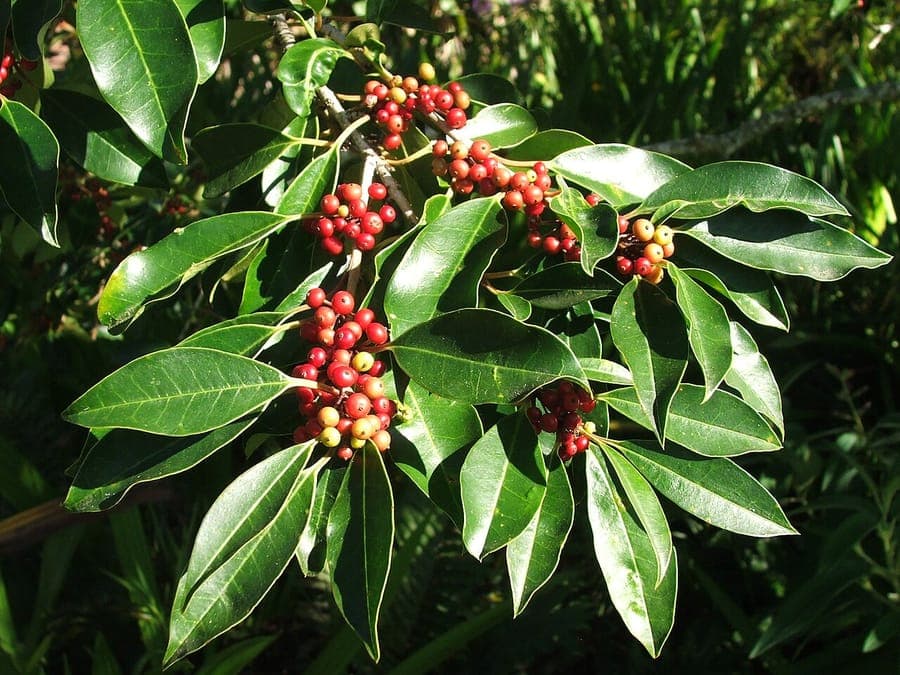
After two to three years of constant effort with boxwood moth, many consider simply choosing a different hedge plant. Ilex crenata (Japanese holly) looks almost identical to boxwood: small leaf, dark green, nicely formable. The big advantage: boxwood moth does not like it. Ilex crenata has deeper leaf veins and a different leaf structure that does not attract the caterpillar.
Ilex crenata grows slightly faster than boxwood (so closes gaps faster). It is about as hardy as boxwood, down to around minus fifteen degrees Celsius. It is more expensive to buy though: around ten to fifteen euros per plant versus three to five euros for boxwood.
You can gradually replace an existing boxwood hedge: note the sections that really become bare from boxwood moth, and replace those sections in October with Ilex crenata. After two years you have a mixed hedge, after four years fully Ilex crenata.
Step by step
Step 1: Hang pheromone traps
In May, once evening temperatures stay above twelve degrees Celsius, hang pheromone traps. One per three metres of hedge, both outside and inside.
Step 2: Daily monitoring
Check your hedge every day from May to September. Look for greenish caterpillars, red or brown leaves, or webbing inside.
Step 3: Manual removal for small numbers
See five to ten caterpillars? Pull them out with hand or tweezers and drown in soapy water.
Step 4: Cut out damaged branches
Branches that are bare or full of webbing: remove them. This gives the plant a chance to regrow.
Step 5: Prepare Bt-spray
Once you see ten or more caterpillars (or two to three moths per trap per day), prepare Bt-spray according to label directions.
Step 6: Thorough spraying
Spray all leaves, inside and outside. Repeat after seven days. Make sure you reach everything.
Step 7: Prevention next season
Note when moths were active. Next year you will be ready earlier.
Frequently asked questions
What if I spray Bt too late and all leaves are already gone?
Then it is too late for this season. The hedge will probably not recover this year because all food reserves are used up. Next spring basal buds will break and slowly start growing. Focus on prevention in future years.
Can I use chemical control for boxwood moth?
Broad-spectrum chemical insecticides against boxwood moth are largely no longer approved for private use in Belgium and the Netherlands, and they harm beneficial insects such as bees and ground beetles anyway. Always check the label first: if there is no approval for private use, you may not use the product. Bt is therefore your best and legally safe choice.
How long does a caterpillar survive if I spray Bt?
Two to three days. The caterpillar stops feeding almost immediately and dies after that. So visible damage stops much faster than you think.
Can I spray Bt in advance to prevent boxwood moth?
No, not effective. Bt only works on caterpillars that eat it. Preventive spraying does not help because caterpillars are not there yet. Pheromone traps and monitoring are real prevention.
See it in your own garden first
Unsure if that hedge design suits your space? On gardenworld.app you can see what alternative hedge plants would look like in your garden. Upload a photo of your hedge, view for free an example of a design with these plants; the detailed image with plant list costs 7.99 euros, just once, no subscription.
Create your own garden design
Upload a photo, pick a style, and get a photorealistic design with plant list in under a minute.
Full design in HD: €7.99


Related articles
How to prune boxwood: prevent and manage box tree moth
Prune boxwood hedges with attention to box tree moth. Learn timing, techniques, and prevention against this pest.
 Planting
Ilex crenata as boxwood alternative: pruning and care
Ilex crenata (Japanese holly) is immune to box tree moth. Learn how to prune and maintain this elegant boxwood replacement.
 Planting
When to monitor box tree moth: flight patterns and warning signs
Box under threat? Learn how to monitor box tree moth flights, spot damage early, and act before major loss occurs.