
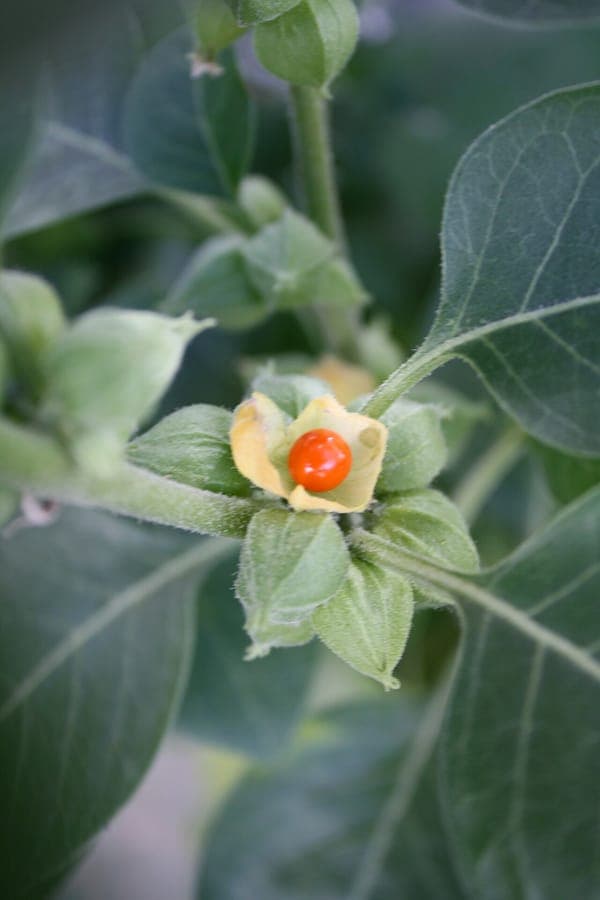
Wowbobwow12 / CC BY-SA 3.0, via Wikimedia Commons
Ashwagandha: complete guide
Withania somnifera
¿Quieres ver Ashwagandha: complete guide en tu jardín?
1 minuto, sin tarjeta de crédito
Overview
Ashwagandha (Withania somnifera), also called winter-cherry or sleep berry, is a semi-tropical shrub native to South Asia with a long history of traditional medicinal use. This compact plant produces small red-orange berries enclosed in distinctive papery calyxes resembling Chinese lanterns, and flowers with a delightful fragrance. Although it prefers warm climates, it can be grown in pots in temperate regions.
Appearance and bloom
Withania somnifera grows as a compact shrub reaching 60-90 cm tall. Leaves are dark green, oval-lanceolate, and slightly wrinkled. Small yellow-green flowers bloom throughout summer (June-September) with a delicate sweet fragrance. Berries ripen golden-orange and are enclosed in a papery, lantern-like calyx.
Ideal location
This plant thrives in full sun, requiring 6-8 hours of direct sunlight daily. In warm regions (USDA zones 9-11), it can be grown permanently outdoors. In temperate climates, grow in large containers. On gardenworld.app, find inspiration for growing tropical plants in cool climates.
Soil requirements
Withania prefers well-draining, lightly sandy soil. Heavy clay should be amended with sand or perlite. The plant tolerates poor soil. Optimal pH: 6.5-7.5.
Diseño gratis
¿Quieres ver Ashwagandha: complete guide en tu jardín? Crea un diseño gratis ahora.
Watering
Water regularly while the soil is actively draining. In containers, soil dries faster. Allow soil to dry slightly between waterings to prevent root rot.
Pruning
Pruning is not essential, but you can maintain shape by cutting back long shoots. Remove spent flowers to encourage continued blooming.
Maintenance calendar
- March-May: bring out of dormancy, acclimate outdoors gradually
- June-September: flowering period, regular watering and feeding
- October-November: berries ripen, reduce water slightly
- December-February: dormancy, minimal water, protect from frost
Winter hardiness
Withania somnifera is not winter hardy in temperate zones. In cooler regions, overwinter indoors (10-15°C).
Companion plants
In warm gardens, pair with other sun-loving plants. In container gardens, it works well with other tropical specimens.
Closing
Ashwagandha is a fascinating addition for gardeners interested in tropical plants. With its medicinal berries, fragrant flowers, and unique papery fruits, it creates a distinctive focal point. Visit gardenworld.app for more ideas on growing exotic plants.
¿Quieres ver Ashwagandha: complete guide en tu jardín? Crea un diseño gratis ahora.
Sube una foto, elige un estilo y obtén un diseño fotorrealista con lista de plantas en menos de un minuto.
Más de 10.000 jardines diseñados
Sin tarjeta de crédito


Plantas similares
Solanum dolichosepalum: complete guide
Solanum dolichosepalum
Discover Solanum dolichosepalum, an Andean nightshade with striking long sepals. Growing tips, hardiness, and companion planting for your patio.
Solanum ripense: complete guide
Solanum ripense
Discover Solanum ripense, a moisture-loving Andean nightshade for pond edges and conservatories. Growing tips, hardiness, and companions.
Solanum tomentosum: complete guide
Solanum tomentosum
Discover Solanum tomentosum, a thorny South African nightshade with felted leaves. Growing tips, hardiness, and companion planting ideas.