
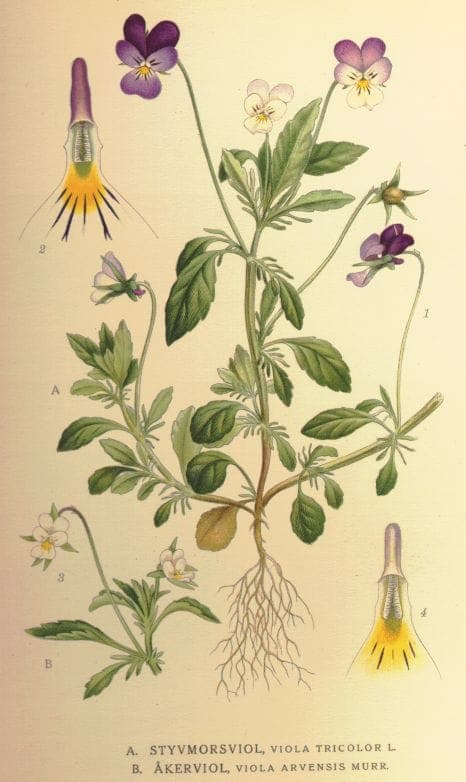
Carl Axel Magnus Lindman / Public domain, via Wikimedia Commons
Johnny-jump-up: complete guide
Viola tricolor
¿Quieres ver Johnny-jump-up: complete guide en tu jardín?
1 minuto, sin tarjeta de crédito
Johnny-jump-up is the wild ancestor of cultivated pansies and charm enthusiasts with its distinctive three-colored flowers combining purple, yellow and white. This cheerful wildflower is the foundation species for modern pansy breeding programs. Growing readily from seed and self-seeding prolifically, it brings cottage garden joy to any planting. This guide shows how to cultivate this delightful species successfully.
Overview
Viola tricolor is native to European grasslands and field margins from lowlands to moderate elevations. The name perfectly describes the three-colored flowers: purple, yellow and white. This species played a crucial role in pansy breeding history and remains a valued garden plant. Modern gardeners appreciate its authentic wildflower charm and practical reliability.
Appearance and Bloom Cycle
Flowers measure 2-3 cm across displaying distinctive three-color pattern: upper petals purple to dark blue, middle petals yellow or white with blue stripes, lower petals white or yellow. Narrow oblong leaves form bushy growth. Height reaches 15-30 cm. Blooming extends from May through September with continuous flower production especially when deadheading spent blooms regularly.
Ideal Location
Position Johnny-jump-up in full sun to light shade for best results. South-facing borders produce maximum blooms. Partial shade tolerates blooming but with reduced flower quantity. Aim for minimum four hours direct sun daily. Intense late-summer heat may cause bolting to seed prematurely.
Soil Requirements
Ordinary well-draining garden soil suits this species perfectly. Add compost for organic enrichment if needed. Johnny-jump-up shows excellent adaptability to variable soil pH. Regular feeding sustains continuous bloom throughout season. Apply fertilizer every two weeks for extended flowering periods.
Diseño gratis
¿Quieres ver Johnny-jump-up: complete guide en tu jardín? Crea un diseño gratis ahora.
Watering
Water newly planted specimens regularly until established. Continue consistent moisture during growing season, especially during dry periods. This species shows moderate drought tolerance. Daily watering in hot summers promotes flower production. Water in early morning to prevent fungal diseases.
Pruning and Maintenance
Remove spent flowers regularly - this practice called deadheading promotes continuous new blooms. Pinch back vigorous growing stems to encourage bushiness. After initial bloom flush, cut plants back hard to stimulate secondary blooming waves.
Maintenance Calendar
March-April: Sow seed indoors or acquire nursery transplants. May-June: First bloom flush, water regularly and feed. July-August: Peak blooming, deadhead consistently. September-October: Secondary bloom period, reduce feeding. November-December: Plant decline or frost damage.
Winter Hardiness
Johnny-jump-up is a biennial or annual plant. First-year plants develop foliage, second-year plants bloom then senesce. In mild winters plants may persist two years. True winter hardiness is limited, with frost below minus 10 degrees Celsius killing most plants.
Companion Plants
Combine with cottage garden favorites like forget-me-nots, lavender and thyme. Pair with yellow wintercress and purple primrose for color contrast. In borders plant alongside sedums for naturalistic mixed plantings.
Closing Thoughts
Johnny-jump-up provides abundant color with minimal fuss. Sow seed indoors in March or acquire nursery plants in May. Source plants from garden centers during spring season. Allow plants to self-seed for next year's display. Discover more cottage garden techniques on gardenworld.app featuring color schemes and design inspiration.
Explore cottage garden mastery and colorful border design on gardenworld.app, your complete resource for practical garden design and botanical cultivation.
¿Quieres ver Johnny-jump-up: complete guide en tu jardín? Crea un diseño gratis ahora.
Sube una foto, elige un estilo y obtén un diseño fotorrealista con lista de plantas en menos de un minuto.
Más de 10.000 jardines diseñados
Sin tarjeta de crédito


Plantas similares
Early dog violet: complete guide
Viola reichenbachiana
Discover Viola reichenbachiana, a delicate early spring woodland wildflower with purple blooms. Growing tips, care requirements, and companion planting ideas.
Wood violet: complete guide
Viola riviniana
Master the cultivation of Viola riviniana, a vigorous woodland violet perfect for shaded borders. Growing tips, care advice, and design suggestions for natural gardens.
Viola: complete guide
Viola odorata L.
A beautiful violet species.