
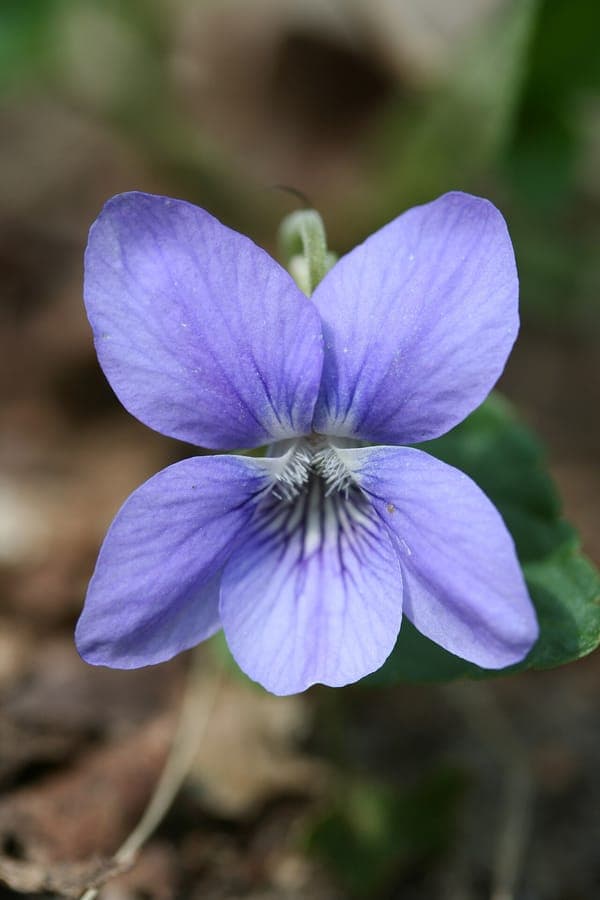
No machine-readable author provided. Svdmolen assumed (based on copyright claims). / CC BY 2.5, via Wikimedia Commons
Wood violet: complete guide
Viola riviniana
¿Quieres ver Wood violet: complete guide en tu jardín?
1 minuto, sin tarjeta de crédito
The wood violet is the most abundant violet species in European deciduous forests and brings authentic woodland character to garden borders. This robust perennial thrives in semi-shade where many competitors struggle, forming natural carpets of purple flowers. Its upright habit and longer stems distinguish it from smaller violet cousins. This guide explains how to grow and use this forest favorite successfully.
Overview
Viola riviniana is the common dog violet found throughout Europe from lowlands to mid-elevation forests. The name riviniana honors the pale-spurred flowers distinctive to this species. Growing 15-25 cm tall, it stands noticeably taller than most other violet species. The plant's sturdy stems and vigorous growth habit make it a reliable woodland garden component.
Appearance and Bloom Cycle
Flowers measure 1.5-2 cm across in shades of purple-violet with characteristically pale-marked lower petals. The distinctive pale spur gives the species its scientific name. Rounded heart-shaped leaves form bushy clumps. Blooming extends from April through June, providing sustained spring color and attracting beneficial insects throughout the season.
Ideal Location
Position wood violets in semi-shade beneath native trees or shrubs where morning light reaches but afternoon sun is blocked. They tolerate dense shade but bloom more profusely with dappled sunlight. Avoid hot south-facing exposures where summer heat causes leaf wilting. Woodland edges and north-facing borders suit them perfectly.
Soil Requirements
Ordinary garden soil suits this species well, though organic matter incorporation improves establishment. It adapts to neutral to acidic soils without complaint. Heavy clay soils benefit from compost amendment at planting. This species shows excellent adaptability to variable soil conditions including moderate compaction.
Watering
Water newly planted specimens regularly for the first 2-3 weeks until established. During the growing season maintain consistent moisture without waterlogging. As bloom concludes in June, reduce watering frequency. Mature plants rarely require supplemental watering except during extreme drought periods.
Diseño gratis
¿Quieres ver Wood violet: complete guide en tu jardín? Crea un diseño gratis ahora.
Pruning
No pruning is necessary. Deadheading spent flowers slightly prolongs bloom duration but optional. After flowering concludes, remove any senescent foliage to encourage fresh growth. The plant naturally manages its shape and requires minimal intervention.
Maintenance Calendar
February-March: Soil preparation, anticipate growth initiation. April-May: Peak blooming period, maintain regular watering. June-July: Bloom decline, reduce maintenance input. August-September: Summer dormancy, minimal attention required. October-November: Prepare for winter dormancy. December-January: Winter rest, no care needed.
Winter Hardiness
Wood violet is extremely hardy to minus 25 degrees Celsius and thrives throughout temperate Europe. No winter protection is necessary in UK or northern continental climates. In Scandinavia and Russia it establishes readily. Snow cover provides natural insulation.
Companion Plants
Combine with other woodland understory plants including native ferns, briony, dead-nettle and lesser celandine. In garden borders position alongside hellebores, pulmonaria and variegated ivy for natural effects. Beneath fruit trees and conifers they create naturalistic groundcover.
Closing Thoughts
Wood violet solves the common problem of establishing color in shade. Self-seed from existing plants for natural multiplication. Acquire plants from spring-selling nurseries when flowering occurs. Source from specialized native plant suppliers or general garden centres. Learn additional shade gardening techniques on gardenworld.app which provides comprehensive guides to establishing diverse woodland gardens. Discover more native planting combinations and design principles at gardenworld.app, your complete resource for authentic woodland garden creation.
Visit gardenworld.app today for more native plant guides and shade garden design inspiration.
¿Quieres ver Wood violet: complete guide en tu jardín? Crea un diseño gratis ahora.
Sube una foto, elige un estilo y obtén un diseño fotorrealista con lista de plantas en menos de un minuto.
Más de 10.000 jardines diseñados
Sin tarjeta de crédito


Plantas similares
Early dog violet: complete guide
Viola reichenbachiana
Discover Viola reichenbachiana, a delicate early spring woodland wildflower with purple blooms. Growing tips, care requirements, and companion planting ideas.
Teesdale violet: complete guide
Viola rupestris
Discover Viola rupestris, a diminutive alpine violet perfect for rock gardens. Specialized care for miniature plantings and challenging sites.
Viola: complete guide
Viola odorata L.
A beautiful violet species.