
Michael Hermann / CC BY-SA 4.0, via Wikimedia Commons
Tropaeolum tuberosum: complete guide
Tropaeolum tuberosum
¿Quieres ver Tropaeolum tuberosum: complete guide en tu jardín?
1 minuto, sin tarjeta de crédito
Overview
Tropaeolum tuberosum, known as Mashua or Anu, is a traditional Andean food crop from Peru, Bolivia, and Ecuador. This unique plant is valued for both its edible tubers and beautiful red and yellow flowers. It is an heritage crop with long history of use in Andean cultures.
In its native habitat, Tropaeolum tuberosum grows in andean mountain regions at moderate elevations. This gives it preference for temperate temperatures and adequate moisture. It is a fascinating plant combining agricultural history with botanical beauty.
Appearance and bloom
Tropaeolum tuberosum is a climbing plant with long sprawling stems that ascend via tendrils. Leaves are large, shield-shaped, and bright green. Tendrils are strong and can easily climb meters.
Flowers are striking: they consist of red to orange petals with contrasting yellow accents. They possess unique form with long spur. Flowering occurs late in season (September through October in Northern Hemisphere), making it unique.
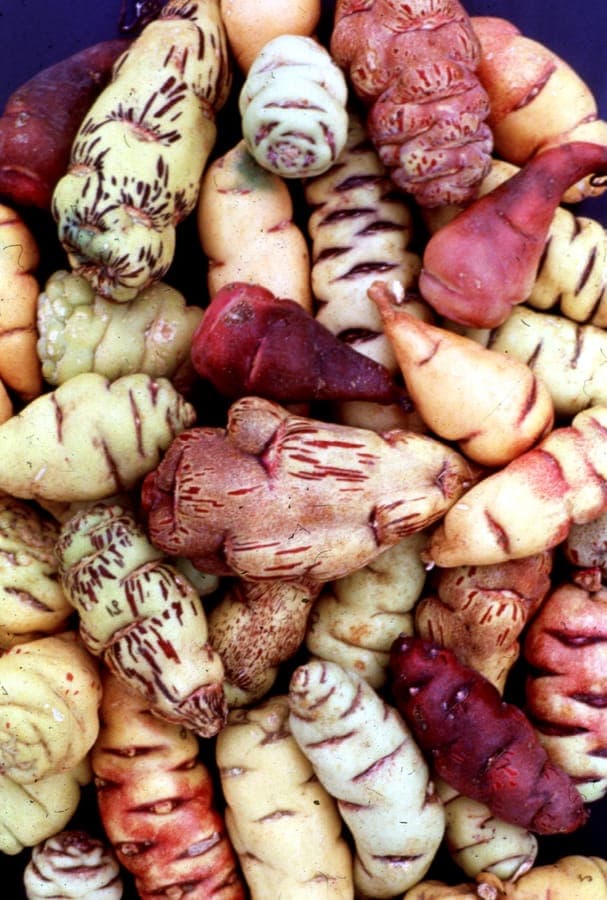
The main feature is underground tubers. These reach potato-like size and are yellow, red, or purple colored. These tubers are highly nutritious and traditionally used as food.
Ideal location
Tropaeolum tuberosum grows best in bright, indirect light. Sunny spots are good, but extreme afternoon heat can cause issues. The plant prefers protected locations.
The plant is naturally climbing. Provide support via trellis, stakes, or netting. It grows successfully in containers with support.
Temperature is important: it grows best between 15 and 25 degrees Celsius. Much warmer than this and tuber formation diminishes. This is not a heat-loving plant.
Soil
Tropaeolum tuberosum grows in nutrient-rich, well-draining soil with high humus content. Work plenty of compost or aged manure through soil.
The plant values good drainage but also moisture retention. Sandy loam with organic matter addition is ideal. pH can be neutral to slightly acidic.
Tuber formation happens better in non-compacted soil. Preparation is important for good harvest.
Diseño gratis
¿Quieres ver Tropaeolum tuberosum: complete guide en tu jardín? Crea un diseño gratis ahora.
Watering
Tropaeolum tuberosum enjoys consistent moisture, especially during growth and tuber formation. Water regularly during season. Excess can cause root rot, so drainage is important.
Reduce water in fall as growth slows. When foliage dies back, cease watering.
After bloom and stem die-back, tubers are underground and need less moisture.
Pruning
Tropaeolum tuberosum requires minimal pruning. Let the climber grow and spread over support. Remove only dead or damaged material.
Optionally you can pinch lateral shoots to encourage bushier growth, but that is optional.
After bloom the crop naturally dies back. This is normal and preparation for tuber harvest.
Maintenance calendar
Spring (March-May): Sow seed or plant tubers. Water well. Plant grows rapidly.
Summer (June-August): Active growth period. Water regularly. Feeding with balanced fertilizer helps. Tuber formation begins.
Fall (September-October): Flowering period. Plant declines. Water less. Patience needed: tubers are still underground.
Winter (November-February): Harvest tubers after frost danger. Store in cool, dry location. Plant is dormant.
Winter hardiness
Tropaeolum tuberosum is not frost hardy in temperate zones. It dies during winter and tubers must be dug and stored.
In subtropical and tropical climates it can grow without interruption, though harvest is still needed.
Tubers can be stored analogously to potatoes: in cool, dry, dark location.
Companion plants
Tropaeolum tuberosum fits well in heritage garden with other Andean crops. Consider potatoes, chickpeas, quinoa for authentic Andean combinations.
Ornamantally it can grow with other beautiful climbing plants for mix of food and beauty.
In containers it can associate with other small crops or flowers.
Conclusion
Tropaeolum tuberosum is a fascinating heritage crop combining nutrition, beauty, and cultural history. With patience and care during season you can enjoy both flowers and nutritious tubers. It is a crop for adventurous gardeners wanting more than standard vegetables. For Andean culinary experiments or simply botanical curiosity, this is a plant deserving attention. Seeds available through specialized seed catalogs.
Visit gardenworld.app for more inspiration on heritage crops and worldwide food gardening.
¿Quieres ver Tropaeolum tuberosum: complete guide en tu jardín? Crea un diseño gratis ahora.
Sube una foto, elige un estilo y obtén un diseño fotorrealista con lista de plantas en menos de un minuto.
Más de 10.000 jardines diseñados
Sin tarjeta de crédito


Plantas similares
Tropaeolum peregrinum: complete guide
Tropaeolum peregrinum
The Canary-creeper (Tropaeolum peregrinum) is a stunning climbing vine with distinctive yellow flowers. A comprehensive care guide for gardeners seeking exotic annual climbers.
Dwarf nasturtium: complete guide
Tropaeolum minus
Dwarf nasturtium is a compact, flower-rich plant from South America with red, orange and yellow blooms. Perfect for baskets, pots and borders. Very easy to grow.
Garden nasturtium: complete guide
Tropaeolum majus
Discover the colorful world of garden nasturtiums. This tropical flower is easy to grow and full of edible blooms. Complete cultivation guide.