
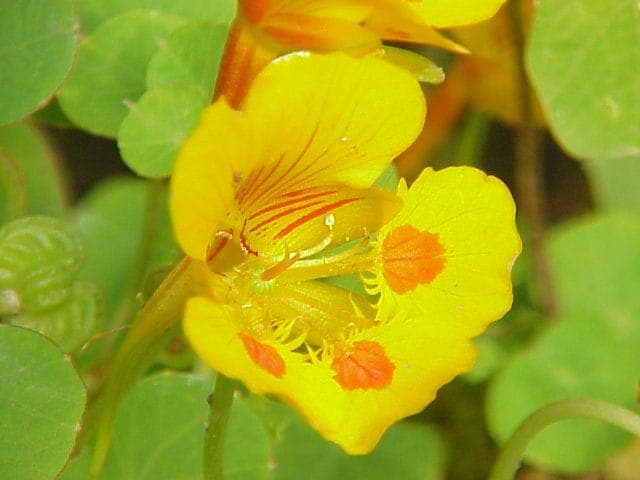
Kurt Stüber [1] / CC BY-SA 3.0, via Wikimedia Commons
Dwarf nasturtium: complete guide
Tropaeolum minus
¿Quieres ver Dwarf nasturtium: complete guide en tu jardín?
1 minuto, sin tarjeta de crédito
Overview
Dwarf nasturtium (Tropaeolum minus), also known as bush nasturtium or dwarf nasturtium, is a compact garden plant from South America, specifically Ecuador and Peru. This annual plant is primarily valued for its abundant, vibrant flowers in warm tones - red, orange, and yellow. With its compact growth habit, it is ideal for baskets, pots, and borders.
The plant is very easy to grow, and even beginning gardeners can achieve success with it. Moreover, the flowers attract many insects, especially bees and bumblebees.
Appearance and bloom
Dwarf nasturtium grows into a compact, bushy plant reaching approximately 25 to 30 centimeters in both height and width. The leaves are attractive, round to slightly kidney-shaped, deep green, and give the plant a friendly, fruity appearance.
Flowering occurs from June to October and is probably the plant's highlight. The flowers are large relative to the plant size - approximately 2 to 3 centimeters across - and appear in clusters along the stems. Color ranges from deep blood-red to golden yellow, with many gradations in between. Some varieties feature spotted or stippled patterns.
Ideal location
Dwarf nasturtium grows best in full sun to partial shade. At least 5 to 6 hours of direct sunlight daily is desirable for best blooming. In very warm regions, some afternoon shade prevents leaf scorching.
The plant is cold-sensitive. Plant only after the last frost (May in much of Europe). High temperatures generally pose no problem and actually promote flowering.
Soil
Dwarf nasturtium is not particularly fussy about soil quality. A lightly fertilized, well-draining potting soil is ideal. For cultivation in open ground, virtually any garden bed soil works. Preference is for a pH of 6.0 to 7.0.
Too much nutrition can cause the plant to produce excessive foliage at the expense of blooms. Therefore: less fertilization is better. For baskets and pots: use neutral potting soil, optionally lightly supplemented with sand for drainage.
Diseño gratis
¿Quieres ver Dwarf nasturtium: complete guide en tu jardín? Crea un diseño gratis ahora.
Watering
Dwarf nasturtium has moderate water requirements. Keep the soil evenly moist but not wet. Overwatering leads to leaf disease and root rot. The plant tolerates short, dry periods better than excess water.
Ensure good drainage in baskets and pots. Water in the evening to minimize evaporation. During periods of intense heat, daily watering may be necessary.
Pruning
Pruning is not essential but can help stimulate a fuller, more compact plant. Pinch out the tops of young plants when they are approximately 10 to 15 centimeters tall. This promotes side branching.
Remove spent flowers regularly to encourage continued bloom production. This deadheading is very effective.
Maintenance calendar
Spring (March - May): Sow indoors in March. Harden off and plant out in late May. Regular watering. Summer (June - August): Regular watering, especially in hot periods. Remove spent flowers. Watch for aphids. Fall (September - October): Continued flowering. Plant dies back at first frost. Allow seed to mature if self-seeding is desired. Winter (November - February): Plant is dead. Store seed for next season.
Winter hardiness
Dwarf nasturtium is a tender annual plant and cannot tolerate frost. Plant only after the last frost in your region. In most of Europe, this means May. Seed can be stored for the next season in cool, dry conditions.
In very warm, frost-free climates, the plant can overwinter and persist for several years. However, this is rare in temperate Europe.
Companion plants
Dwarf nasturtium combines beautifully with:
- Blue lobelias
- Silver-leaved senecio (Senecio cineraria)
- Petunias
- Tagetes
- Dahlberg daisy
- White alyssum (Lobularia maritima)
Together, they form colorful, luxuriant containers or borders.
Closing
Dwarf nasturtium is a simple, rewarding plant for gardeners of all levels. The compact growth, abundant blooms, and easy cultivation make it perfect for baskets, pots, and small spaces. Whether you are a beginning or experienced gardener, dwarf nasturtium offers seasons of pleasure.
Seeds are available from garden centers. Plant them in May for a summer full of color. For more inspiration about small gardens and container cultivation, visit gardenworld.app.
Visit gardenworld.app regularly for detailed planting plans and seasonal advice.
¿Quieres ver Dwarf nasturtium: complete guide en tu jardín? Crea un diseño gratis ahora.
Sube una foto, elige un estilo y obtén un diseño fotorrealista con lista de plantas en menos de un minuto.
Más de 10.000 jardines diseñados
Sin tarjeta de crédito


Plantas similares
Tropaeolum tuberosum: complete guide
Tropaeolum tuberosum
Tropaeolum tuberosum, known as Mashua, is a traditional Andean food crop with edible tubers and beautiful red flowers. Learn how to grow this remarkable plant for food and ornament.
Tropaeolum peregrinum: complete guide
Tropaeolum peregrinum
The Canary-creeper (Tropaeolum peregrinum) is a stunning climbing vine with distinctive yellow flowers. A comprehensive care guide for gardeners seeking exotic annual climbers.
Garden nasturtium: complete guide
Tropaeolum majus
Discover the colorful world of garden nasturtiums. This tropical flower is easy to grow and full of edible blooms. Complete cultivation guide.