
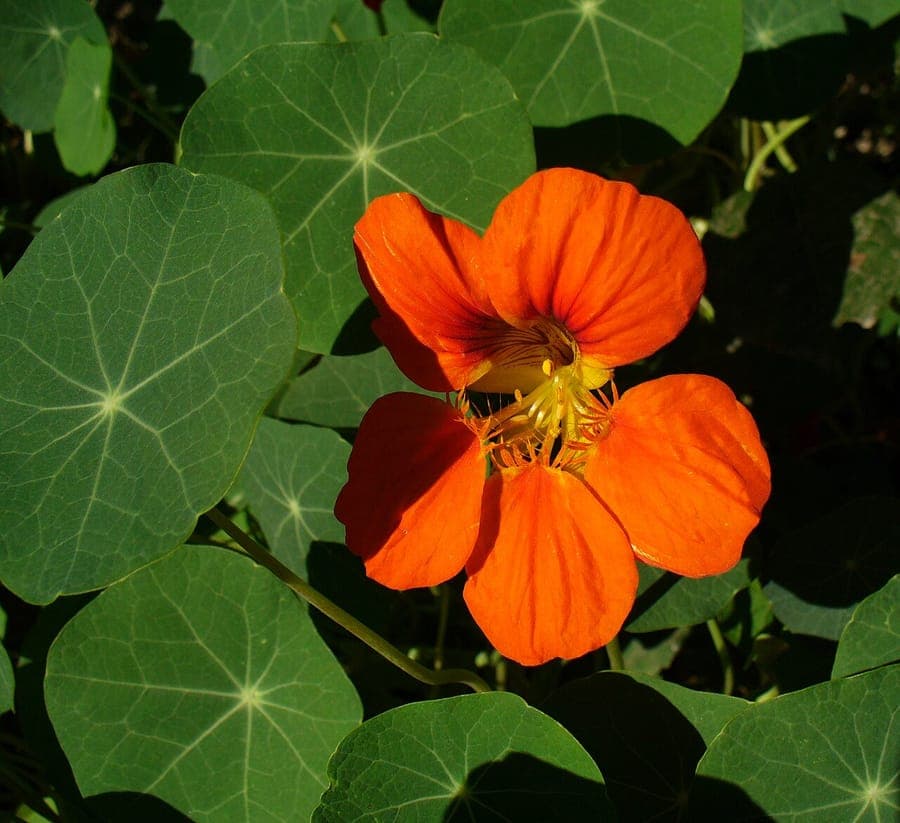
George Chernilevsky / Public domain, via Wikimedia Commons
Garden nasturtium: complete guide
Tropaeolum majus
¿Quieres ver Garden nasturtium: complete guide en tu jardín?
1 minuto, sin tarjeta de crédito
Garden nasturtium (Tropaeolum majus) is a surprising plant from Peru with beautiful, edible flowers. This annual climbing plant brings color and utility to gardens.
Overview Nasturtiums are famous for their bright flowers that are both beautiful and edible. They grow rapidly and produce abundant blooms. The plant is thankful and undemanding. For quick visual impact and edible decoration: unmatched.
Appearance and bloom Plants reach 1.5-2 meters height with trailing growth pattern. Leaves are round and shield-shaped. Flowers are large, approximately 5 centimeters in diameter, in orange, red, yellow, and bicolor variants. Blooming lasts from June to October. Both flowers and leaves are edible.
Ideal location Choose full sun to partial shade. Sunlight promotes rich blooming. In warm climates, afternoon shade can be beneficial. Plant against fences or pergolas for optimal growth.
Soil Nasturtiums grow in well-draining, moderate nutrient soil. Overly rich soil causes lots of leaves, few flowers. Acidic to neutral pH (6.0-7.0) is ideal.
Watering Water regularly but moderately. They like to be moist, not waterlogged. Water more often in hot periods. They are relatively drought-tolerant.
Pruning Pinch tops for bushier growth. Remove dead flowers for continued blooming. Late season pruning can be useful for regrowth.
Maintenance calendar May: Plant after frost danger. June: First flowers appear, start watering. July-September: Full bloom, regular watering. October: Bloom slowly declines. November: Plant dies back.
Winter hardiness Nasturtiums are frost-sensitive annuals. They cannot tolerate freezing temperatures. Plant after last night frost. In temperate climates they can self-seed.
Companion plants Ephemeral vegetables fit well. Other fast growers help. Plants with yellow can contrast nicely. Marigolds help pest control.
Closing Nasturtiums bring color, nutrition, and joy to your garden. With minimal care, you get months of flowers. Start your nasturtium adventure this spring!
On gardenworld.app you can find more information about edible flowers. Visit gardenworld.app/blog for more plant guides.
¿Quieres ver Garden nasturtium: complete guide en tu jardín? Crea un diseño gratis ahora.
Sube una foto, elige un estilo y obtén un diseño fotorrealista con lista de plantas en menos de un minuto.
Más de 10.000 jardines diseñados
Sin tarjeta de crédito


Plantas similares
Tropaeolum tuberosum: complete guide
Tropaeolum tuberosum
Tropaeolum tuberosum, known as Mashua, is a traditional Andean food crop with edible tubers and beautiful red flowers. Learn how to grow this remarkable plant for food and ornament.
Tropaeolum peregrinum: complete guide
Tropaeolum peregrinum
The Canary-creeper (Tropaeolum peregrinum) is a stunning climbing vine with distinctive yellow flowers. A comprehensive care guide for gardeners seeking exotic annual climbers.
Dwarf nasturtium: complete guide
Tropaeolum minus
Dwarf nasturtium is a compact, flower-rich plant from South America with red, orange and yellow blooms. Perfect for baskets, pots and borders. Very easy to grow.