
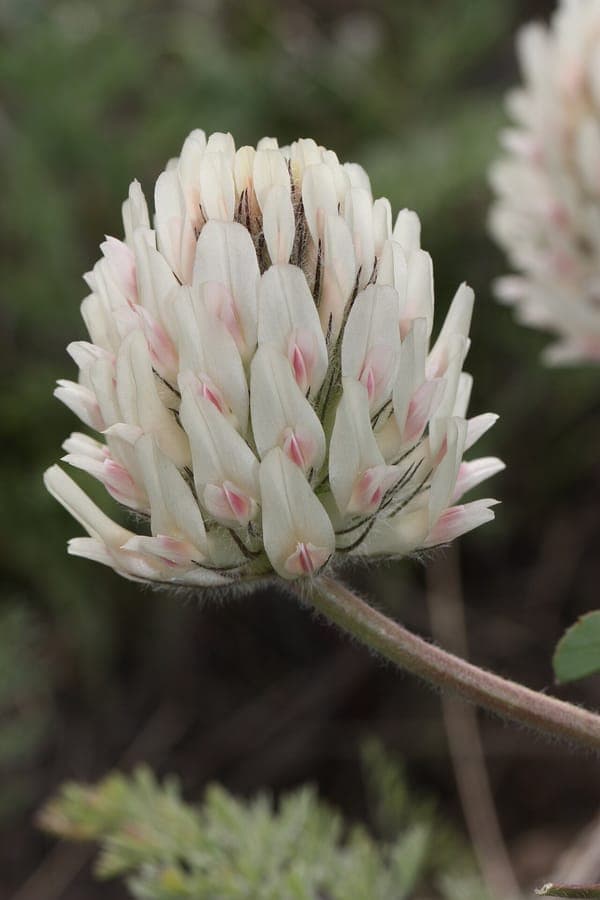
Walter Siegmund (talk) / CC BY-SA 3.0, via Wikimedia Commons
Large-head clover: complete guide to Trifolium macrocephalum
Trifolium macrocephalum
¿Quieres ver Large-head clover: complete guide to Trifolium macrocephalum en tu jardín?
1 minuto, sin tarjeta de crédito
Overview
Trifolium macrocephalum, commonly called large-head clover, largehead clover, or bighead clover, is a striking perennial in the Fabaceae family. Native to the Pacific Northwest states of California, Nevada, Oregon, and Washington, it is one of the most visually impressive clovers you can grow, with flower heads dramatically larger than those of any common clover. The species was first described in 1817 by French botanist Jean Louis Marie Poiret, making it one of the earlier documented Pacific Northwest plants.
Unlike many clovers, Trifolium macrocephalum grows from a single crown rather than spreading via rhizomes. This makes it well-behaved in the garden, taking up a defined space. In cold climates it is sometimes grown as an annual since the crown may not survive hard winters, though in milder zones it behaves as a reliable short-lived perennial. It is rarely seen in European gardens, which makes it a genuine conversation piece - visitors who know their plants will stop and look twice. It is rated as rapid-growing, establishing quickly in a single season. Gardenworld.app offers design ideas for using showy perennials like this in a front garden.
As a legume it fixes nitrogen, and the large flower heads are particularly attractive to bumblebees and large solitary bees that have the reach to access the deeply-set nectar.
Appearance and bloom
The name 'macrocephalum' means large-headed and the flower heads justify this entirely. They can reach up to 5 cm across, among the largest of any clover species, held on firm stems 20 to 40 cm tall. The colour is purple to deep rose-purple. Each head is a dense sphere of dozens of small pea-type flowers.
Leaves are three-part with medium texture and a faint pale chevron on each leaflet. The foliage forms a low-to-medium base, with the bold flower stalks rising well clear of it. Bloom time is early to mid spring, continuing into early summer. Seeds are brown at maturity.
Ideal location
Full sun gives the best results. In its native range across the Pacific Northwest, this clover grows on open prairies, sunny hillsides, and dry woodland margins. In the garden it needs a sunny, open position for strong flower production. Plants in shade will be leafy but bloom poorly.
Its rapid growth means it fills a gap quickly. Use it as a temporary filler in new borders, a bold single specimen, or a component in a naturalistic planting mix.
Soil
The preferred pH range is 6.2 to 7.1, pointing to neutral to slightly acid soils. The plant is not fussy about soil type but needs reasonable drainage. Heavy, waterlogged clay should be avoided or improved with grit before planting. Its single-crown growth form means it does not spread aggressively, keeping it easy to manage.
Watering
Moderate water needs. In its Pacific Northwest home, the plant gets wet winters and drier summers, so it is adapted to summer drought. In the garden, water during dry spells in summer. Deep watering once a week during drought is more effective than shallow daily watering. Avoid standing water around the roots.
Pruning
Remove spent flower heads after blooming to keep the plant tidy. The large dried heads can also be left in place as they age decoratively and provide seeds for birds and self-sowing. A general cut-back in autumn is optional. In colder climates, leaving some above-ground structure through winter can help protect the crown.
Maintenance calendar
- March: Sow or plant new specimens in a sunny, well-drained spot.
- April: Active growth begins. Light fertiliser on poor soils.
- May: First large flower heads appear.
- June: Peak bloom. Leave undisturbed for pollinators.
- July: Flower heads dry off. Remove or leave for seeds.
- August: Water once a week during extended drought.
- September: Assess seed production for self-sowing potential.
- October to February: Resting period. Mulch root zone in cold climates.
Diseño gratis
¿Quieres ver Large-head clover: complete guide to Trifolium macrocephalum en tu jardín? Crea un diseño gratis ahora.
Winter hardiness
Trifolium macrocephalum is moderately cold-hardy, corresponding to USDA zones 5 to 8. In its Pacific Northwest home, winters are mild and wet. In colder climates it may behave as a short-lived perennial or biennial. Hard winters can kill the crown, so mulching in autumn is a good precaution in exposed sites. In typical Western European climates, zones 6 to 8, the plant is generally reliable.
Companion plants
The large purple flower heads create a spectacular contrast next to yellow-flowering plants such as Potentilla or Hypericum. In a naturalistic border, combine with Gaillardia, Penstemon, and low ornamental grasses. For an American prairie theme, pair with Echinacea and Rudbeckia for a bold, season-long display.
In a front garden, Trifolium macrocephalum serves as an eye-catching focal point that rewards close inspection from passers-by and is a genuine draw for large pollinators.
Propagation
Trifolium macrocephalum is best propagated from seed. The plant has no rhizomes and does not spread vegetatively. Seeds ripen in summer and can be harvested when flower heads turn brown and dry. Sow in early spring under glass at 18-20 degrees C; germination takes 1-2 weeks. Harden off and plant outside after the last frost date in a sunny, well-drained spot. Self-seeding in the garden is possible if you leave the drying heads in place through late summer. The plant is sometimes available at specialist nurseries and online from wildflower and native plant suppliers. RHS-approved nurseries and garden centres in the UK sometimes stock it in the perennials section, though it is rarely common. For the most reliable results, sow fresh seed each year rather than relying on overwintered crowns in colder gardens.
Pests and diseases
Large-head clover is largely trouble-free. In damp conditions, powdery mildew can appear on the leaves; good air circulation is the best prevention. Slugs may attack young shoots in spring - use iron phosphate pellets or a copper barrier on vulnerable young plants. Root rot can occur on poorly drained soils during wet growing seasons; improving drainage before planting is the most effective long-term fix. Aphids occasionally target young flower stalks but rarely cause serious damage on otherwise healthy plants. Treat heavy infestations with insecticidal soap. The plant's rapid growth gives it good resilience against minor attacks.
In the front garden
The oversized flower heads of Trifolium macrocephalum make it an excellent focal point in the front garden. Plant it in a visible position, ideally along a path or in a raised bed, where the bold heads can be fully appreciated at close range. Its rapid growth means a bare patch fills in within one season. In a naturalistic design it works beautifully with ornamental grasses and low wildflowers. On gardenworld.app you can have a front garden design created where this plant is used as a colour accent alongside grasses and native flowers. Because it does not spread via rhizomes, it stays exactly where you plant it and never becomes a nuisance. Its rarity in European gardens gives it extra appeal as a plant that knowledgeable visitors will immediately notice and ask about.
Closing thoughts
Trifolium macrocephalum rises well above ordinary clover status, both literally and in visual impact. The oversized purple flower heads set it apart from all common clovers and make it a memorable garden plant. Visit gardenworld.app to explore how bold perennials like this one can lift an ordinary front garden into something genuinely distinctive.
¿Quieres ver Large-head clover: complete guide to Trifolium macrocephalum en tu jardín? Crea un diseño gratis ahora.
Sube una foto, elige un estilo y obtén un diseño fotorrealista con lista de plantas en menos de un minuto.
Más de 10.000 jardines diseñados
Sin tarjeta de crédito


Plantas similares
Caucasian clover: complete guide to Trifolium ambiguum
Trifolium ambiguum
Everything about Trifolium ambiguum, caucasian or kura clover. Growth habit, location, soil, maintenance and use as groundcover or pasture plant.
Longstalk clover: complete guide to Trifolium longipes
Trifolium longipes
Everything about Trifolium longipes, the longstalk clover from western North America. Location, soil, watering and garden use tips.