
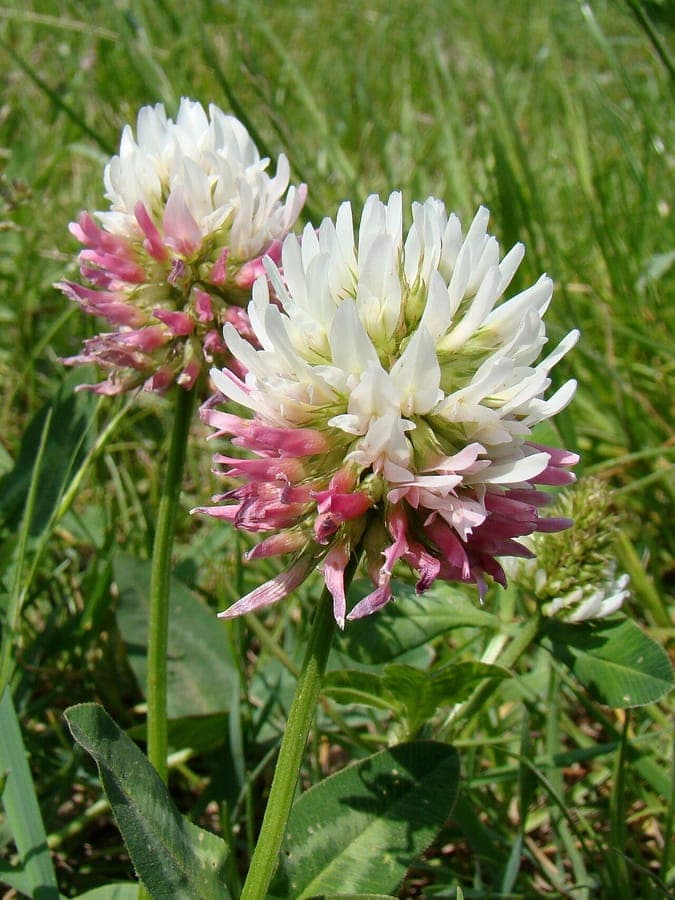
Юрий Данилевский / CC BY-SA 4.0, via Wikimedia Commons
Caucasian clover: complete guide to Trifolium ambiguum
Trifolium ambiguum
¿Quieres ver Caucasian clover: complete guide to Trifolium ambiguum en tu jardín?
1 minuto, sin tarjeta de crédito
Overview
Trifolium ambiguum, known by the common names caucasian clover, kura clover, honey clover, and pellett clover, is a persistent perennial clover in the Fabaceae family. Native to the Crimea, Caucasus region, Turkey, Iran, Iraq, Ukraine, and southern European Russia, it has also been introduced to parts of Australia and New Zealand as a pasture plant, where its exceptional persistence under grazing pressure made it highly valued in permanent pastures. In garden settings it is a useful long-lived groundcover for difficult spots. Gardenworld.app can show you how groundcover plants like this one integrate into a low-maintenance front garden design.
The plant grows via rhizomes, spreading slowly underground to form a dense mat over time. This rhizomatous habit makes it very persistent: once established it is hard to dislodge and holds soil well, which also makes it valuable for erosion control on slopes. In agricultural research, the species has been recognised for decades for its ability to persist in pastures where other clovers fail, thriving on depleted soils and surviving drought cycles that eliminate less robust competitors.
As a legume, Trifolium ambiguum fixes atmospheric nitrogen through root nodules. This improves soil fertility naturally and makes it a sound choice for areas where soil improvement is desirable.
Appearance and bloom
The leaves are the classic trefoil shape of all clovers, with a fine leaf texture and slightly larger leaflets than common white clover. A pale V-shaped chevron marking is often visible in the centre of each leaflet. Plants form low mats 15 to 25 cm tall, spreading laterally via rhizomes.
Flowers are round, globe-shaped heads on long stalks reaching up to 30 cm, held well above the leaf mat. The colour is white to pale pink. The plant is conspicuously floriferous in late spring and early summer, and the flowers are an excellent nectar source for bees and other pollinators.
Ideal location
Trifolium ambiguum is quite flexible about light levels. Full sun gives the best flowering but the plant tolerates partial shade and even lighter full shade. It grows in lawns, along paths, on slopes, and as filler in borders. The rhizomatous spread makes it suitable for larger areas where low-maintenance cover is the goal.
A well-drained to moderately moist position is ideal. The plant is unsuitable for permanently waterlogged or extremely dry exposed spots.
Soil
The pH tolerance runs from 5.7 to 7.2, meaning this clover grows in most garden soils without any special amendment. It prefers soils that are not too heavy and not too dry. On poor soils, its nitrogen-fixing ability allows it to perform better than many competitors. Regular deep tillage can damage the rhizomes and set the plant back, so avoid heavy soil disturbance once established.
Watering
Once established, caucasian clover is reasonably drought-tolerant, though not as extreme as true Mediterranean plants. In the first growing season, water regularly to allow the rhizomes to establish well. After that, watering is only needed during prolonged summer drought. Normal rainfall in northern and western Europe is generally sufficient to keep the plant healthy.
Pruning
Very little pruning is needed. In lawn use, the plant tolerates mowing but keep the cut height at 7 to 10 cm minimum to avoid weakening the mat. In border or groundcover use, allow free growth and cut back old clumps at the end of the season to stimulate fresh rhizome spread the following spring.
Maintenance calendar
- March: Check plants after winter. Remove dead material. Apply a light general feed if needed.
- April: Active rhizome growth begins. Early flowers may appear in late April.
- May/June: Peak bloom period. Leave undisturbed for pollinators.
- July: Post-bloom regrowth. Water once a week if drought persists for more than two weeks.
- August: Heat rest period. Plant may look stressed but recovers in autumn.
- September/October: Fresh growth as temperatures cool. Trim mat edges to contain spread if needed.
- November to January: Dormant period. Rhizomes survive cold without any protection.
Diseño gratis
¿Quieres ver Caucasian clover: complete guide to Trifolium ambiguum en tu jardín? Crea un diseño gratis ahora.
Winter hardiness
Trifolium ambiguum is very cold-hardy. Its Caucasus and Crimean origins mean it is adapted to cold winters, corresponding to USDA hardiness zones 4 to 7. Above-ground growth dies back in hard winters but the rhizomes survive reliably. In mild Western European winters the plant can remain semi-evergreen, keeping some leaf cover through the coldest months.
Companion plants
As a groundcover, caucasian clover works well beneath open tree canopies or between taller perennials. Combine with ornamental grasses like Deschampsia or Festuca for a naturalistic meadow effect. In a wildflower setting, pair with Achillea and Leucanthemum for a mixed, insect-friendly planting. In a lawn blend, the nitrogen fixation benefits surrounding grasses.
Propagation
Caucasian clover is best propagated by rhizome division in early spring or autumn. Lift a clump, divide the rhizomes into sections each carrying 2-3 growing points, and replant immediately at 3-5 cm depth on a moist, prepared site. Water in well after planting and keep the soil evenly moist until new growth confirms establishment. Division is also a reliable way to contain the plant's spread if it grows larger than intended - simply lift the outermost sections and either replant them elsewhere or compost them.
Seed propagation works but germination rates are variable. Sow in early spring under glass at 15-18 degrees C and expect germination within 1-2 weeks. Harden off and plant out after the last frost date. Plants are sometimes available at garden centres and nurseries in the perennials section. Specialist suppliers stock it online, where it can be found under 'caucasian clover' or 'kura clover'.
Pests and diseases
Trifolium ambiguum is generally disease-resistant but can suffer from fungal issues in prolonged wet conditions. Clover rust and powdery mildew occur occasionally; the best prevention is good air circulation and avoiding overhead watering in late evening when foliage stays wet overnight. Aphids occasionally attack young growth in spring. Treat heavy infestations with an insecticidal soap solution, applying in the morning so the plant can dry before nightfall. Rodents and rabbits may gnaw at the rhizomes over winter; a layer of coarse grit or gravel around the plant base discourages this. The plant's dense mat habit makes it relatively self-protecting once well established.
Use as green manure
One of the notable advantages of caucasian clover is its ability to fix atmospheric nitrogen through root nodules colonised by Rhizobium bacteria. On depleted or impoverished soils, it can measurably improve soil fertility over a period of two to three growing seasons, performing a similar role to deliberately sown green manures such as field beans or vetches but without requiring annual re-sowing.
In agriculture, Trifolium ambiguum is used to improve permanent pastures because of its persistent rhizomatous growth and high nitrogen contribution. In the garden, it works well as an understorey plant beneath taller crops or ornamentals, where its nitrogen input benefits neighbouring plants without competition for light. When the foliage is cut back and worked into the soil surface, it also improves organic matter content and soil structure over time.
Before dedicating a bed to a clover understorey, you can map the layout on gardenworld.app and see how the low carpet reads beneath your existing shrubs and perennials.
Closing thoughts
Trifolium ambiguum is a tough, persistent perennial with real practical value as a groundcover, soil improver, and nectar source. For gardeners looking for a low-maintenance, wildlife-friendly solution for difficult patches, it is an excellent choice. Explore gardenworld.app for design ideas that show how groundcovers like caucasian clover can form the foundation of a beautiful, low-effort garden.
¿Quieres ver Caucasian clover: complete guide to Trifolium ambiguum en tu jardín? Crea un diseño gratis ahora.
Sube una foto, elige un estilo y obtén un diseño fotorrealista con lista de plantas en menos de un minuto.
Más de 10.000 jardines diseñados
Sin tarjeta de crédito


Plantas similares
Longstalk clover: complete guide to Trifolium longipes
Trifolium longipes
Everything about Trifolium longipes, the longstalk clover from western North America. Location, soil, watering and garden use tips.
Large-head clover: complete guide to Trifolium macrocephalum
Trifolium macrocephalum
Everything about Trifolium macrocephalum, the large-head clover from the Pacific Northwest. Location, soil, watering, pruning and companion plants.