
Juan Carlos Fonseca Mata / CC BY-SA 4.0, via Wikimedia Commons
Caltrop: complete guide
Tribulus terrestris
¿Quieres ver Caltrop: complete guide en tu jardín?
1 minuto, sin tarjeta de crédito
Overview
Caltrop (Tribulus terrestris) is an unassuming annual weed that spreads from Africa through India and the Mediterranean region. This isn't a plant you'd deliberately cultivate, but rather an unwanted invader that establishes itself unbidden in gardens. Botanically interesting and used in traditional medicine across cultures, it nonetheless poses ecological concerns.
The plant grows low along the ground, with stems spreading radially up to 30-60 centimeters outward. The name 'Tribulus' refers to its infamously notorious fruits: small, hard, four-winged seed pods (caltrops) that cling readily to animal fur and clothing, achieving effortless dispersal.
This is an invasive species across many European countries. In the Netherlands, it appears on official invasive species watch lists. Nevertheless, in carefully controlled conditions, it offers interesting botanical lessons. Prevention is paramount: strict seedling control is essential.
Appearance and bloom
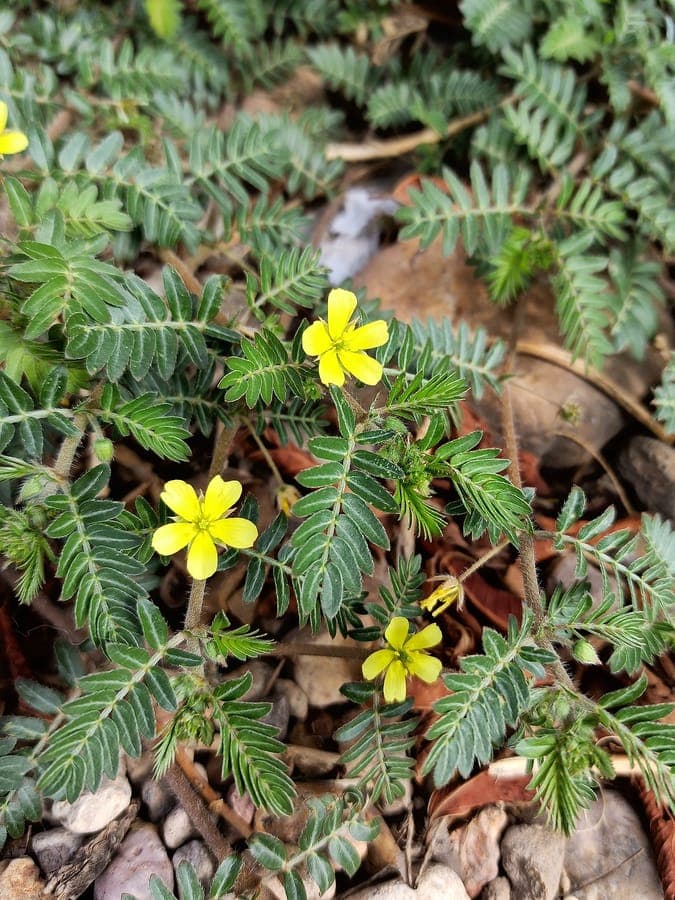
Caltrop grows as a low, radiating mat barely 10-15 centimeters tall. The stems are thin, tough, spreading star-like from a central point. Leaves are complexly compound, composed of many tiny leaflets creating delicate texture.
Flowers appear June through September and are strikingly yellow. Small, approximately 1 centimeter diameter, featuring five individual petals. Flowering is abundantly generous - blooms visible regularly throughout the plant's mat.
Fruits follow rapidly after flowering. These are the notorious "caltrops" - hard, triangular, bearing four characteristically sharp spines. These form both difficulty for walkers and brilliant dispersal mechanism. They cling to feet and are carried kilometers.
The entire plant dies after first frost. Fruits remain behind, carrying seeds until next spring.
Ideal location
Caltrop establishes on almost any sunny, warm spot. It's thoroughly weedy and opportunistic.
Sunlight: Minimum 6-8 hours direct daily light. More is better. Shade restricts growth severely.
Temperature: Strictly a warm-season plant. Germination occurs only when soil temperature reaches 15+ degrees Celsius. In Netherlands, optimal growth is May through October - if you wanted it.
Soil: Completely undemanding. Lean, compacted, dry soils are ideal - this is a plant of wastelands. High fertility leads to rampant, overwhelming growth.
Water supply: Extremely drought-tolerant once established. Actually thrives better in dry conditions than moist.
Soil requirements
This is a plant of lean conditions. Indeed, it favors impoverished soils.
Soil type: Sandy, gravelly, compacted grounds are perfect. Heavy clay must be amended with sand. Pure sand works.
Fertility: Don't apply fertilizer. Don't add compost. This plant grows better without nutrition - discouraging competitors but stimulating this weed.
PH: Tolerant from 5.5 to 8.0. Neutral is fine, but not required.
Drainage: Good drainage is essential. Wet soils suppress this plant (though in actual gardens it often grows in moister zones).
Diseño gratis
¿Quieres ver Caltrop: complete guide en tu jardín? Crea un diseño gratis ahora.
Watering
Once established: virtually no water needed. This is a drought-tolerant plant of steppes.
From sowing: keep seed bed moist, but not waterlogged. Flooding promotes disease.
During extreme drought (more than three weeks without rain): watering encourages further growth. But the plant survives drought.
Container culture: keep moister. Check daily if soil is dry.
Avoid excessive moisture - this promotes root rot and fungal issues.
Pruning
Pruning is unnecessary - this plant lasts only one season.
Controls: Remove unexpected seedlings strictly. This is a plant you must eliminate, not cultivate.
Dispersion prevention: harvest ripe fruits before they scatter and spread. This prevents future seedlings in subsequent seasons.
Composting: dead plant can be mixed, provided fruits are first removed.
Maintenance calendar
May-June: Seedlings appear on wasteland or prepared sites. Control strictly.
June-July: Rapid growth. Plant covers ground. Flowering begins.
August: Abundant flowering. Fruits begin forming.
September: Fruits mature. Plant dries and ages.
October: After first frost, plant dies. Fruits scatter or remain attached.
November-April: Winter rest. Seed waits in soil for next spring.
Winter hardiness
Not winter-hardy. This is purely an annual dying after first frost.
Seed survival: Hard fruits can survive years in soil. This is why this plant is invasive - seed germinates throughout decades.
Frost-hardiness: Seeds survive -20 degrees Celsius and even more intense cold. This makes elimination difficult.
Companion planting
This plant is unsuitable company. It's competitive and suppresses other species.
If accidentally present: protect stronger-growing plants by pulling weeds nearby.
Native alternatives: replace with native low-stemmed groundcovers or other lean-soil plants that aren't invasive.
Closing thoughts
Caltrop is not recommended for gardeners. It's invasive, aggressive, and difficult-to-impossible once established. Sharp fruits are also a hazard to feet and paws.
Don't invest energy cultivating this. Control and prevention are priority: remove seedlings, harvest fruits before seed dispersal, ensure seeds don't escape your plot.
For more on invasive plant management, visit gardenworld.app/en. You'll find guides for recognizing and controlling invasive species in various regions.
Nurseries stock no caltrop seed - not from unwillingness to sell, but because it's legally problematic in many countries to deliberately spread it.
¿Quieres ver Caltrop: complete guide en tu jardín? Crea un diseño gratis ahora.
Sube una foto, elige un estilo y obtén un diseño fotorrealista con lista de plantas en menos de un minuto.
Más de 10.000 jardines diseñados
Sin tarjeta de crédito


Plantas similares
Desert Date: Complete Guide
Balanites aegyptiaca
Discover Balanites aegyptiaca, the desert date tree from Africa. Extreme drought tolerance and unique character - perfect for dry regions and arid gardens.
Guaiacum officinale: complete guide for holy wood
Guaiacum officinale
Discover Guaiacum officinale, the rare holy wood with unique medicinal heritage. Learn cultivation tips, historical significance, and botanical characteristics of this precious tropical tree.
Guaiacum sanctum: complete guide
Guaiacum sanctum
Discover how to successfully grow Lignum vitae with this comprehensive guide. From basic care to maintenance planning - all you need for this unique tree.