
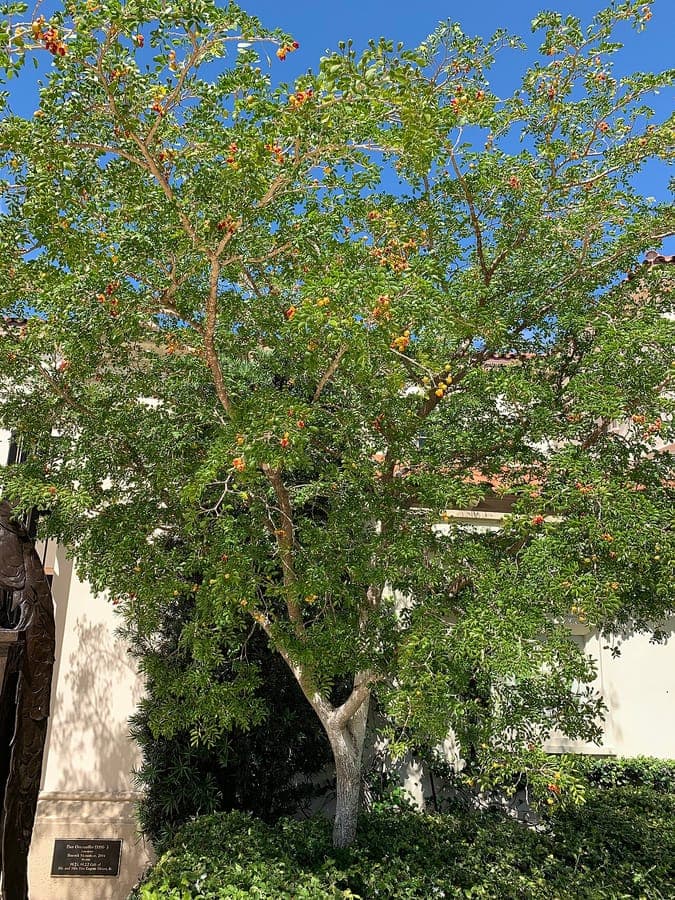
KATHERINE WAGNER-REISS / CC BY-SA 4.0, via Wikimedia Commons
Guaiacum sanctum: complete guide
Guaiacum sanctum
¿Quieres ver Guaiacum sanctum: complete guide en tu jardín?
1 minuto, sin tarjeta de crédito
Overview
Guaiacum sanctum, commonly known as Lignum vitae or holy wood, is a slow-growing tropical tree with blue-purple flowers and yellow fruit capsules. This rare tree is famous for its extraordinarily hard and dense wood. The tree originates from Central America and the Caribbean and now grows primarily in botanical gardens and as an ornament in warm climates.
Appearance & Bloom
The tree reaches 5-8 meters in height and forms a dense, rounded crown. The leaves are small, green, and compound. The flowers are bright blue to violet with four petals, blooming in summer. The fruits are yellow heart-shaped capsules with black seeds. The bark is dark and rough-textured.
Ideal Location
Guaiacum sanctum grows only in warm climates (USDA zones 10-12). The tree thrives best in full sun with at least 6 hours of direct sunlight daily. Protection from cold and strong winds is essential. Plant in a location where the tree has space to reach mature size.
Soil
The tree is not fussy about soil type but prefers well-draining, sandy to loamy soil. Heavy clay soil must be improved. Salt tolerance is beneficial. A pH of 6.0-8.5 is acceptable. The tree is drought-tolerant once established.
Diseño gratis
¿Quieres ver Guaiacum sanctum: complete guide en tu jardín? Crea un diseño gratis ahora.
Watering
Water regularly during the first two years while the tree becomes established. Once established, the tree is very drought-tolerant and requires minimal watering. Water only during prolonged drought. Excessive watering leads to problems.
Pruning
Minimal pruning is needed. Remove only damaged or crossing branches. The tree naturally forms an attractive shape. Young trees can be lightly shaped by selecting preferred branches as they grow.
Maintenance Calendar
April-May: Prepare planting location, start watering. June-August: Growth period, blooming, regular watering. September-October: Fruit setting, reduce watering. November-March: Dormancy period, minimal watering.
Winter Hardiness
Guaiacum sanctum is not winter hardy and cannot tolerate frost. Plant only in warm, frost-free climates. Protection from cold air is essential. In areas with winter, the tree must be grown in containers and brought indoors or placed in a greenhouse.
Companion Plants
Combine with other drought-tolerant, warm-climate plants such as Aloe, Agave, and other xeriscape species. The blue-purple flowers contrast beautifully with silvery or grayish foliage.
Closing
Guaiacum sanctum is a unique, slow-growing tree for warm climates with year-round interest. The heavy wood makes it ideal as a specimen tree. Perfect for botanical gardens and warm regions. Learn more at gardenworld.app/en and gardenworld.app/nl.
¿Quieres ver Guaiacum sanctum: complete guide en tu jardín? Crea un diseño gratis ahora.
Sube una foto, elige un estilo y obtén un diseño fotorrealista con lista de plantas en menos de un minuto.
Más de 10.000 jardines diseñados
Sin tarjeta de crédito


Plantas similares
Desert Date: Complete Guide
Balanites aegyptiaca
Discover Balanites aegyptiaca, the desert date tree from Africa. Extreme drought tolerance and unique character - perfect for dry regions and arid gardens.
Guaiacum officinale: complete guide for holy wood
Guaiacum officinale
Discover Guaiacum officinale, the rare holy wood with unique medicinal heritage. Learn cultivation tips, historical significance, and botanical characteristics of this precious tropical tree.
Zygophyllum fabago: complete guide
Zygophyllum fabago L.
Discover the Syrian bean-caper, a unique xeric plant with delicate white flowers. Learn cultivation, care, and garden design strategies for this drought-loving specimen.