
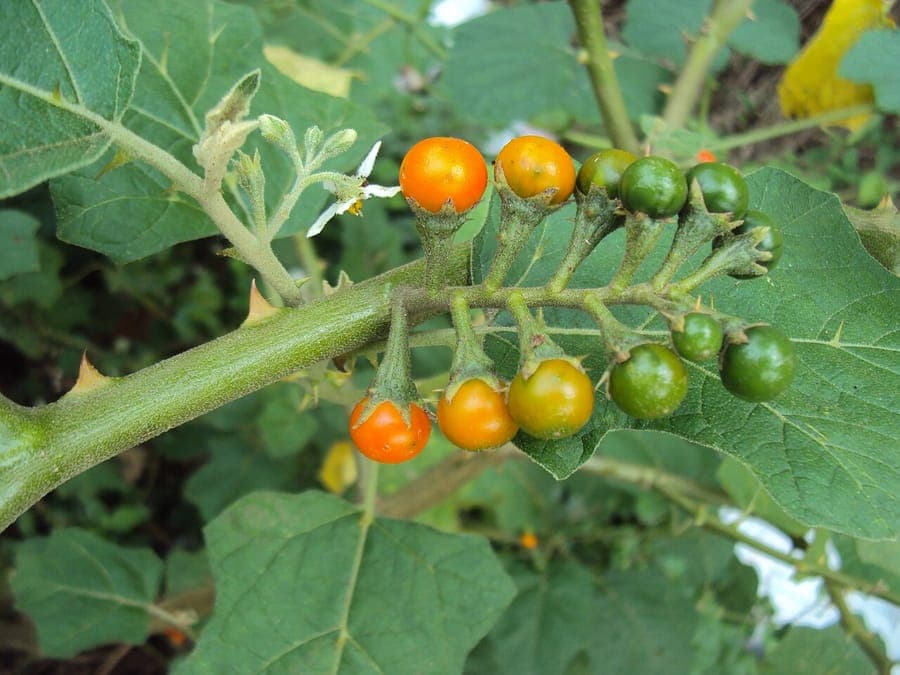
Vinayaraj / CC BY-SA 3.0, via Wikimedia Commons
Solanum violaceum: complete guide
Solanum violaceum
¿Quieres ver Solanum violaceum: complete guide en tu jardín?
1 minuto, sin tarjeta de crédito
Overview
Solanum violaceum, commonly known as Purple Nightshade or Indian Eggplant, is a tropical shrub native to Africa and Asia. This ornamental member of the Solanaceae family grows as a versatile shrub with dark green leaves, elegant purple flowers, and decorative round berries. The plant is valued in warm climates as an ornamental and is sometimes used in traditional medicine.
Appearance and bloom
Solanum violaceum grows as a semi-woody shrub, 1-2 meters tall. The leaves are long, oval, and somewhat rough-textured. From April to October (or longer in warm regions), numerous violet to purple flowers appear, each with golden stamens. These flowers attract insects and are followed by round, orange-yellow to red berries approximately 1 cm in diameter. The berries are not edible.
Ideal location
Purple Nightshade thrives in full sun. Plant in a location receiving at least 6-8 hours of direct daily sunlight. In very hot climates, light afternoon shade is beneficial. The plant suits patios, balconies (in containers), small gardens, and greenhouses. In cooler regions, grow in containers that are brought indoors before frost.
Soil
Solanum violaceum thrives in well-drained, fertile soil. Ideal mixture: 50% garden soil, 30% compost, 20% sand. The plant loves enriched soil with consistent feeding. For container cultivation, use quality potting compost with regular feeding. Fertile soil promotes flowering and fruiting.
Diseño gratis
¿Quieres ver Solanum violaceum: complete guide en tu jardín? Crea un diseño gratis ahora.
Watering
Solanum violaceum prefers regular watering. Water during the growing season when the top inch becomes dry. In warm months, daily watering may be necessary. In winter, reduce watering but never allow soil to dry completely. Excellent drainage prevents waterlogging. In containers, monitor moisture more carefully.
Pruning
Purple Nightshade responds well to pruning. In early spring, cut back the plant to encourage compact, branching growth. Remove dead wood and crossing branches. For container plants, pinch regularly for fuller shape. Older, leggy plants can be cut back hard.
Maintenance calendar
May-June: Active growth, water regularly, feed weekly. July-August: Flowering and fruiting, continue feeding. September-October: Reduce watering gradually. November-April: Dormancy, minimal water, stop feeding. Prune in March.
Winter hardiness
Solanum violaceum is not frost-hardy. In temperate zones, bring indoors before first frost. The plant can overwinter in a greenhouse or conservatory above 10 degrees C. Harden off gradually after winter.
Companion plants
Purple Nightshade pairs well with other heat-loving plants: Brugmansia, tropical Hibiscus, Lantana, Mandevilla, and other Solanum species. For container combinations, pair with Bougainvillea or ornamental foliage plants.
Conclusion
Solanum violaceum is a stunning ornamental for warm seasons and controlled environments. Perfect for gardeners desiring tropical beauty in a manageable size. Available from specialty plant nurseries. Visit gardenworld.app for container gardening ideas.
¿Quieres ver Solanum violaceum: complete guide en tu jardín? Crea un diseño gratis ahora.
Sube una foto, elige un estilo y obtén un diseño fotorrealista con lista de plantas en menos de un minuto.
Más de 10.000 jardines diseñados
Sin tarjeta de crédito


Plantas similares
Solanum dolichosepalum: complete guide
Solanum dolichosepalum
Discover Solanum dolichosepalum, an Andean nightshade with striking long sepals. Growing tips, hardiness, and companion planting for your patio.
Solanum ripense: complete guide
Solanum ripense
Discover Solanum ripense, a moisture-loving Andean nightshade for pond edges and conservatories. Growing tips, hardiness, and companions.
Solanum tomentosum: complete guide
Solanum tomentosum
Discover Solanum tomentosum, a thorny South African nightshade with felted leaves. Growing tips, hardiness, and companion planting ideas.